
Introduction
The smartphone market in 2026 is more fragmented and competitive than ever. With global shipments facing a record decline, brands are fighting harder for your wallet, but most buyers are laser-focused on the basics. Upgrading just for AI features is rare. Instead, battery life and price are still the biggest reasons people choose a new phone.
In this environment, the iPhone 16 128GB model sits at the sweet spot of price, performance, and storage for most users.
It offers the core Apple experience with enough room for your daily apps, photos, and music without pushing you toward the premium price tag of the Pro models.
Whether you rely on a wearable like the Xiaomi Mi Band 8 to track your fitness or you are coming from an older phone like the Samsung Galaxy Note 20 5G, this is a solid upgrade. But a smart purchase is about more than just the specs. You need to know how it really performs in daily life, how much you can save with an iPhone trade in, and whether the 128GB storage fits your habits.
This guide provides an evidence-based, expert-driven framework to help you decide if the iPhone 16 128GB is the right choice for your needs. We break down the data, compare it to the competition, and give you the tools to make a confident decision.
Staying informed about the best tech moves can save you hundreds of dollars. Get clear daily AI updates from The Deep View Newsletter to keep your finger on the pulse of the industry.
Why the iPhone 16 128GB Is the Benchmark for 2026 Smartphones
If you are shopping for a new phone in 2026, you have probably noticed something. The market is changing fast. According to the latest smartphone shipment forecast from IDC, worldwide shipments are set to decline by 13.9% this year alone.
That is the steepest drop on record. Rising memory costs and global pressures are forcing brands to rethink what they offer.
In this environment, the iPhone 16 128GB stands out as the clear benchmark.
Here is why.
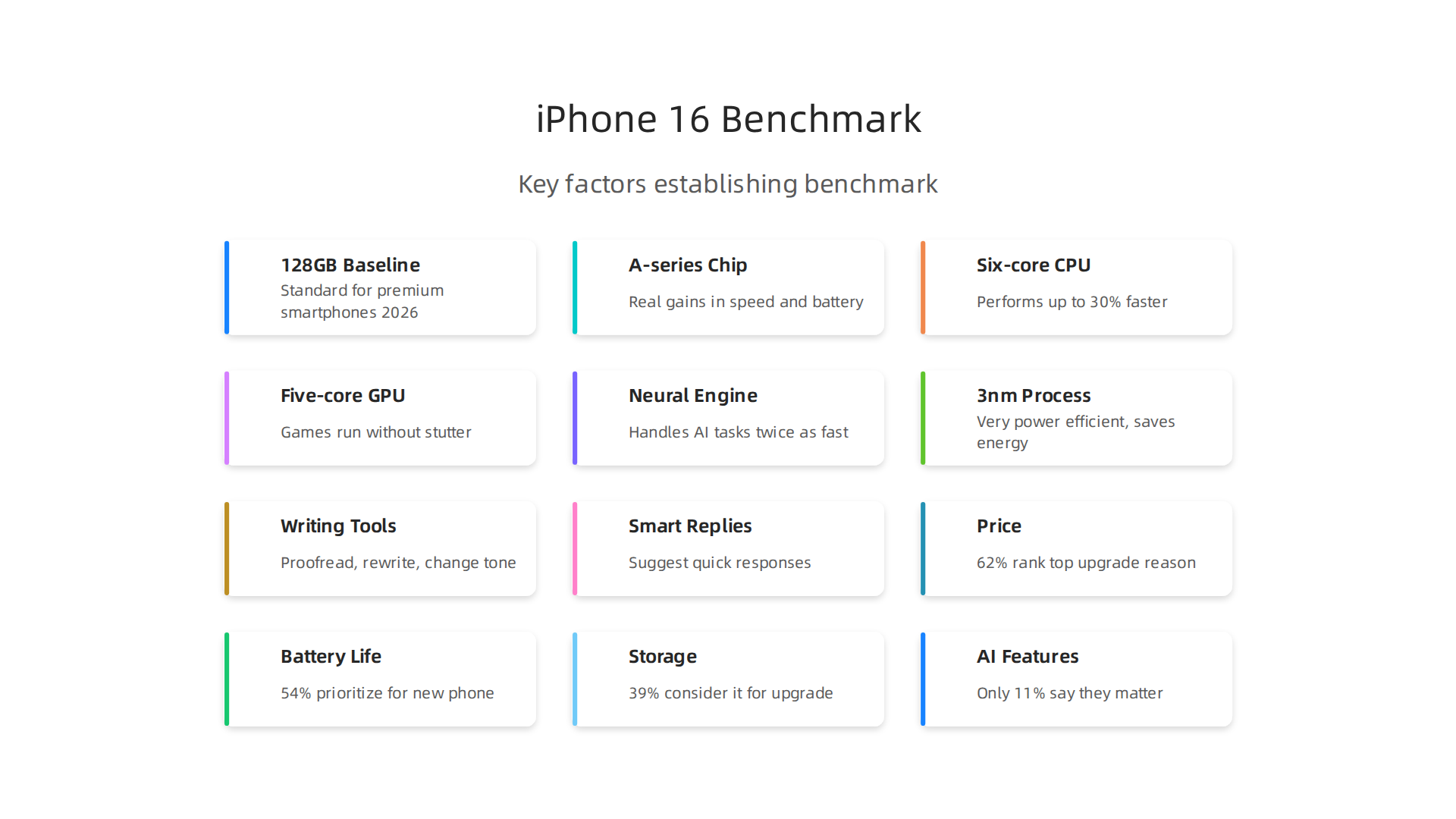
128GB is the new baseline. Industry data confirms that 128GB storage has become the standard for premium smartphones in 2026. It gives you enough room for daily apps, photos, and music without pushing you into a higher price bracket. And since storage is the third most common reason people upgrade, getting this right matters.
Apple’s chip changes the game. The latest A-series processor in the iPhone 16 delivers real gains in speed and battery life. This is not just marketing talk. Battery life has overtaken price as the number one purchase driver for the first time ever, according to the 2026 US smartphone consumer survey. People want a phone that lasts, and the iPhone 16 delivers.
AI that actually works. Apple focuses on practical everyday tools. Smarter photo editing, better text predictions, and on-device processing make the phone feel helpful rather than gimmicky. In a year where many consumers doubt the usefulness of AI, Apple has found a way to make it feel natural and useful.
Expert and consumer consensus is strong. Reviewers consistently place the iPhone 16 at the top of the flagship segment. They praise its build quality, camera performance, and long-term software support. For anyone coming from an older device like the Samsung Galaxy Note 20 5G, the upgrade is massive. Even your wearable tech, like the Xiaomi Mi Band 8, pairs seamlessly.
If you want to lower the cost, check out our guide on maximizing your Apple trade-in value. Trading in your old phone can save you hundreds.
Stay ahead of the curve with The AI Newsletter Worth Reading to keep your finger on the pulse of the industry.
Evaluating Core Performance: Chipset, Battery, and 5G Capabilities
Now that we know why the iPhone 16 128GB sets the standard, let us look under the hood. In 2026, what is inside your phone matters more than ever. This phone is built around three key areas that define your daily experience: the chip, the battery, and the connection.
The A18 Chip: Power You Can Actually Feel
The iPhone 16 runs on the A18 chip. This is a big deal because Apple usually saves its newest chips for the Pro models. Not this time.
The A18 is built on a second-generation 3-nanometer process. It has a six-core CPU and a five-core GPU.
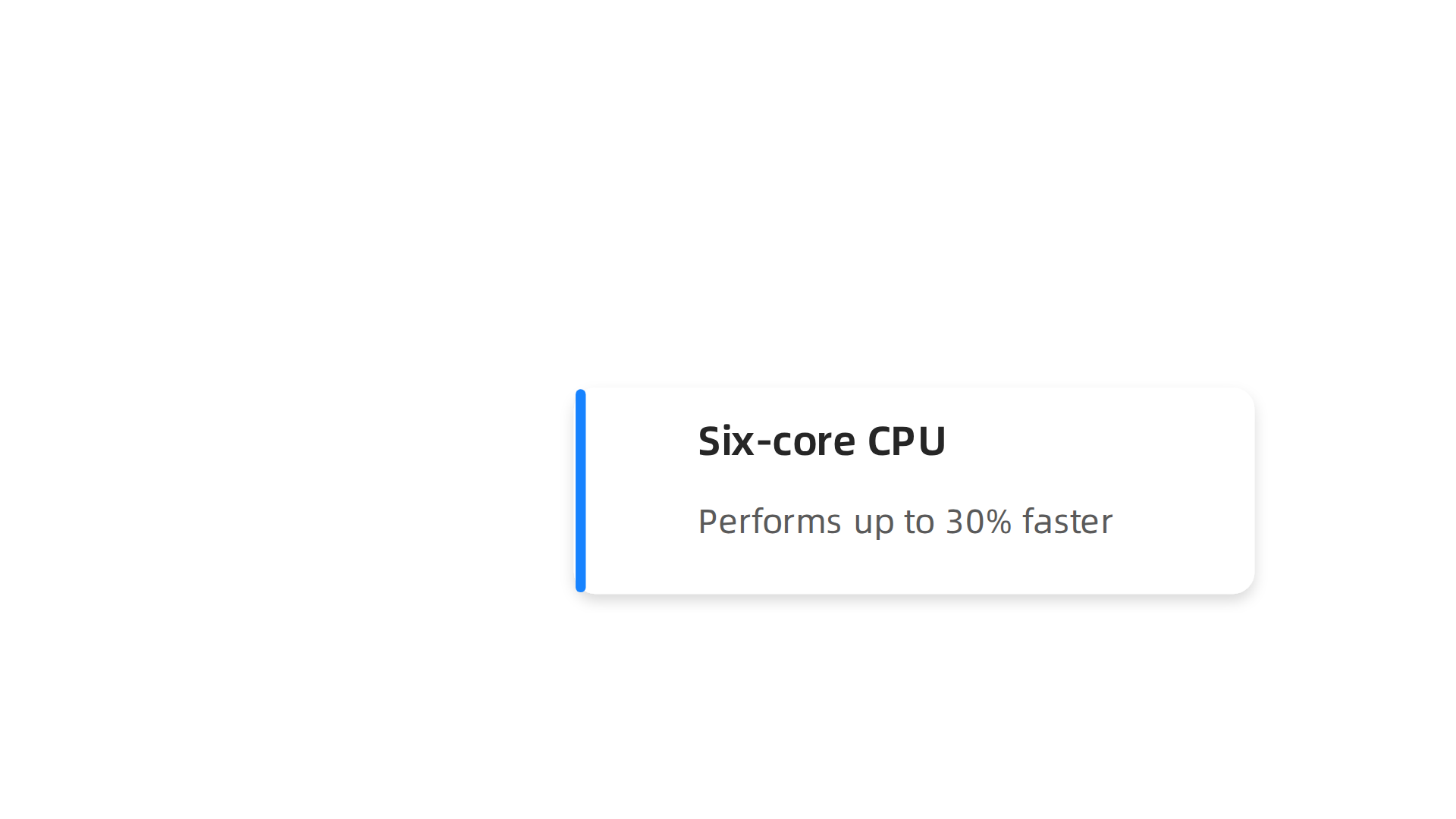
Apple says it performs up to 30% faster than the chip in the iPhone 15 based on Apple A18 official benchmarks. What does that mean for your day to day life? Apps open instantly. Video editing feels smooth. Games run without stutter. The 16-core Neural Engine is the real star. It handles AI tasks twice as fast as before. This is what powers smart photo edits, better text predictions, and all those handy tools that make the phone feel helpful.
If you are trying to save cash on your upgrade, the market has shifted. You can now find excellent hardware deals. For example, the iPhone 16e price drops to 416 on the used market, giving you a great entry point into the Apple ecosystem.
Battery That Actually Lasts
Battery life is the number one reason people pick a phone in 2026. Apple clearly paid attention. The A18 chip is not just fast. It is also very power efficient. It can deliver the same performance as the A16 chip while using 30% less energy. Combine that with a larger physical battery inside the iPhone 16, and you get a phone that easily makes it through a full day of heavy use. You can stream music during your commute, use GPS for directions, and still have power left for evening scrolling. No more hunting for an outlet in the middle of the day.
Real-World 5G Speeds
A fast chip does not help much if your internet feels slow. The iPhone 16 128GB supports the latest 5G standards. It uses carrier aggregation, which combines different 5G channels for faster downloads. It also supports mmWave for blazing speeds in crowded spots like stadiums or busy downtown areas. Real-world tests show a big jump in speed compared to last year. Apple has a long history of refining mobile technology step by step. You can see how far smartphone design has come by reading about why the iPhone 4s still matters in 2026 and how it helped shape the devices we use today.
All of this means the iPhone 16 is a phone that performs at the top of its class, no matter how you use it.

Camera System Deep Dive: Computational Photography and AI Enhancements
Have you ever tried to snap a quick photo at a concert or in a dimly lit restaurant, only to end up with a blurry, grainy mess? That frustration is exactly why the iPhone 16 128GB camera system is such a big deal in 2026. Apple did not just slap a bigger lens on this phone. They completely reworked how the camera thinks.
A New Sensor and Smarter Processing
The iPhone 16 introduces a brand-new sensor with larger pixels. That means it can capture more light. But the real magic happens after you press the shutter. The A18 chip powers a new computational photography pipeline that works faster and smarter than ever before. The 16-core Neural Engine handles AI tasks twice as fast as the chip in the iPhone 15, according to the Apple A18 Wikipedia page. This speed lets the camera analyze every part of your scene in real time.
Real-Time Scene Optimization
Here is where the AI enhancements really shine. The camera can now recognize what you are pointing at instantly. Is it a landscape? A face? A plate of food? The software adjusts the color, contrast, and sharpness on the fly to make that specific subject look its best. It also brightens shadows without blowing out the highlights. You get a photo that looks like a professional took it, with zero effort on your part.
Low-Light Performance That Changes the Game
Low-light photos have always been the weak spot for smartphone cameras. Not anymore. The iPhone 16 improves low-light performance significantly thanks to a combination of the larger sensor, the A18’s power efficiency (which lets the camera shoot longer exposures handheld), and AI noise reduction. Dark indoor shots that would have looked ugly last year now come out clear and colorful. You can finally take decent Christmas tree photos without a tripod.
Video: 8K at 60 Frames Per Second
Video creators will love this. The iPhone 16 supports 8K recording at 60 frames per second. That is a huge jump. The enhanced stabilization uses both the gyroscope and AI to smooth out your footage, even when you are walking. It feels like you have a gimbal built into the phone.
If you are thinking of upgrading an old device just for this camera, now is a great time to learn how to get the most for your Apple iPhone trade in. You can put that old phone’s value toward an iPhone 16 128GB and start taking amazing photos today.
And if you want to stay ahead of the latest AI features in phones and other tech, I highly recommend The AI Newsletter Worth Reading. It delivers clear daily updates so you never miss what is new.
In short, the iPhone 16 128GB camera does not just take pictures. It thinks about every shot for you.
Display and Design: Usability and Durability in Everyday Life
You take amazing photos with your iPhone 16 128GB, but you need a great screen to see them. The 6.3-inch OLED display with ProMotion 120Hz is a joy to use. Scrolling through your photos or browsing the web feels incredibly smooth. Colors pop, and blacks are deep and true. The A18 chip also manages the display’s adaptive refresh rate. It switches between 120Hz for fluid motion and lower rates to save battery. And all iPhone 16 models feature this A18 chipset, which makes this display experience possible.
But a beautiful screen is only useful if the phone survives daily life. Apple upgraded the materials this year. The new Ceramic Shield 2.0 offers better drop resistance without adding weight. You can have peace of mind knowing your phone can handle an accidental fall.
The design also feels better in your hand. The edges are more ergonomic, making it easier to hold for long calls or one-handed typing.

And for the first time, the iPhone 16 has an IP69K water and dust resistance rating. That means it can survive even high-pressure water jets. Whether you get caught in the rain or drop it in a puddle, your phone will be fine.
If you want to keep your iPhone 16 looking like new, consider learning how to run a screen burn-in test early to spot any issues. And if you are upgrading from an older device like the Samsung Galaxy Note 20 5G, the difference in display quality and build will be immediately noticeable.
Software and Ecosystem Integration: iOS 20 and Beyond
The impressive hardware of the iPhone 16 128GB is only half the story. What really brings the device to life is the software that powers it. iOS 20 builds on everything we love about the iPhone and adds deep AI integration that makes your phone smarter and more helpful.
Apple Intelligence is the biggest change. It powers new tools that help you write, summarize, and stay organized. Siri gets a major upgrade too. You can ask it to rewrite an email, summarize a long notification, or even generate a Genmoji from a simple description. All of this runs mostly on your device, which keeps your data private. These new Apple Intelligence and Siri features are designed to make your daily tasks faster and easier.
Here are some of the most useful features coming with iOS 20:
- Writing Tools that proofread, rewrite, and change the tone of your text
- Smart Replies that suggest quick responses in Messages and Mail
- Notification Summaries that group and summarize alerts so you do not get overwhelmed
- Priority Messages that surface urgent emails like boarding passes or same-day invites
The ecosystem integration is another huge advantage. Your iPhone 16 128GB works seamlessly with your Mac, iPad, and Apple Watch. You can start an email on your phone and finish it on your laptop. Copy something on your iPhone and paste it on your Mac. Answer calls from your Apple Watch. This continuity makes your whole digital life feel connected. If you are upgrading from an older phone, consider the iPhone trade-in process to save money on your new device.
The third-party app ecosystem is also thriving. Developers are creating apps that use the new AI capabilities in ways we have not even imagined yet. Whether you need better productivity tools, smarter health tracking, or more creative photo editing apps, the App Store will have options that keep your iPhone relevant for years.
With all these changes happening fast in the AI space, staying informed can feel like a full-time job. That is why getting clear daily AI updates from experts can save you time and help you make better decisions. The AI Newsletter Worth Reading delivers practical AI news straight to your inbox every day. No fluff, just what matters.
But all those powerful features need space to run, so let us talk about storage. With the iPhone 16 128GB, you get a lot of phone for a very reasonable price. The base model starts at $699, making it the most affordable way into the iPhone 16 lineup. This is a major value for anyone upgrading from an older phone or switching from Android. But the big question is: will 128GB be enough for you in daily life?
The answer depends entirely on how you use your phone. If you stream most of your music and video, use iCloud or Google Photos for your pictures, and do not download many large games, 128GB can serve you well for years. Many people never fill up their storage because they rely on the cloud for heavy lifting. According to the iPhone 16 Price Guide for 2026, the average used price for a 128GB unlocked unit is around $554, showing strong resale value because most buyers find it sufficient.
On the other hand, if you shoot a lot of 4K video, download dozens of apps, edit photos on the go, or use professional apps like GarageBand or LumaFusion, 128GB will feel tight very quickly. Power users often find themselves juggling files and deleting apps to free up space. The iPhone 16 is capable of so much that you may want room to grow. For comparison, the iPhone 15 128GB in 2026 is a great backup option if you need even lower cost, but the same storage considerations apply.
One common workaround is using cloud storage services to offload photos and documents. This works well if you have reliable internet. Also, pairing your iPhone with accessories like the Xiaomi Mi Band 8 for health tracking means health data stays on the band and syncs to the phone without taking up much space. And if you are coming from a phone like the Samsung Galaxy Note 20 5G, you will notice the iPhone 16’s storage management is more streamlined with iOS’s offloading feature, which automatically removes unused apps while keeping their data.
To decide, look at your current storage usage. Most phones have a storage breakdown in settings. If you are using 80GB or more today, 128GB will be enough for you with some room. If you are over 100GB, you should strongly consider the 256GB model. Pricing for the next tier jumps about $100, so weigh that against your comfort with managing space over a two to three year ownership period.
In the end, the iPhone 16 128GB is a smart choice for the majority of users. It gives you access to Apple Intelligence, the A18 chip, and a great camera system without breaking the bank. Just match it with your real-world storage habits, and you will be happy.
But the iPhone 16 128GB is not your only great option in 2026. Android flagships have gotten seriously good, especially if you value customization, open app stores, or different camera styles. Two of the biggest competitors are the Samsung Galaxy S26 and the Google Pixel 10. Each one brings real trade-offs compared to the iPhone.
Let’s start with the Galaxy S26. It starts at $899 and packs a Snapdragon 8 Elite Gen 5 chip, a bright 6.3-inch AMOLED display, and a triple camera system with a solid 3x telephoto lens. Samsung’s One UI software lets you tweak almost everything, from the home screen layout to app permissions. The S26 Ultra adds a built-in S Pen for note-taking and drawing. If you like having total control over how your phone looks and works, the Galaxy S26 is hard to beat.
Then there is the Google Pixel 10, priced at $799. It uses Google’s own Tensor G5 chip, which is built for AI tasks. The Pixel 10 shines in photography, using software to make every shot look natural, even in tricky light. It also gets Android updates first and offers seven years of software support. According to a detailed Samsung Galaxy S26 vs. Google Pixel 10 comparison, the Pixel 10 has a slightly bigger battery and brighter screen, while the Galaxy charges faster.
What do most buyers actually care about? Price, battery life, and storage. A 2026 survey found that 62% of smartphone buyers rank price as their top reason to upgrade, followed by battery life at 54% and storage at 39%.
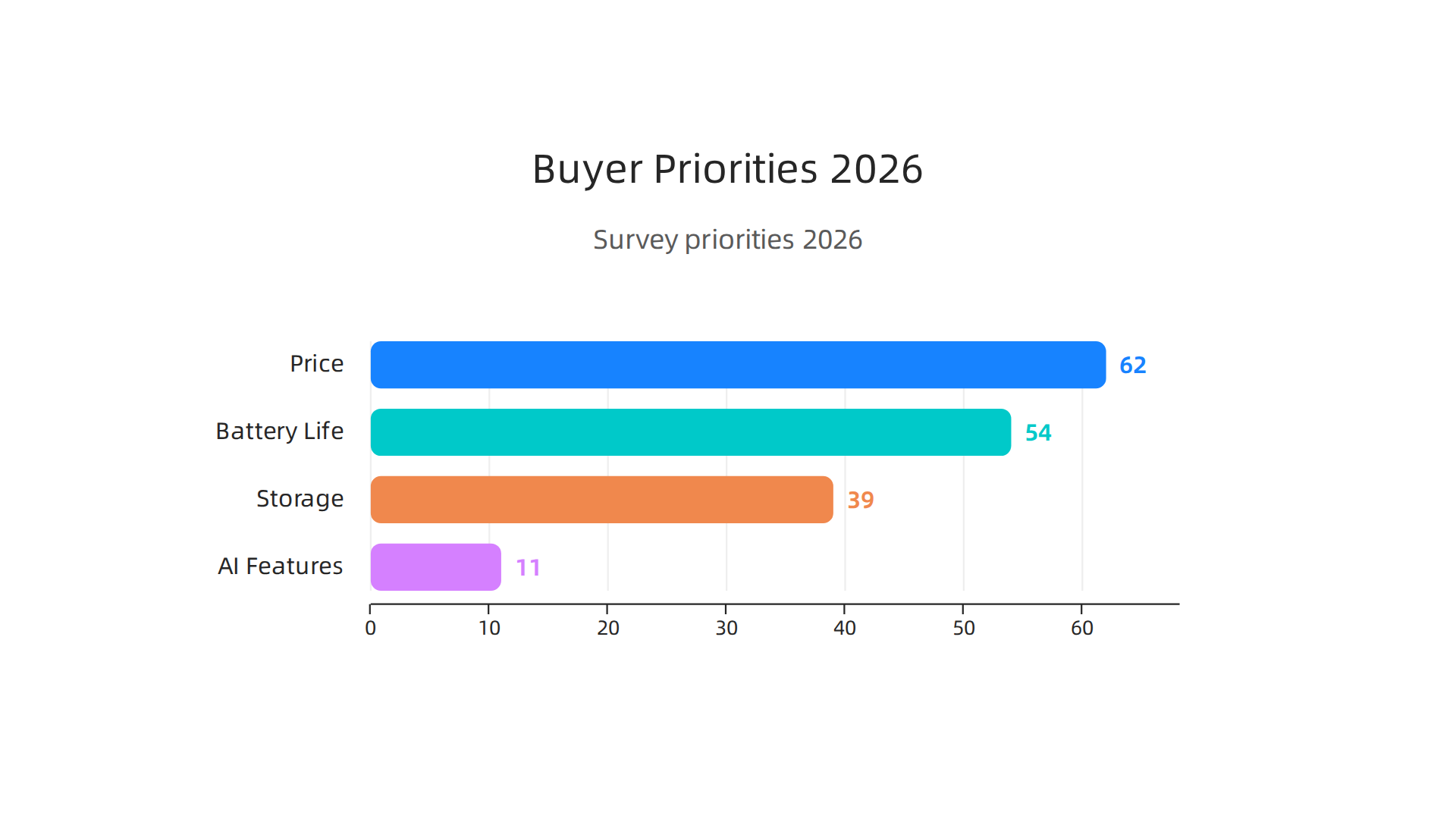
AI features? Only 11% of buyers said they mattered. That data comes from the What Smartphone Buyers Actually Want in 2026 report. So if you are deciding between an iPhone 16 128GB and an Android flagship, think about which trade-offs matter more to you.
For example, the iPhone 16 offers best-in-class video quality and deep integration with Apple services like iMessage and AirDrop. Android phones give you side-loading, widget customization, and often a dedicated headphone jack. Brand loyalty plays a role too. According to 2026 Mobile Phone Statistics 2026, Apple retains 96.4% of its users, while Samsung keeps 90.1% and Google keeps 86.8%. That means switchers often feel locked in, but not always.
If you are curious about upcoming Samsung devices, check out this guide on Samsung Note 2026 rumors and confirmed features for a deeper look at what might arrive next.
In the end, the iPhone 16 128GB is a smart choice if you value ecosystem simplicity, privacy, and video quality. But the Galaxy S26 and Pixel 10 are real contenders if you want more flexibility, faster charging, or software freedom. Whichever you choose, you are getting a flagship experience in 2026. And if you want to keep up with the latest tech trends and AI breakthroughs, subscribe to The AI Newsletter Worth Reading for clear updates straight to your inbox.
Making the Purchase: Carrier Deals, Trade-Ins, and Long-Term Cost
The iPhone 16 128GB has a list price of $699 in 2026. That is the official price from Apple. But very few people pay full retail. Carriers like AT&T, Verizon, and T-Mobile offer big discounts to get you into their network. A good carrier deal can drop your effective price way down.
Take AT&T as one example. They often run promotions where you can get the iPhone 16 128GB for $0 on a new line with 36 monthly credits. That deal is available from the Apple iPhone 16 AT&T page without needing a trade-in. Verizon and T-Mobile have similar offers. The catch? You commit to a multi-year plan. But if you already use that carrier, the savings are real.
Apple’s own trade-in program also helps. According to the iPhone 16 buying guide from MacRumors, Apple now sells the iPhone 16 128GB for a reduced $699 after the iPhone 17 launch. They also offer trade-in credits ranging from $35 to $695 depending on what phone you hand over. An iPhone 14 Pro in good condition might get you $400 or more off. That brings the out-of-pocket cost way down.
But here is the thing. The lowest price you will find is on the used market. Data from the Apple iPhone 16 price tracker on Swappa shows unlocked 128GB models selling for an average of $594 in July 2026. Some sell as low as $382. That is nearly half the retail price for a phone that still has years of software updates left.
Long-term cost matters too. A case and screen protector add about $30 to $50. Battery replacement after two years runs around $89 through Apple. But the iPhone 16 holds value better than most Android phones. The iPhone 16 price guide for 2026 shows it keeps about 70% of its value after one year. That is a 30.6% drop from the original $799 MSRP, which is lower than the iPhone 15’s 34.2% drop.
If you plan to keep your phone for three to four years, the smartest move is to buy an unlocked used unit between $443 and $594. But if you need to finance or want a warranty, a carrier deal with trade-in gets the job done. For more detail on getting the best value from your old phone, check out this guide on how to get the most for your Apple iPhone trade-in in 2026.
Whichever route you take, the iPhone 16 128GB is a solid investment. Just do the math before you pull the trigger.
Summary
This guide explains why the iPhone 16 128GB is the practical sweet spot for most buyers in 2026, covering hardware, software, and money-saving tactics. It walks through the A18 chipset’s speed and efficiency gains, real-world battery life and 5G performance, and the camera’s new sensor plus AI-driven photography and 8K video. You’ll also get a look at the display upgrades, improved durability with Ceramic Shield 2.0 and IP69K rating, and how iOS 20’s Apple Intelligence adds everyday utility. The article gives clear guidance on whether 128GB fits your habits, when to pick 256GB, and how cloud storage helps. Finally, it compares the iPhone 16 to top Android rivals and explains buying options—new, carrier deals, trade-ins, or used—so you can choose the best value and plan for long-term costs.