

Introduction
Every year, Apple fans hold their breath waiting for the next iPhone release.

And in 2026, the buzz around the iPhone 17 Pro price is louder than ever. Will it cost more than last year’s model? Will the rumored upgrades justify a higher price tag? These questions are on everyone’s mind.
Here’s the thing: the rumor mill is spinning fast. One day you hear about a redesigned aluminum body. The next day someone claims Apple is adding an 8x optical zoom camera. Sorting through all these claims is exhausting. Some rumors even suggest the 5 biggest iPhone 17 Pro leaks might include vapor chamber cooling and a new telephoto sensor. But how much of this is real, and how much is wishful thinking?
That’s where most people get stuck. You want to know what the iPhone 17 Pro price will be before you start saving up or planning your upgrade. But with conflicting reports and information overload, it’s hard to separate fact from fiction.
This article is your solution. We’ve gathered historical pricing data from past Apple launches, analyzed leaked specifications from trusted sources, and studied industry trends to give you a clear, evidence-based forecast. We’re not guessing here. We’re connecting the dots between what Apple has done before and what the latest 2026 leaks suggest is coming.
By the end of this guide, you’ll have actionable predictions for the iPhone 17 Pro price. You’ll also understand how to protect your new investment with the right accessories, like the apple iphone 17 pro max case or even the best iphone 16 cases if you decide to wait.
And if you want to stay ahead of every tech development this year, check out The AI Newsletter Worth Reading for daily updates cut through the noise.

Let’s start with what we know for sure.
The Evolution of iPhone Pro Pricing: A Historical Context
Let’s look back at how Apple has priced its Pro iPhones over the years. This history helps us forecast the iPhone 17 Pro price with more confidence.
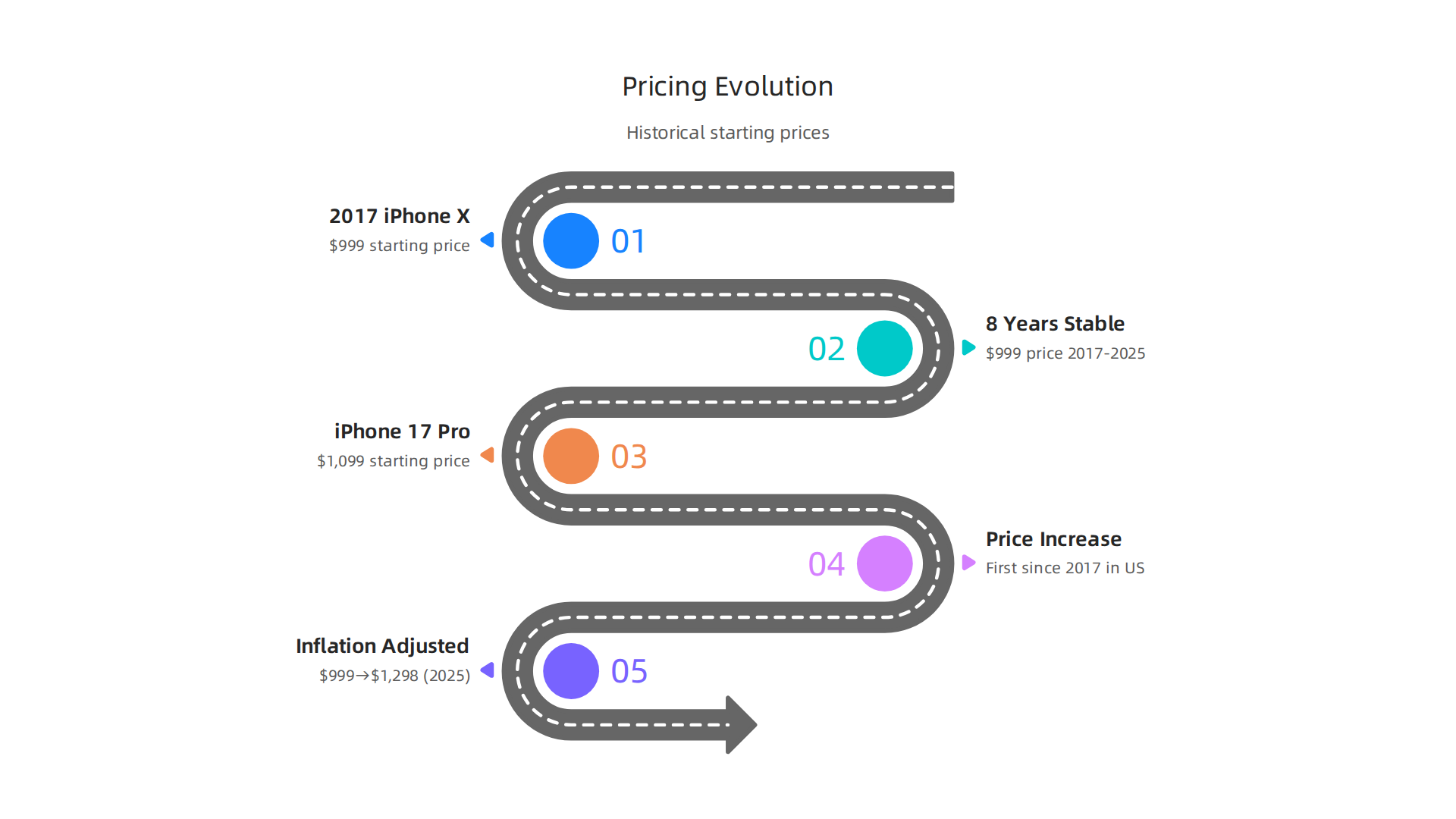
For eight straight years, from the iPhone X in 2017 all the way to the iPhone 16 Pro, Apple held the starting price at $999. That is a long run of stability. During that time, the company faced inflation, supply chain problems, and higher shipping costs. Yet it did not raise the base price for its Pro model.
Then came September 2025. Apple announced the iPhone 17 Pro with a starting price of $1,099. That was a $100 increase. According to a new report on iPhone 17 Pro price hike, this was the first time since 2017 that Apple raised the entry-level Pro price in the United States.
Here is something interesting. Even when the Pro model cost $999, that price was actually getting cheaper over time because of inflation. When you adjust the 2017 iPhone X price for inflation, $999 in 2017 was worth about $1,298 in 2025. So compared to that, the iPhone 16 Pro at $999 was a relative bargain. The new $1,099 price still leaves room below that inflation-adjusted peak.
What does this mean for the iPhone 17 Pro price going forward? The $1,099 starting point seems likely to stick for at least another generation. Apple has shown it can hold prices steady for several years once it sets a new baseline. But if component costs climb or if Apple adds major new features, another small increase is possible.
If you want to see the full pricing story from the very first iPhone to today, check out this complete history of iPhone pricing. It puts the current numbers into a broader perspective.
What to Expect from iPhone 17 Pro: Key Predicted Features
Now that you know the pricing story, let’s talk about what you actually get for that $1,099. The features packed into the iPhone 17 Pro are the real reason the iPhone 17 Pro price makes sense. These upgrades are not small.
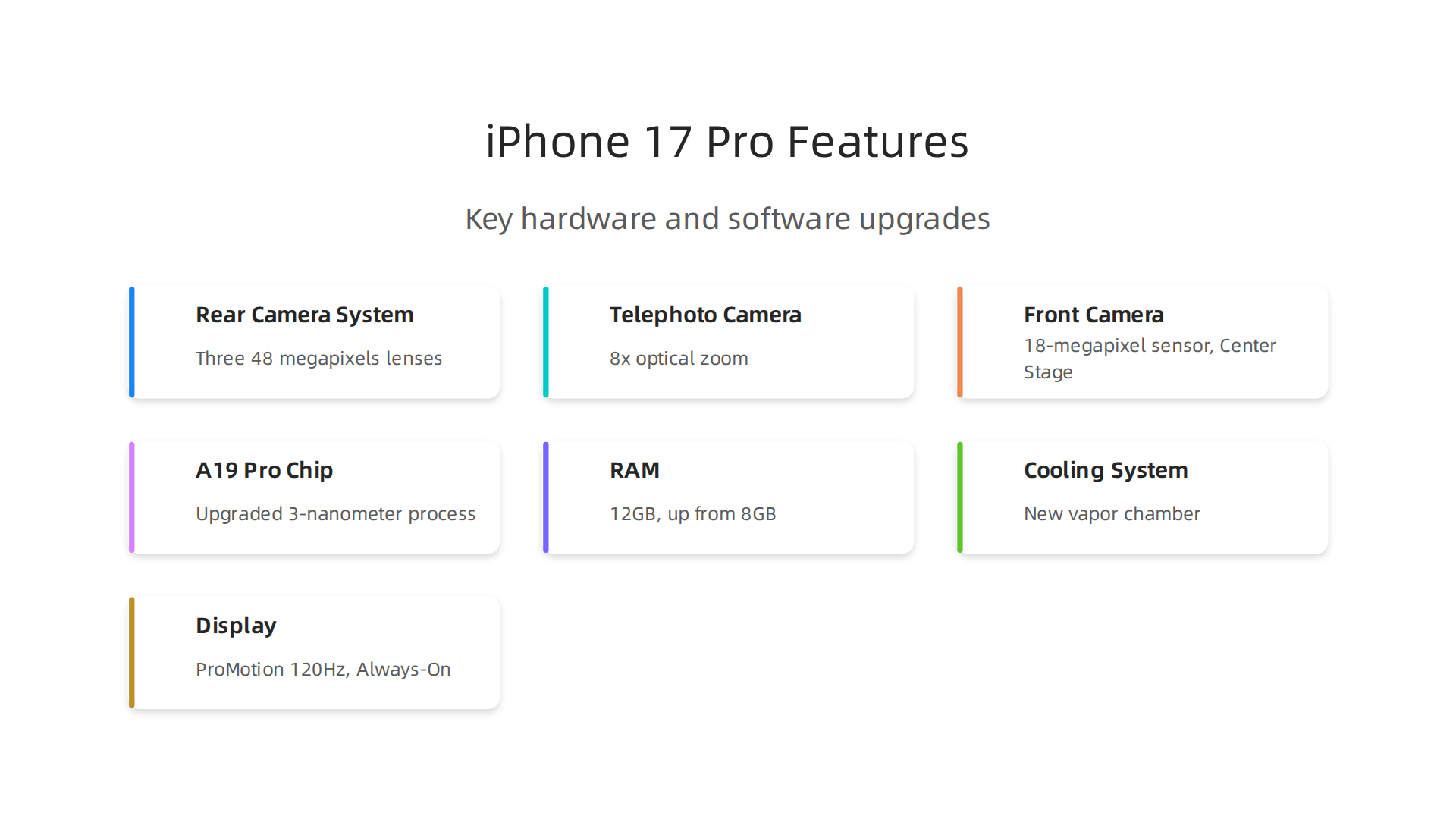
The biggest headline is the camera system. For the first time, all three rear cameras are 48 megapixels. That includes the main lens, the ultra wide lens, and the telephoto lens. The new telephoto camera supports 8x optical zoom, which is a huge jump from what we had before. Apple also added a larger sensor that is 56 percent bigger than the previous generation. This means sharper photos in low light and more detail in every shot. You can see the full details in the official iPhone 17 Pro announcement.
The front camera got a big upgrade too. It now has an 18-megapixel sensor with Center Stage support. That means your selfies and video calls will look noticeably better.
Inside the phone, Apple put the new A19 Pro chip. This chip uses an upgraded 3-nanometer process. It has a 6-core CPU and a 6-core GPU. The Neural Engine is also upgraded to 16 cores. And here is a key detail for power users. The iPhone 17 Pro now comes with 12GB of RAM, up from 8GB in the iPhone 16 Pro. This extra memory helps with multitasking and makes Apple Intelligence features run smoothly. According to a detailed iPhone 17 Pro spec roundup, the phone also has a new vapor chamber cooling system. This helps the phone stay cool during heavy use like gaming or video editing.
The display is getting better too. All iPhone 17 models now have ProMotion with a 120Hz refresh rate and Always-On display. That used to be a Pro-only feature. Now even the standard models get it. For the Pro models, the display is brighter and more efficient.
All of these features cost money to build. The new camera sensors, the faster chip, the extra RAM, and the cooling system all add up. That is exactly why the iPhone 17 Pro price went up by $100. You are paying for real hardware improvements.
If you want to dig deeper into everything this phone offers, take a look at this iPhone 17 Pro Max buying guide. It breaks down the specs and helps you decide which model fits your needs.
Staying on top of these rapid tech changes can feel overwhelming. That is why many readers turn to the The AI Newsletter Worth Reading. It delivers clear daily updates on the latest technology and AI developments straight to your inbox. No fluff, just the insights you need.
iPhone 17 Pro Price Predictions: Analysis and Scenarios
Before Apple made the official announcement, the tech world was full of guesses about the iPhone 17 Pro price.
Analysts had different views. Some predicted a modest bump. Others warned of a much bigger jump.
Here is what a lot of people expected. For years, the iPhone Pro model started at $999. The iPhone 16 Pro cost that much. So did the iPhone 15 Pro, the iPhone 14 Pro, and every Pro model going back to 2017. That is a long stretch without a price change.
Many experts thought Apple could not keep that going forever. Component costs were rising. The new chip, bigger camera sensors, and extra RAM all cost more to make. A report from CNET looked at this history and explained why a change was likely. You can read the full report on the imminent iPhone 17 Pro price hike to understand the reasoning.
Some analysts predicted a start price between $1,199 and $1,299 for the base model. They pointed to inflation and the cost of new features as reasons for a significant jump. Others thought Apple would be more careful. They guessed a $100 increase to $1,099. That ended up being the right call.
So what actually happened? Apple raised the price of the iPhone 17 Pro to $1,099. That is a $100 increase over the iPhone 16 Pro. It is the first time since 2017 that Apple has raised the starting price for its entry-level Pro phone in the United States. The increase was real, but it was not as big as some worst-case predictions suggested.
Why did Apple choose this path? A few factors played a role. First, Apple wanted to keep the phone competitive against rivals. A huge price jump could push customers to other brands. Second, economic conditions were uncertain. A big increase might slow down sales. Third, the new features like the triple 48MP camera system and the A19 Pro chip justified a moderate bump but not an extreme one.
If you want to see what actual users are saying about these price changes and the phone overall, check out this iPhone 17 Pro Reddit insights article. It collects real opinions from people who bought the phone.
The bottom line is this. Apple chose a modest price increase rather than a dramatic one. The $1,099 starting price feels reasonable when you look at the hardware upgrades you get. And for anyone who was worried about a $1,200 or $1,300 price tag, the actual cost is a welcome surprise.
How iPhone 17 Pro Compares to Competitors and Its Predecessors
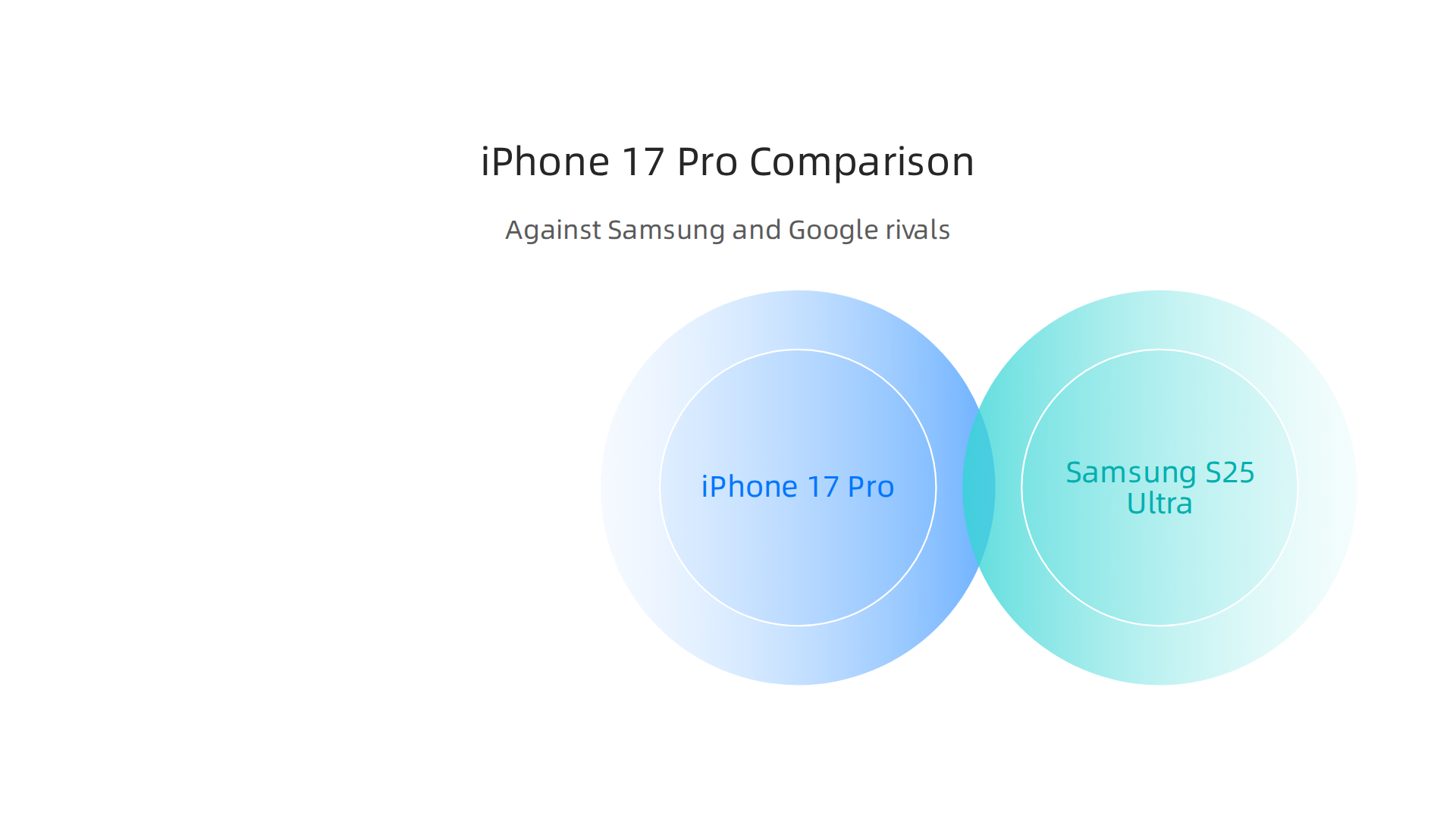
So the iPhone 17 Pro lands at $1,099. But how does it hold up against the best phones from Samsung and Google?
And is the jump from last year’s model actually worth it?
Let us start with the Samsung Galaxy S25 Ultra. Samsung’s flagship launched with a retail price of $1,299. That is $200 more than the Apple phone. But prices have dropped since launch. You can now find the Samsung Galaxy S25 Ultra at its lowest price for $1,049 on Amazon. That is actually $50 less than the iPhone 17 Pro.
What do you get for that money? A 6.9-inch display. A 200MP main camera. A 5000mAh battery that lasts all day. And the built-in S Pen for notes and drawing. The iPhone 17 Pro fights back with Apple’s smooth ecosystem, the new chip, and a camera system that takes stunning photos in any light. Both are amazing phones. Your pick really comes down to whether you prefer iOS or Android.
Then there is the Google Pixel 11 Pro. Google priced it at $999 this year. That undercuts both Apple and Samsung. You get Google’s best camera software and a clean Android experience. But the hardware is not quite as premium as the other two. Still, for $100 less than the iPhone, it is a strong option.
Now let us talk about the upgrade from the iPhone 16 Pro. You already know the price went up by $100. But what do you actually get for that extra cash? A faster processor that handles games and video editing like a dream. Better battery life that gets you through a full day and then some. And the new camera setup is a big step forward, especially for low-light shots and zoom.
If you are using an iPhone 15 Pro or older, the upgrade to the iPhone 17 Pro feels huge. Everything is faster, the screen looks better, and the camera is in a different league. If you have an iPhone 16 Pro, the changes are nice but not essential. You could easily wait another year.
Competition from Samsung and Google keeps Apple from getting lazy. Knowing that strong alternatives exist at similar or lower prices pushes Apple to actually improve the phone each year. That pressure is good for everyone.
If you want to keep up with how these tech giants are shaping the future, there is a simple way to stay informed. For a deeper look at how Apple’s phones have evolved over time, read this complete history of the iPhone. And for daily updates on the biggest trends across Apple, Samsung, Google, and AI, Get clear daily AI updates from The Deep View Newsletter.
Factors Influencing the iPhone 17 Pro’s Price Tag
You already know the iPhone 17 Pro costs $1,099. But why that number? It is not random. A few big forces pushed Apple to land on that price. Let me break them down for you.
Component costs are a huge piece of the puzzle. Every iPhone is made of hundreds of tiny parts. The new A19 chip costs more to produce than its predecessor. The camera sensors are bigger and better. The display hits 3,000 nits of peak brightness. All those upgrades add up. According to a detailed breakdown from Counterpoint Research, the bill of materials for the iPhone 17 Pro Max has climbed compared to last year. Apple does not just eat those costs. They pass some of them along to you.
Macroeconomic factors also play a role. Inflation has raised the price of everything, including phone parts. Currency fluctuations can hurt Apple when the US dollar is weak. And then there are tariffs. As reported in a comprehensive look at the iPhone 17 price from Ghostek, the threat of tariffs on imports from China and India could push prices even higher. Apple has held prices steady for five years, but that run may be ending. In fact, recent news from MacRumors suggests Apple may raise prices on current models as soon as this month. CEO Tim Cook told The Wall Street Journal that the company can no longer absorb rising memory and storage chip costs.
Apple’s pricing strategy is the third factor. Apple positions the Pro models as premium devices. They want a healthy profit margin on every phone sold. That is why the iPhone 17 Pro starts at $1,099 instead of $999. It signals that this is the advanced option. At the same time, Apple offers trade-in programs to soften the blow. You can get up to $695 off by trading in an older iPhone. That makes the actual price you pay much lower. If you want to see how previous models compare in value, check out this guide on the iPhone 15 128GB in 2026, which still outperforms newer models for less money.
Understanding these factors helps you see why the price is what it is. It is not just about the phone. It is about the world around it.
Future Model Predictions: What Comes After the iPhone 17 Pro?
So you’ve got the iPhone 17 Pro price locked in your mind. What’s next for Apple’s lineup? The future is already taking shape, and it looks pretty exciting.

The iPhone 18 Pro and beyond are already leaking. According to a comprehensive iPhone 18 rumors roundup, Apple plans to launch the iPhone 18 Pro and Pro Max in September 2026 with the same general design as the iPhone 17 Pro. The big upgrades will be under the hood: a new A20 chip built on a 2-nanometer process, a variable aperture lens for the main camera, and possibly a 35% smaller camera bump. A foldable iPhone, sometimes called the iPhone Fold, is also expected to launch in fall 2026. It will open like a book with a smaller outer display and a larger inner one. Some sources predict the foldable could cost upwards of $2,000. And for 2027, Apple’s 20th anniversary year, rumors point to a curved all-glass design, under-display Face ID, and silicon anode batteries for much longer life. A YouTube breakdown of the iPhone 18 Pro leaks mentions these bold redesign ideas.
The pricing trajectory is worth watching. If the iPhone 17 Pro already sits at $1,099, and the foldable iPhone could top $2,000, where does the Pro line go next? Apple has held prices steady for years, but with component costs rising and a potential foldable Pro model in the works, it’s easy to imagine the Pro line exceeding $1,500 within the next two generations. The base iPhone 18 may not arrive until early 2027, according to a delay reported by TechRadar, which could shift Apple’s pricing strategy even further.
Long-term trends are also changing how you pay. Apple is pushing harder into services like Apple One and AppleCare+. You may see subscription models that bundle hardware, software, and cloud storage for a monthly fee. Trade-in cycles already soften the upfront cost, and Apple’s pivot to services means the phone itself becomes a gateway to recurring revenue. If you want a full timeline of how we got here, check out this complete history of the iPhone from 2007 to the iPhone 17 in 2026.
Staying ahead of these changes takes a little effort. That’s why getting clear, daily AI and tech updates straight to your inbox can save you time. You can subscribe to The AI Newsletter Worth Reading from The Deep View Newsletter for easy, digestible insights on all the innovations coming your way.
Expert Tips for Making an Informed Purchase Decision
You’ve looked at the iPhone 17 Pro price and thought about all those future models. Now comes the hard part. Should you buy the iPhone 17 Pro now or hold out for something better? Here are three practical tips to help you make the call.

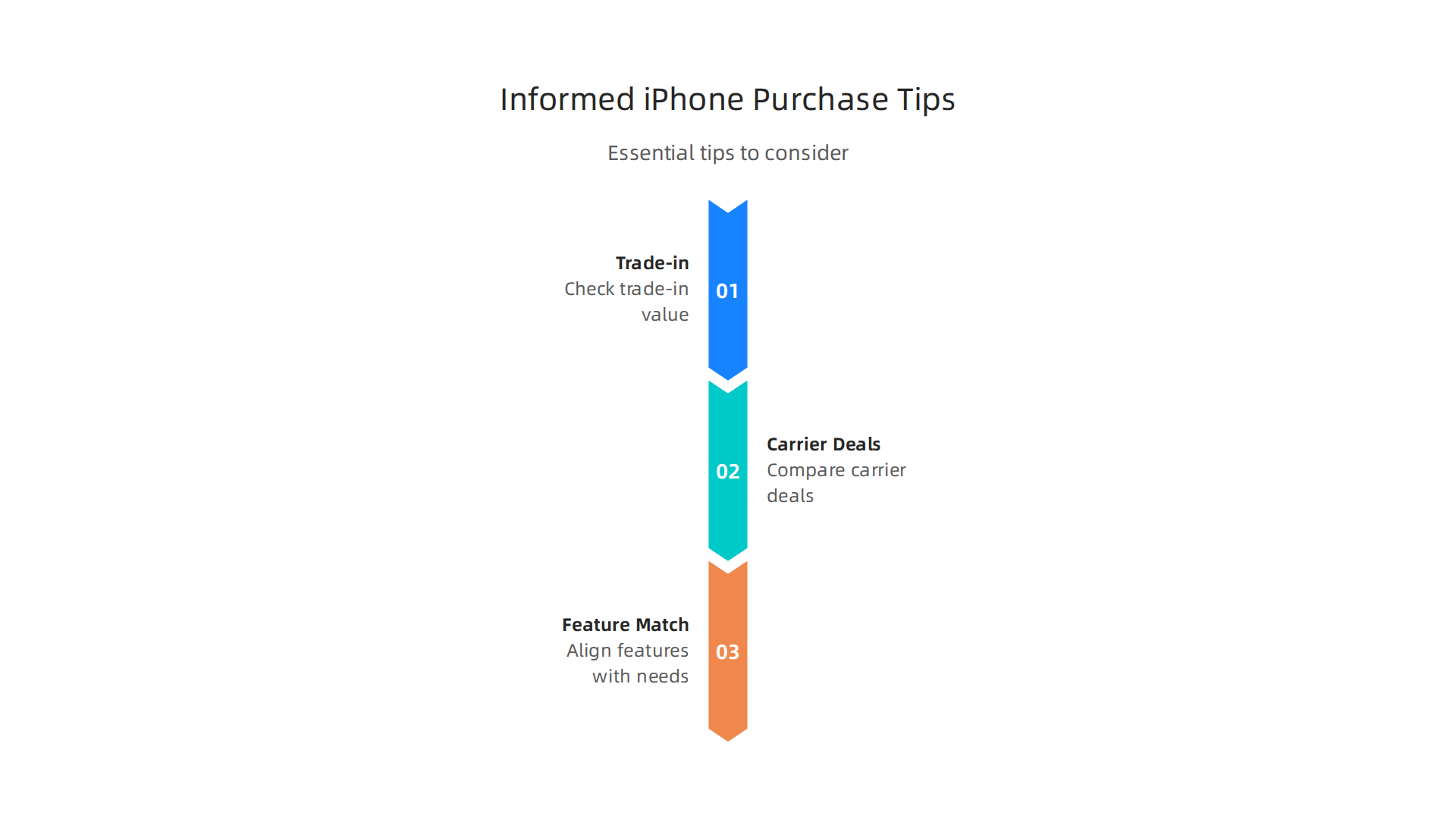
Tip 1: Know what your current phone is worth. Trade-in programs from Apple and wireless carriers can knock a big chunk off the iPhone 17 Pro price. If you have a recent model in good shape, you might get hundreds of dollars in credit. That makes the upgrade feel a lot lighter on your wallet. For a deeper look at what the iPhone 17 Pro Max offers and how to get the best deal, check out this buying guide for the iPhone 17 Pro Max. Timing your trade-in right matters too. Values drop over time, so don’t wait too long.
Tip 2: Compare carrier deals and upgrade plans. Carriers often offer discounts, free storage upgrades, or monthly credits when you switch or bring a number. Some plans spread the cost over 36 months with zero interest. That can make the iPhone 17 Pro price feel more manageable. Apple’s iPhone Upgrade Program also lets you get a new phone every year with AppleCare+ included. Just read the fine print on contract length and early termination fees before you commit.
Tip 3: Match the rumored features to your real needs. It’s easy to get caught up in rumors about variable aperture lenses and faster chips. But ask yourself: will those features change how you use your phone every day? If you take lots of photos in low light, a better camera might matter. If you mainly browse social media and text, the current iPhone 17 Pro already delivers. For a clear look at what future models bring, the iPhone 18 rumors and release details give useful context. Sometimes the smartest move is to skip the hype and buy what works for you right now.
Overall, the best choice comes down to your budget and how long you plan to keep the phone. Use trade-ins, shop around for carrier deals, and be honest about which features you truly need. That way, whatever you decide, you’ll feel good about your purchase.
Summary
This article examines the iPhone 17 Pro price and explains why Apple raised the entry-level Pro price to $1,099. It reviews historical pricing trends, breaks down the hardware upgrades—like the A19 Pro chip, 12GB RAM, triple 48MP cameras with 8x optical zoom, and vapor chamber cooling—and shows how those improvements justify the bump. The guide compares the 17 Pro with competitors and previous iPhones, explains the main cost drivers (components, macroeconomics, and Apple’s strategy), and outlines likely future directions for Apple’s lineup. Practical buying advice covers trade-ins, carrier plans, and when an upgrade makes sense, plus tips for protecting your purchase with cases and AppleCare. After reading, you’ll understand the price change, how it stacks up against alternatives, and how to decide whether to buy now or wait.