
Choosing a new iPhone color might not be the biggest technical decision, but it is the one you will look at every single day. With the iPhone 16 Pro Max, Apple has shaken up the palette. The new lineup includes a fresh shade called Desert Titanium, joining the familiar Natural, White, and Black Titanium options. This marks a clear departure from the iPhone 15 Pro series, which had a Blue Titanium finish that many found less popular. According to a detailed breakdown of all four Pro colors, Desert Titanium is the only truly new hue this time around, giving buyers a bold, bronze-gold alternative to the classic metallics.
But with each new iPhone generation comes the same question: do you upgrade now, or wait for the next one? The iPhone 16 Pro Max brings real changes in performance, camera capabilities, battery life, and software, but rumors about the next model start before you even unbox your phone. This article will walk you through the colors, design, hardware upgrades, and future outlook so you can decide with confidence.

If you already know you want to protect your new device, you can check out our guide to the best iPhone 16 Pro Max MagSafe cases for 2026. And for those who want to stay current on every tech shift from smartphones to AI, consider signing up for The AI Newsletter Worth Reading to get clear daily updates delivered straight to your inbox.
iPhone 16 Pro Max Colors and Design Evolution
You might spend a few minutes just turning your new phone over in your hand when you first unbox it. That color becomes your constant companion for the next couple of years. Getting it right matters. For the iPhone 16 Pro Max, Apple chose a palette that feels more grounded and premium than ever before.
Apple kept things simple with four titanium finishes: Black Titanium, White Titanium, Natural Titanium, and the brand-new Desert Titanium.
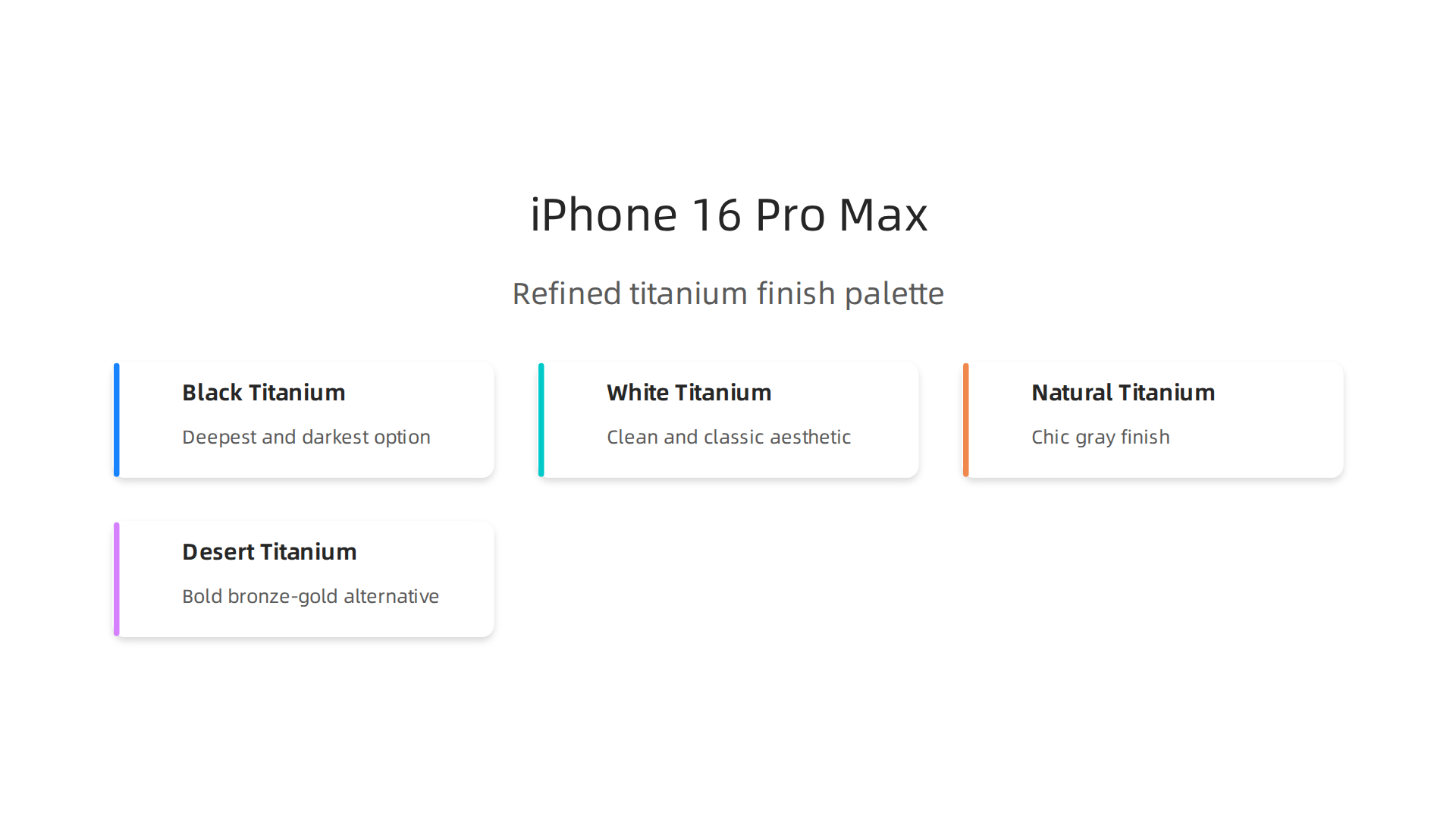
According to a detailed breakdown of every Pro color, Desert Titanium is the only truly fresh shade this year. It replaced the Blue Titanium option from the iPhone 15 Pro series. In person, it sits somewhere between a warm bronze and a subtle gold, giving the phone a sophisticated look that shifts depending on the light.
If you followed the early rumors, you might have expected names like Space Black, Silver, or Deep Purple to show up in the 2026 lineup. Those names carry a lot of nostalgia, especially for longtime Apple fans. But Apple decided to stick with the titanium series for the Pro models this cycle. The familiar Natural Titanium returns with its chic gray finish, and the White Titanium remains as clean and classic as ever. The Black Titanium leans toward a true space black, offering the deepest and darkest option in the range.
This focus on metallic shades over bright colors tells us Apple is targeting people who value understated luxury. However, if you are hoping for a bigger design shakeup next time, rumors are already heating up. You can explore the latest iphone 17 pro rumors to see what might be coming down the road.

Beyond the colors, the iPhone 16 Pro Max received real design improvements. The titanium frame is noticeably lighter than the stainless steel used in older models. The bezels are thinner too, giving you more screen without making the phone wider. The camera bump was also redesigned to fit the new sensor array. As noted in Apple’s official announcement, the build quality combines a microblasted titanium frame with a tough glass back for a feel that is both premium and durable.
Does the color you pick affect resale value? Yes, it can. Black and Natural Titanium models historically hold strong value because they appeal to the widest audience and hide everyday wear well. Desert Titanium is brand new and less common, so it might attract a premium from collectors later on. According to a color trend analysis for 2026, black still dominates overall search interest, but unique shades like Desert Titanium generate the most excitement among early adopters.
If you are coming from an older phone, the jump to the 16 Pro Max is huge. Even the iPhone 15 128GB in 2026 still runs well, but you miss the titanium build, the improved camera system, and the richer battery life. Upgrading now means locking in one of these four colors for the next few years.
Apple’s approach to the iPhone 16 Pro Max colors feels intentional. Instead of chasing every passing trend, they refined a palette that looks cohesive, premium, and timeless. Whether you choose the bold Desert Titanium or the classic Black Titanium, you are getting a device that looks as good as it performs.
Performance and Battery: A18 Pro and Real-World Usage
You picked your favorite shade from the four titanium finishes, and that color will be part of your daily carry for years. But the iphone 16 pro max colors are only the beginning of what this phone offers. The real magic lives under the glass, inside the A18 Pro chip. This is the heart of the device, and it changes how fast everything feels.
How Fast Is the A18 Pro Really?
The A18 Pro delivers a 15 to 20 percent jump in both CPU and GPU speed compared to the A17 Pro inside the iPhone 15 Pro Max. That number might not sound huge, but in practice it makes every interaction smoother. Apps open instantly. 4K video exports finish in seconds. Heavy multitasking with a dozen open apps never slows down.
According to the first A18 Pro benchmarks published by Macworld, the chip scored around 3,409 in single-core performance on Geekbench 6. That single-core score actually beats the M1 MacBook Air. The multi-core score hit roughly 8,492, compared to 7,158 on the iPhone 15 Pro Max. Those are real gains you can feel.
So what do those numbers mean when you actually use the phone? When you jump from Instagram into a heavy browser window and then into a navigation app, the iPhone 16 Pro Max never stutters. When you record ProRes video and edit it on the device, the A18 Pro handles it like a desktop computer. The chip uses a 3-nanometer process with two high-performance cores and four efficiency cores. That split is important. The phone uses low power for simple tasks like checking email and only cranks up the power when you need it.
Battery Life That Keeps Going
The efficiency gains from the A18 Pro pair perfectly with a slightly larger battery. Together they add roughly two extra hours of usage compared to the iPhone 15 Pro Max. For most people, that means a full day of heavy use without reaching for a charger.

You can stream video for hours, take long GPS walks, play demanding games, and still have charge left at bedtime. The ProMotion display helps too. It can drop its refresh rate down to 1Hz when you are looking at a static screen. That saves power without you noticing any difference in smoothness.
The phone also supports faster charging over both USB-C and MagSafe. When you do need to top up, it takes less time than before. Combined with the A18 Pro’s smart power management, the iPhone 16 Pro Max is one of the most battery-efficient flagships you can buy in 2026.
How It Compares to Android Rivals
The Samsung Galaxy S25 Plus uses a Snapdragon chip that can match the A18 Pro in short bursts. But Apple’s advantage shows under sustained load. The A18 Pro maintains peak performance for much longer during gaming sessions or long video exports. Better thermal management inside the titanium frame means the phone stays fast instead of throttling down.
Apple’s tight integration between hardware and software also plays a role. iOS is built specifically for this chip, so every optimization is tuned to the A18 Pro. Android phones have to work with a wider range of processors, making it harder to match that level of polish.
The Upgrade Question
If you are using an iPhone 15 Pro Max right now, the upgrade brings a clear jump in both speed and battery life. If you are coming from something older, the difference is massive. Even the iPhone 15 128GB in 2026 still runs well for everyday tasks. But you miss the A18 Pro’s raw power, the extra battery hours, and the improved camera processing that this chip enables.
For context on how far iPhone chips have come since the early days, check out the complete history of the iPhone from 2007 to iPhone 17 in 2026.
It shows how each generation built on the last one.
The A18 Pro makes the iPhone 16 Pro Max feel fast right now and ready for the next several years of updates. Whether you bought it for the Desert Titanium hue or the raw performance, the chip inside delivers on every promise.
Camera System: Pro-Level Photography and Videography
The A18 Pro chip does more than just make everything fast. It also powers one of the most advanced camera systems Apple has ever built. No matter which of the iphone 16 pro max colors you picked, the three lenses on the back are identical and incredibly capable. Let’s walk through what they can do.
Three Lenses, Three Upgrades
The main camera stays at 48 megapixels, but it uses a second-generation sensor that captures more light.
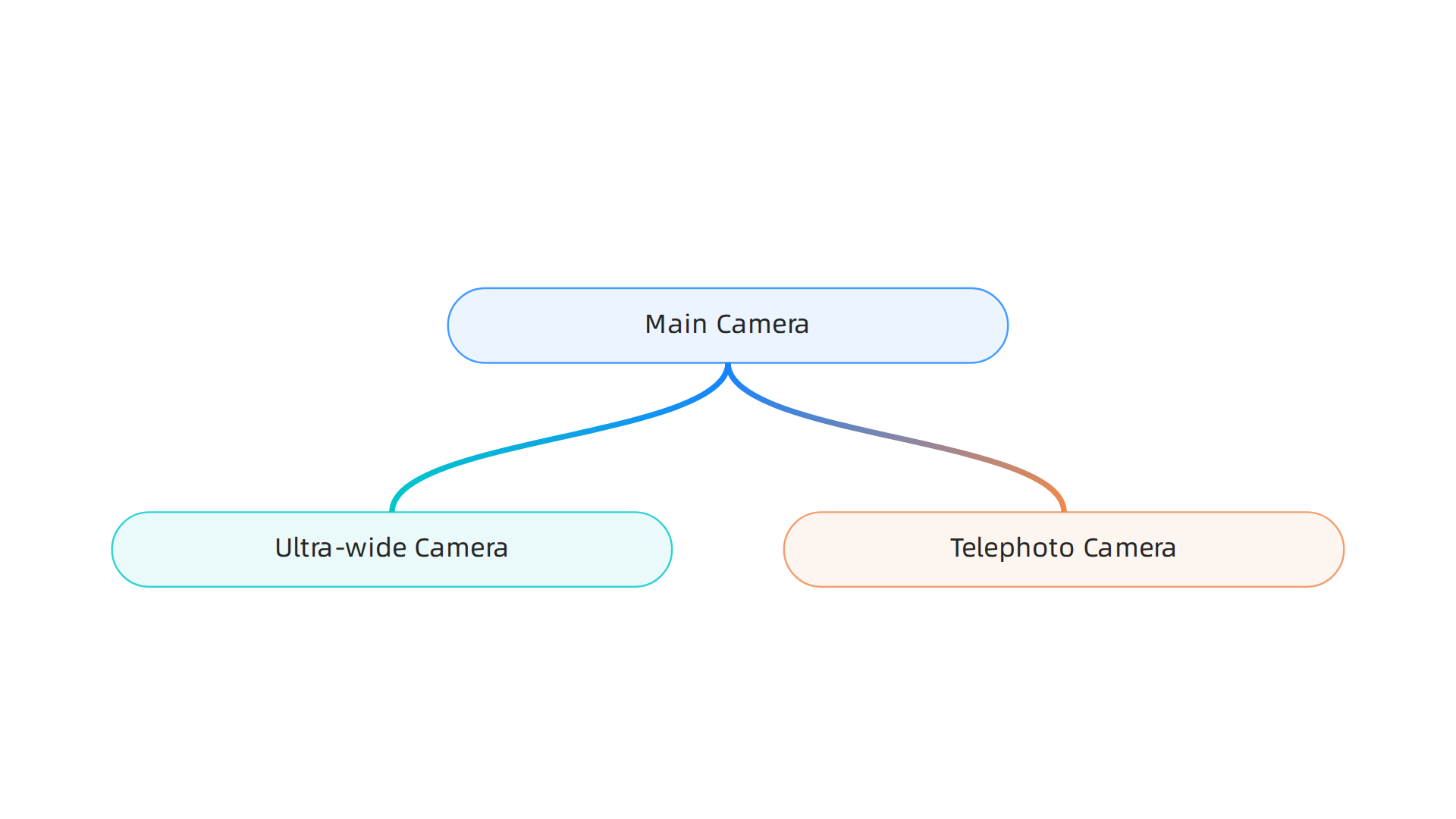
You get a 24mm equivalent f/1.78 aperture lens with sensor-shift optical image stabilization. That means less blur in low light and smoother video even when you are walking. According to the iPhone 16 Pro Max tech specs on Apple’s support page, the main sensor also enables 2x telephoto at 48mm by cropping into the center, giving you a lossless zoom without needing a separate lens.
The ultra-wide camera got the biggest upgrade this year. It jumps from 12 megapixels on the iPhone 15 Pro Max to 48 megapixels. That is a huge leap. It has a 13mm equivalent f/2.2 aperture and a 120-degree field of view. You can now capture ultra-wide shots with much more detail, and it works better in lower light too.
The telephoto camera is a 12-megapixel periscope lens with 5x optical zoom, equivalent to 120mm. This was exclusive to the iPhone 15 Pro Max last year, but now both the iPhone 16 Pro and Pro Max have it. It uses a tetraprism design with 3D sensor-shift stabilization, so your zoomed shots stay sharp.
Together, these three lenses give you a 10x optical zoom range (from 0.5x to 5x), and digital zoom goes up to 25x. The DxOMark iPhone 16 Pro Max camera test results rated the camera among the best in the world, praising its consistent color and detail across all lenses.
Smarter Photos Without the Work
Computational photography is where Apple really shines. Smart HDR 6 uses AI to balance highlights and shadows better than before. Faces look natural even against a bright sky. Night mode gets a boost too. The larger sensor on the main camera and the brighter aperture on the ultra-wide mean you can shoot in dimmer conditions and still get clear, noise-free images.
You also get new editing tools powered by Apple Intelligence. The Clean Up tool lets you remove unwanted objects from photos by simply tapping or circling them. It works surprisingly well for a phone. And if you shoot in ProRAW at 48 megapixels, you have incredible flexibility to adjust exposure, color, and detail later in apps like Lightroom.
Video Recording Gets a Big Bump
For video creators, the iPhone 16 Pro Max is a serious tool. It now supports 8K recording at 30 frames per second. That is four times the resolution of 4K, giving you the ability to crop in or create high-quality stills from video. The A18 Pro handles the massive data stream without dropping frames.
Stabilization is improved across all lenses. The combination of sensor-shift OIS and advanced gyroscopes keeps footage smooth even when you are moving quickly. You also get ProRes Log recording, which captures a flat color profile. That gives you more room to grade the video in post-production, matching professional cinema cameras.
If you want to protect your investment in this camera system, a good case goes a long way. Check out our list of the 10 best iPhone 16 Pro Max MagSafe cases in 2026 for options that keep your phone safe without blocking the lenses.
How It Stacks Up Against the Competition
The Samsung Galaxy S25 Plus has a 200-megapixel main sensor, but megapixels are not everything. The iPhone 16 Pro Max’s larger individual pixels and superior image processing often produce more natural-looking photos, especially in tricky lighting. Video is where Apple still leads by a clear margin. No Android phone matches the iPhone’s combination of stabilization, color accuracy, and ProRes support.
Final Thoughts on the Camera
Whether you are a casual shooter or a serious creator, the iPhone 16 Pro Max gives you tools that were once reserved for dedicated cameras.

The triple-lens system, powered by the A18 Pro and Apple Intelligence, makes taking great photos easier than ever. And with 8K video and ProRes Log, you can produce professional content right from your pocket.
Software and AI Features: iOS 18 and Beyond
All that camera hardware is impressive, but the software running underneath is what makes the iPhone 16 Pro Max truly smart. iOS 18 brings Apple Intelligence, a suite of AI tools that run right on your device. And the best part? It works no matter which of the iphone 16 pro max colors you chose.
What Apple Intelligence Actually Does
Apple Intelligence is not just a marketing name. It is a real set of features that help you write, summarize, edit photos, and interact with your phone in smarter ways. According to a complete Apple Intelligence features guide from PhoneArena, the system rolled out in phases starting with iOS 18.1 and kept growing through 18.2 and beyond.
Here are the highlights you will actually use:
Writing Tools let you proofread, rewrite, or summarize text anywhere. You can make an email sound more professional or turn a long message into a quick bullet list. It works in Mail, Notes, Messages, and even third-party apps.
Photo Clean Up is the object removal tool we already touched on in the camera section. But it is powered by Apple Intelligence, not just standard editing. The phone analyzes the scene and suggests items to remove. You tap or circle them, and they disappear.
Notification Summaries save you time. When a bunch of messages pile up, your iPhone creates a short one-sentence summary of what was said. You get the gist without opening each one.
Siri got a major upgrade too. The voice assistant now understands you better even if you stumble over your words. You can also type to Siri instead of speaking. And it can answer questions about your own device, like how to scan a QR code, with step-by-step instructions pulled directly from the phone.
Privacy First, Always
Here is the thing that makes Apple’s approach different from most competitors. Almost all of these AI features run on the device itself using the Neural Engine inside the A18 Pro chip. As Apple explained in their official newsroom announcement about Apple Intelligence availability, your data never leaves your phone for everyday tasks.
For tougher requests that need more power, Apple uses something called Private Cloud Compute. Your data is processed on Apple’s own servers built with Apple silicon, and it is never stored or shared. Independent security experts can inspect that code to verify the privacy promise. That is a level of transparency no other company offers.
Third-Party Apps Get Smarter Too
Developers are already integrating these AI capabilities into their own apps. The ChatGPT integration inside Siri and Writing Tools is the biggest example. You can ask Siri to generate a poem or create an image, and it taps into ChatGPT without you leaving the conversation. It is all optional and off by default, so you stay in control.
Productivity apps like Pages and Keynote now offer AI-assisted writing and slide creation. Your calendar app can pull dates from posters you photograph. Even the Camera Control button on the iPhone 16 Pro Max uses Visual Intelligence to identify plants, animals, and landmarks just by pointing.
For readers who want to stay ahead of all these rapid AI changes, keeping up daily can feel like a full-time job. That is exactly why the team behind Consumer Tech News Today created The AI Newsletter Worth Reading. It delivers clear, daily AI updates straight to your inbox so you never miss what matters.
Looking Ahead
Apple Intelligence is still evolving. Features like Genmoji for creating custom emojis and Image Playground for generating images are rolling out through 2026. But even today, the iPhone 16 Pro Max with iOS 18 gives you tools that were science fiction just a couple of years ago. And they all respect your privacy.
If you are curious how earlier iPhone models compare, you might enjoy our look at how the iPhone 17 Pro Reddit insights reveal what real users are saying about rumored features and what that means for the future of the lineup.
Future iPhone Models: What to Expect in 2027 and Beyond
The iPhone 16 Pro Max is a powerhouse right now, but Apple never rests. While you might be deciding between your favorite iPhone 16 Pro Max colors, the company’s roadmap stretches far into the future. By 2027 and beyond, we could see some dramatic changes that make today’s flagships look almost ordinary.
Under-Display Face ID Is Finally Coming
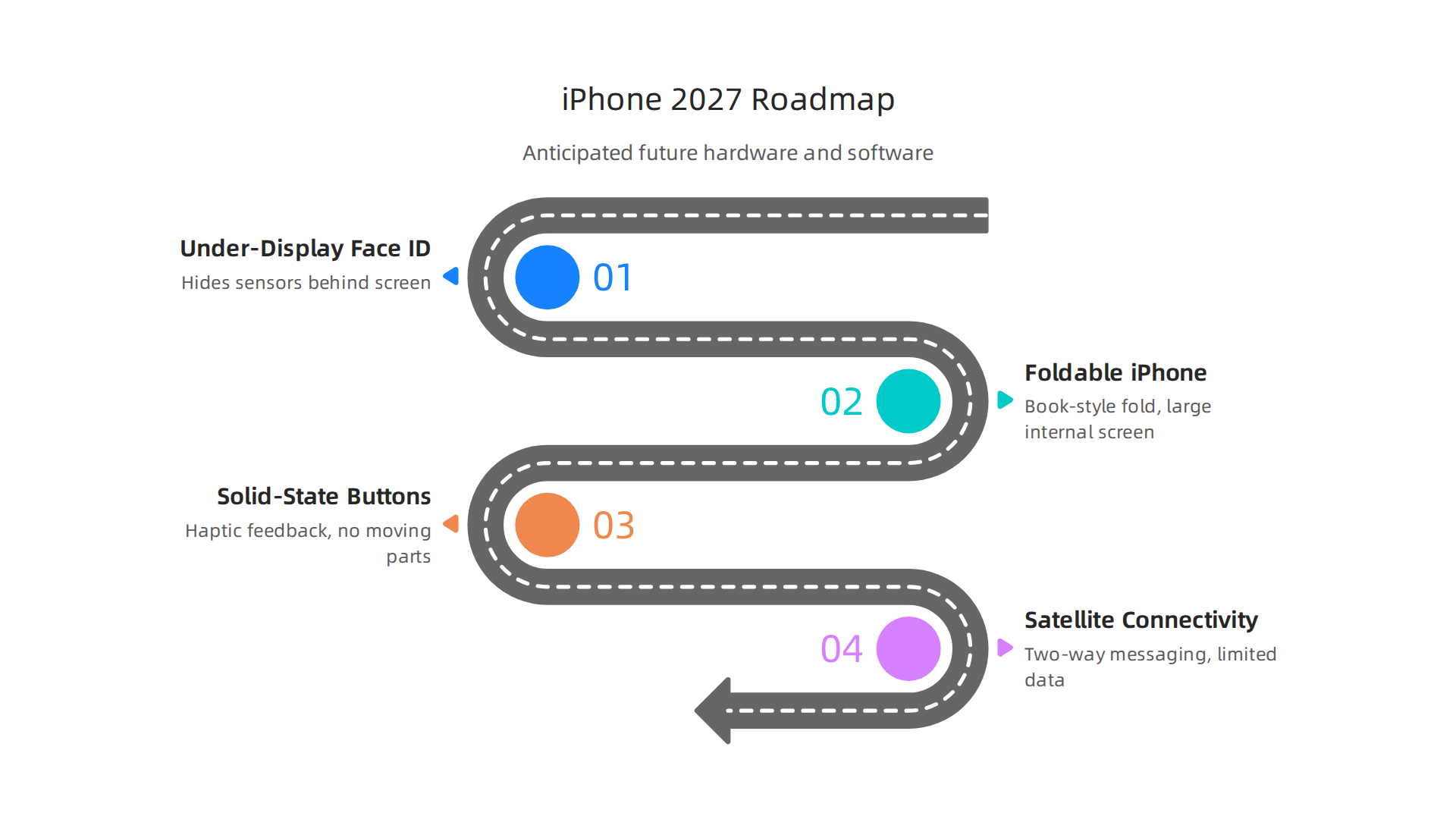
One of the biggest rumored upgrades is under-display Face ID. For years, Apple has been working to hide the TrueDepth camera sensors behind the screen. Recent leaks point to the iPhone 18 Pro line being the first to get this technology. According to a report from MacRumors, the iPhone 18 Pro models are again rumored to feature under-screen Face ID. Instead of a Dynamic Island cutout, the front camera would sit in a small hole in the top corner. The rest of the display would be completely uninterrupted. This would give you a true full-screen experience without the notch or pill.
A Foldable iPhone Might Finally Arrive
After years of rumors, Apple’s first foldable iPhone could launch around 2027. That would line up with the iPhone’s 20th anniversary. Early reports suggest a book-style design with a 7.76-inch inner screen and a 5.49-inch outer display. How would Face ID work on a foldable? One leak says the device could use a hole-punch camera on the folding screen and a Touch ID power button instead of under-display Face ID. However, another report from CNET suggests the foldable iPhone may have Face ID embedded in the screen. The debate is still ongoing, but one thing is clear: Apple is testing multiple approaches.
Solid-State Buttons and Better Satellite Connectivity
Apple is also reportedly developing a solid-state button design. Instead of physical buttons that click, these would use haptic feedback. The volume and power buttons would feel like they press but have no moving parts. This would improve water resistance and durability. You might see this first on an upcoming Pro model.
Enhanced satellite connectivity is another area of focus. The current satellite SOS feature works for emergencies, but future iPhones could support two-way messaging and even limited data over satellite. This would be especially useful in remote areas or during travel.
The Longer View: Autonomous Chips and AR Glasses
Looking even further ahead, Apple’s long-term roadmap includes a fully autonomous driving chip and possible AR glasses integration. While the Apple Car project has stalled, the company continues to develop custom silicon that could power future transportation. And with Apple Vision Pro already shipping, a lighter, more affordable pair of AR glasses could connect directly to your iPhone by the end of the decade.
Apple’s pattern is clear. It takes time to perfect new technology, but when it arrives, it changes everything. To see how past breakthroughs shaped today’s iPhones, check out how the iPhone X legacy still drives smartphone innovation in 2026. The future is coming faster than you think.
Summary
This article breaks down everything that matters when choosing and living with an iPhone 16 Pro Max, from the new Desert Titanium finish to the hardware, camera, battery and software improvements that shape daily use. It explains Apple’s four titanium colors and why Desert Titanium stands out, then walks through the A18 Pro chip’s real-world performance and roughly two extra hours of battery life. The piece details major camera upgrades — a 48MP ultra‑wide, improved main sensor, 5x periscope telephoto and 8K video — plus Apple Intelligence features in iOS 18 that add on‑device AI tools while keeping privacy intact. You’ll get clear comparisons to prior iPhones and Android rivals, advice on whether to upgrade now, and practical notes on protecting your investment with MagSafe cases. The article also previews likely future changes like under‑display Face ID, foldables and solid‑state buttons so you can decide with confidence today and understand what may come next.