Why revisit the iPhone 6 in 2026?
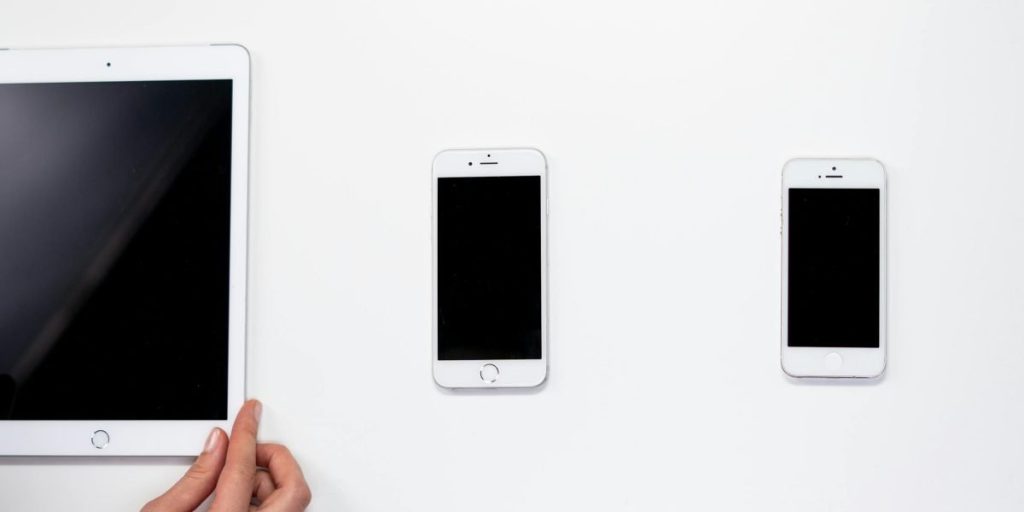
Think back to 2014. That’s when the original iphone 6 first came out. It was a really big deal for smartphones. It brought a new, bigger design and changed how everyone thought about what a phone could be. It set the stage for many phones that came after it, even newer ones like the Samsung Galaxy Note 9.
But here we are in 2026. Why would we even talk about an old phone like the iphone 6 when there are so many new devices, like the iPhone 17 Pro, and everyone is buying a new phone case iPhone 15 for their latest device? Well, things are changing. People are keeping their phones for longer these days. In fact, many folks now upgrade their smartphone about every 3.5 years, so older models are staying in use longer than before, according to How Often Do People Upgrade Their Phone? (2026 Statistics).
This article will take a close, fair look at the iphone 6 in 2026. We want to know if it still has any practical value. Can it handle your everyday tasks? Does it make sense to use one, or are you better off with something newer? We will dive deep into its performance, features, and overall usefulness today. We won’t just say it’s old. We will see where the iphone 6 still shines and where it just can’t keep up in today’s fast tech world.
Want to stay on top of all the latest tech news, including how AI is changing our devices? The AI Newsletter Worth Reading delivers clear daily updates.
The iPhone 6’s historical impact and why it still matters
The iPhone 6 really changed phones. Before it, iPhones were smaller. But the iphone 6 came with a much bigger screen and a new, slim body with rounded edges.

This design was so popular that many other phone makers, even ones like Samsung with its popular Galaxy line, started making phones that looked similar. The larger screen made it easier to do many things, like watching videos, playing games, or reading. It truly set a new standard for how smartphones should look and feel in your hand.
It also brought important new features. It had Touch ID, which let you unlock your phone with your fingerprint. This was a big step for phone security and convenience, moving beyond simple passcodes. The iphone 6 also helped launch Apple Pay, making it easier and safer to pay for things with just your phone. These were not just small changes. They became standard parts of almost every smartphone we use today, even advanced ones like the latest iPhone 17 Pro models.
Even in 2026, the iphone 6 still matters because it helped shape the phones we have now. This means older phones like the iphone 6 still influence how new phones are made and even how we keep them working. For example, the lasting demand for these older models means there’s a strong market for parts and repairs. This helps reduce electronic waste, too. Many people today might look for a refurbished iphone 6 or a similar older model if they need a simple, reliable phone without spending a lot of money. The "iPhone 6 Guide: Should You Still Use or Buy One in 2026?" points out that there’s still practical value in these devices for certain users. This ongoing demand for legacy devices highlights their role in today’s tech world.
However, older phones do face challenges. One big one is getting software updates. Phone makers often stop sending new software to very old models after a few years. This can make them less secure over time, as new threats emerge, and unable to run the newest apps. For example, experts explain that limited software support from manufacturers is a key challenge for keeping old smartphones usable and secure for long periods, as seen in research discussing Opportunities and Challenges in Securely Reusing and Refurbishing Smartphones. This lack of updates means users of an older iphone 6 might miss out on new features and important security fixes. Despite this, understanding the iphone 6 today helps us appreciate how technology grows and changes. It teaches us about the lasting impact of groundbreaking designs and features, even when newer models like the iPhone 13 or even an iPhone 15 128GB in 2026 outperforms newer models for less money are available. Its place in history is secure, and its influence continues to be felt throughout the modern smartphone world.
Technical limits in 2026: hardware, battery life, and performance
While the iPhone 6 was a big step forward when it first came out, older phones also face real physical limits. Beyond the software updates we talked about earlier, the actual parts inside the iphone 6 just aren’t built for what phones do in 2026.
Let’s look at the main parts. The iphone 6 has an Apple A8 chip, which is like its brain. It’s a dual-core processor that runs at about 1.4 GHz, meaning it can do about 1.4 billion simple tasks per second. Back then, this was fast! But today’s phones have much stronger brains with many more cores, like the advanced chips in new phones such as the iPhone 17 Pro models. For example, modern smartphones usually replace their components every 3.5 years, showing how quickly technology moves forward, as noted in reports on How Often Do People Upgrade Their Phone? (2026 Statistics).
Then there’s the RAM, which is like the phone’s short-term memory. The iphone 6 only has 1 GB of RAM. This is very little by today’s standards. Newer phones, including many from other brands like the Note 9 from years past or even current top Samsung tablets, often have 6 GB, 8 GB, or even more RAM. This bigger memory allows new phones to juggle many apps at once without slowing down. The amount of storage on an iphone 6 was also smaller, typically 16 GB, 64 GB, or 128 GB, which fills up fast with photos and videos today. You can find these details on the iPhone 6 Wikipedia page.
So, how does this affect using an iphone 6 in 2026?
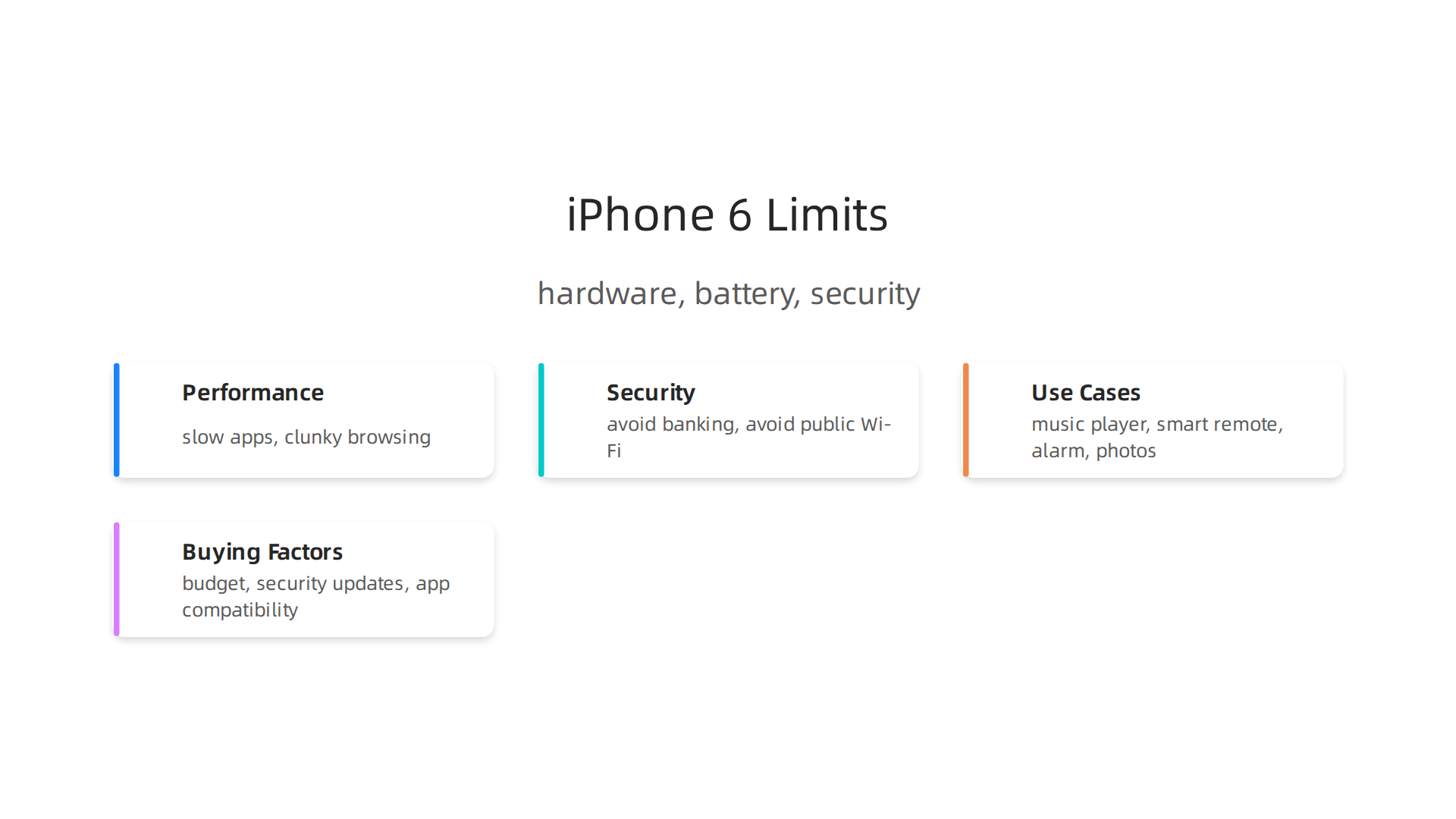
- Slow Apps: Many modern apps, especially popular social media or streaming apps, will load very slowly or crash often. Some newer apps might not even open at all because they need more power than the A8 chip can give.
- Web Browsing: Going online can feel clunky. Websites with lots of pictures or videos will take a long time to load, making simple tasks like looking up information frustrating.
- Video and Games: Watching high-quality videos might not work well, and playing anything beyond very simple games is usually impossible. The graphics simply aren’t powerful enough.
- Multitasking is Hard: If you try to switch between a few apps, the phone will likely slow down a lot or reload apps every time you open them. This is because of the small amount of RAM.
- Battery Life: Even if you replaced the battery in an iphone 6, its original design didn’t hold as much power as today’s phone batteries. Plus, running modern apps takes more energy, draining the older battery even faster. You’ll find yourself needing to charge it many times throughout the day.
In short, the hardware of the iphone 6 is like a small, older car trying to keep up with current sports cars on a busy highway. It just can’t handle the speed and demands of today’s digital world.
Trying to use it for anything complex, like running the latest AI features in apps, would be impossible. If you are interested in how technology continues to evolve, especially with new developments in artificial intelligence, you might find valuable insights in The AI Newsletter Worth Reading to keep up with the latest advancements. Comparing the iphone 6 to newer devices like the iPhone 17 Pro really shows how far phone technology has come, from basic functions to powerful mobile computers.
Beyond the physical parts we just talked about, the software on your iPhone 6 also faces big limits, especially when it comes to keeping your information safe in 2026.
Software support and security: Is it safe to keep using an iPhone 6?
Apple, like other phone makers, stops giving updates to its older phones after some time. For the iPhone 6, this means it no longer gets the newest iOS software. The last official update for the iPhone 6 was iOS 12.5.8, which came out on January 26, 2026. This means your phone won’t get iOS 13, 14, 15, or any newer versions.
Here’s why that’s a problem:
- No New Security Fixes: Imagine your phone’s software as a house with locks. Over time, clever people find small weak spots in those locks. Software updates are like getting new, stronger locks. Without these updates, your iPhone 6 has old locks that hackers know how to pick. This leaves your personal information, like bank details or photos, at risk. Experts agree that limited software support from manufacturers is a big challenge for keeping older devices safe and secure, as discussed in research on Opportunities and Challenges in Securely Reusing and ….
- App Problems: Most new apps need the newest iOS software to work well. This means many of your favorite apps, like social media or banking apps, might not even open on an iPhone 6. Or, if they do open, they might be very old versions with missing features or constant crashes. This also affects how well some games might run, especially compared to newer phones like the Note 9.
What to do if you still use an iPhone 6
If you’re still using an iPhone 6 in 2026, it’s really important to be careful. Here are some simple steps to stay safer:
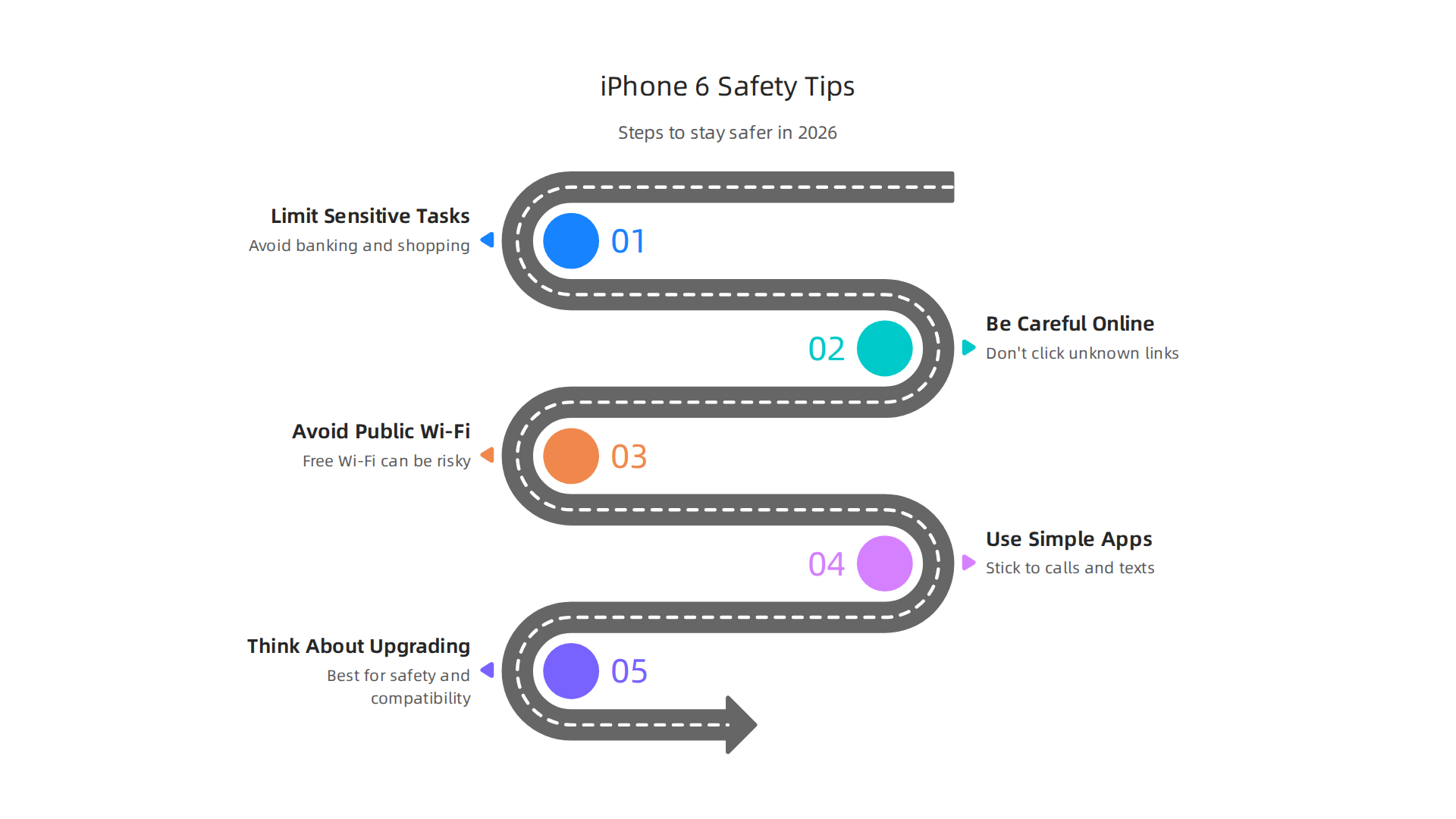
- Limit Sensitive Tasks: Try not to do important things like online banking, shopping, or checking private emails on your iPhone 6. Use a newer, more secure device for these tasks.
- Be Careful Online: Don’t click on links from people you don’t know, and be very careful with messages that ask for your personal details.
- Avoid Public Wi-Fi: Free Wi-Fi at coffee shops or airports can be risky. It’s easier for others to snoop on your phone when it’s not protected by the latest security updates.
- Use Simple Apps: Stick to basic things like making calls, sending text messages, or using apps that don’t hold sensitive data.
- Think About Upgrading: The best way to stay safe and enjoy modern apps is to get a newer phone. Many newer iPhones offer much better security and performance. For example, a iPhone 15 128GB in 2026 outperforms newer models for less money and gives you access to all the latest features. If you are open to other brands, you might also consider checking out options like the best Samsung tablet 2026 S11 FE and A series compared for a more modern experience.
Using an unsupported phone like the iPhone 6 carries real risks. Keeping your information secure in today’s digital world means having a device that gets regular software and security updates.
Even with the security worries and older software, an iPhone 6 in 2026 isn’t totally useless. It can still be a good fit for certain simple jobs. Think of it like a trustworthy old tool that might not be great for everything, but still has its special uses. The market for older, used phones is actually growing, as many people look for good value and ways to reuse items instead of buying new ones. This trend shows that refurbished and second-hand items are gaining popularity with consumers, as highlighted in a report on the second-hand marketplace.
Here are some smart ways an iPhone 6 can still find a place in your life:
As a Second Phone or Backup Device
Your iPhone 6 might not be your main phone anymore, but it can be a trusty backup.
- Emergency Phone: Keep it charged in your car or at home for emergencies. It can still make calls and send texts if your main phone runs out of battery or gets lost.
- Travel Phone: If you’re going somewhere risky and don’t want to bring your expensive new phone, the iPhone 6 can be a good choice. You won’t worry as much if it gets lost or stolen.
- Car Entertainment: Use it just for music or podcasts in your car. It can connect to your car’s system for tunes without draining your main phone’s battery. Just make sure to download your music beforehand, as streaming might not be the best experience.
For Kids or Older Family Members
An iPhone 6 can be a simple, affordable option for someone who just needs basic phone features.
- Child’s First Phone: It’s a great way to introduce a child to phone use without spending a lot of money. They can learn responsibility and basic communication. Plus, if it breaks, it’s not as big a loss as a new phone. You can also keep it limited to simple games and educational apps.
- Basic Communication for Seniors: For older family members who only need to make calls, send texts, or use a few simple apps, the familiar Apple layout can be easy to learn. Just remember the security advice from before: keep sensitive info off the device.
Dedicated Device for Specific Tasks
Think of your iPhone 6 as a single-purpose tool.
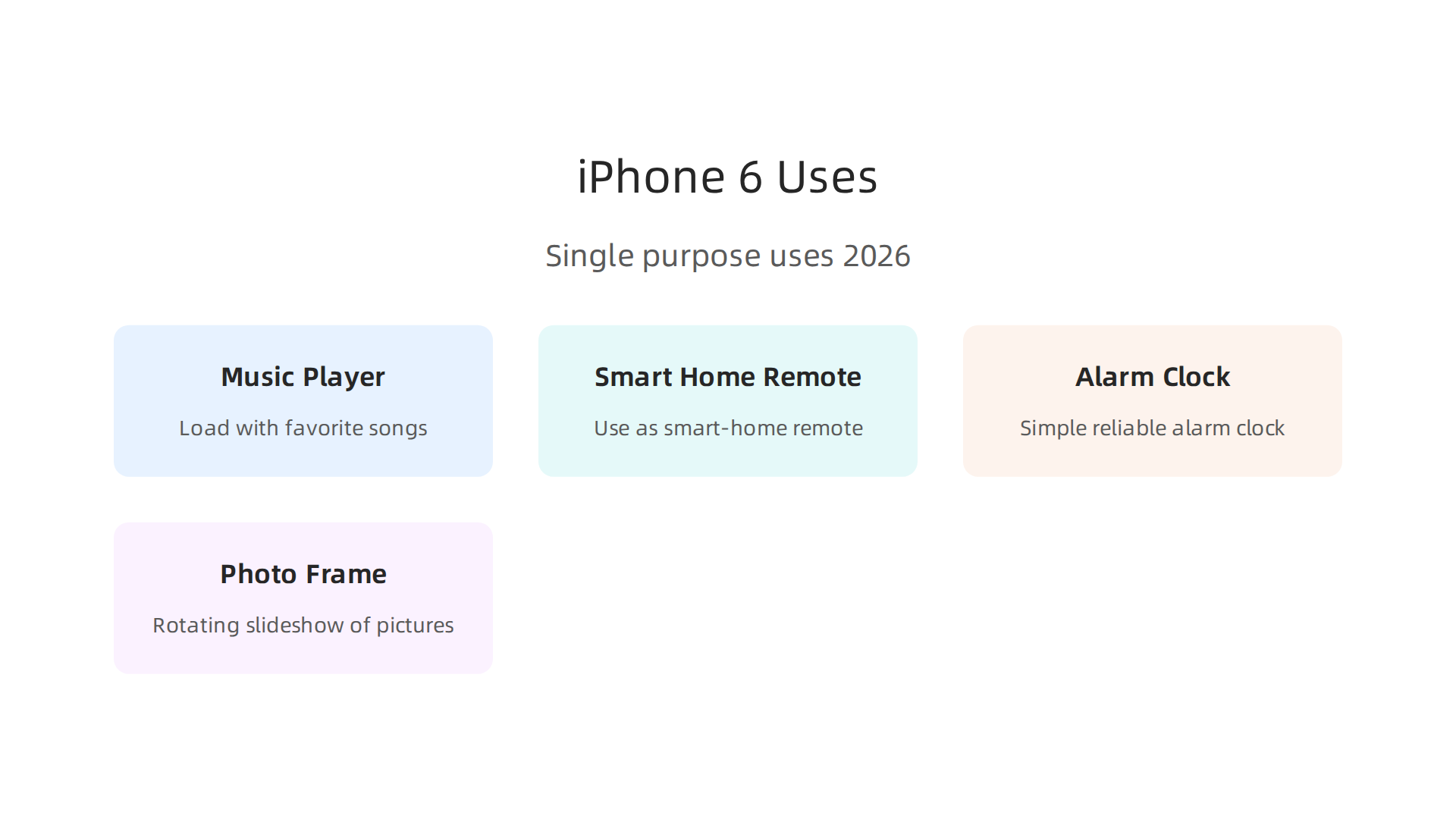
- Music Player: Load it up with your favorite songs and use it as a dedicated music player. This saves space and battery on your main device. It’s like having a modern iPod.
- Smart Home Remote: If you have smart lights or other smart devices, you can use the iPhone 6 as a remote control. It can stay plugged in and always ready to turn lights on or off.
- Alarm Clock/Timer: A simple and reliable alarm clock that doesn’t need to be updated or connected to the internet all the time.
- Digital Photo Frame: Use it to show a rotating slideshow of your favorite pictures when it’s charging.
It’s important to remember that using an iPhone 6 in 2026 means you’re trading off the latest features and security for its low cost and basic functions. When considering older phones like the iPhone 6, it’s helpful to compare them with newer models to weigh the real-world usage and cost, as discussed in a guide to Refurbished vs New iPhone in 2026. This can help you decide if it’s truly worth keeping or if it’s time to upgrade. While its security features are outdated, for these very specific uses, an iPhone 6 can still be a handy tool.
When your iPhone 6 has served its purpose in all those ways, or if you decide it’s simply time to move on, you have choices beyond just tossing it away. These choices are good for your wallet and for our planet.
Resale Value and Why It Matters
Even an older phone like the iPhone 6 still holds some value in 2026. The market for second-hand electronics is growing, with many people looking for affordable gadgets. So, selling your old phone can give it a new life and put a little money back in your pocket. This trend of buying and selling used items is becoming very popular, as people look for good deals and ways to be more eco-friendly, a shift noted in the State of Fashion 2026 report by McKinsey, which highlights the general rise of the resale market.
You can often sell your iPhone 6 to online stores that buy used phones, or through popular marketplace apps. Even if it’s not worth much, every little bit helps.
Responsible Recycling for a Better Environment
If your iPhone 6 is too old or broken to sell, recycling it is the next best step. Throwing old electronics in the trash can harm the environment because phones have materials that can pollute our earth. Recycling makes sure these materials are taken out safely and can be used again to make new things. Many phone companies and electronics stores have programs where you can drop off old devices for free. This helps keep harmful stuff out of landfills. The global mobile industry is always looking at ways to be more sustainable, as shown in the GSMA Global Mobile Trends 2026 overview.
Don’t Forget to Wipe Your Data
Before you sell or recycle your iPhone 6, it’s super important to erase all your personal information from it. This protects your photos, messages, and banking details. You can do this by going to Settings > General > Transfer or Reset iPhone > Erase All Content and Settings. Make sure to back up anything you want to keep first.
Repair or Replace?
Sometimes, you might wonder if it’s better to fix a broken iPhone 6 or just get a new phone. For an iPhone 6 in 2026, repairs might cost more than the phone is worth, especially for major issues. Deciding to repair versus replace often comes down to cost and what you need the phone to do. If you’re looking at newer, more efficient options, you might find that a phone like the iPhone 15 128GB in 2026 outperforms newer models for less money. Thinking about how to protect your next device, maybe with a strong phone case iPhone 15 style, can also help your next phone last longer.
Making Sustainable Choices
Choosing to sell or recycle your old iPhone 6 is part of a bigger movement towards being more mindful about what we buy and how we use it. Consumers in 2026 are increasingly thinking about the environmental impact of their choices, reflecting changes in What matters to today’s consumer 2026. By extending the life of devices through resale or ensuring proper recycling, we all help reduce waste and make a positive difference.
Making smart choices about your old iPhone 6, like whether to keep, sell, or recycle, is part of understanding the bigger picture of technology and its impact. To stay informed on these kinds of decisions and all the latest in AI and tech, make sure you get The AI Newsletter Worth Reading.
When you’re done with your old iPhone 6, it’s natural to think about what’s next. Should you buy a brand new, affordable smartphone, or get a refurbished older iPhone? This decision involves looking at how much things cost, how well the phone works, and if it will last you a long time.

Alternatives: Budget Modern Smartphones vs Refurbished iPhone 6
In 2026, the tech market offers many choices. You might be weighing a cheap new phone against a refurbished iPhone 6. Let’s break down what matters for each.
Cost and Value
A refurbished iPhone 6 will likely be very cheap. It offers the Apple experience for a low price. However, its low cost reflects its age. On the other hand, many new budget Android phones, like some in the Samsung Galaxy A-series or a Note 9 if you find it, can be bought new for a similar price or a little more. These new phones often come with a warranty and up-to-date software. When you look at refurbished phones, it’s important to understand the differences, as explained in the guide Refurbished vs New iPhone in 2026: Which One Makes More Sense?.
Performance and Speed
The iPhone 6 is pretty old in 2026. Its main brain, called the processor, and its memory are not as fast as even cheap new phones. This means apps might run slower, or some newer apps might not work at all. Newer budget smartphones, while not top-of-the-line, are built with current apps in mind. They usually handle everyday tasks like browsing, social media, and basic games much more smoothly than an iPhone 6.
Software and Security Updates
This is a big one. The iPhone 6 no longer gets new iOS updates. This means it misses out on new features and, more importantly, vital security fixes. Using a phone without current security updates can be risky for your personal information. New budget smartphones, even cheap ones, will usually get security updates for at least a few years. This keeps your phone safer from new threats. If you’re using an iPhone 6, it’s wise to consider its usability and security limits in 2026, as discussed in the iPhone 6 Guide: Should You Still Use or Buy One in 2026?.
Camera Quality and Apps
Older phones like the iPhone 6 have cameras that were good for their time, but they can’t compare to even basic cameras on new phones in 2026. If taking good pictures is important to you, a newer budget phone will almost certainly do better. Also, app compatibility is key. Some apps might stop working on the iPhone 6 over time, but a new budget phone will support the latest apps.
Making Your Decision
Here are some things to think about when choosing:
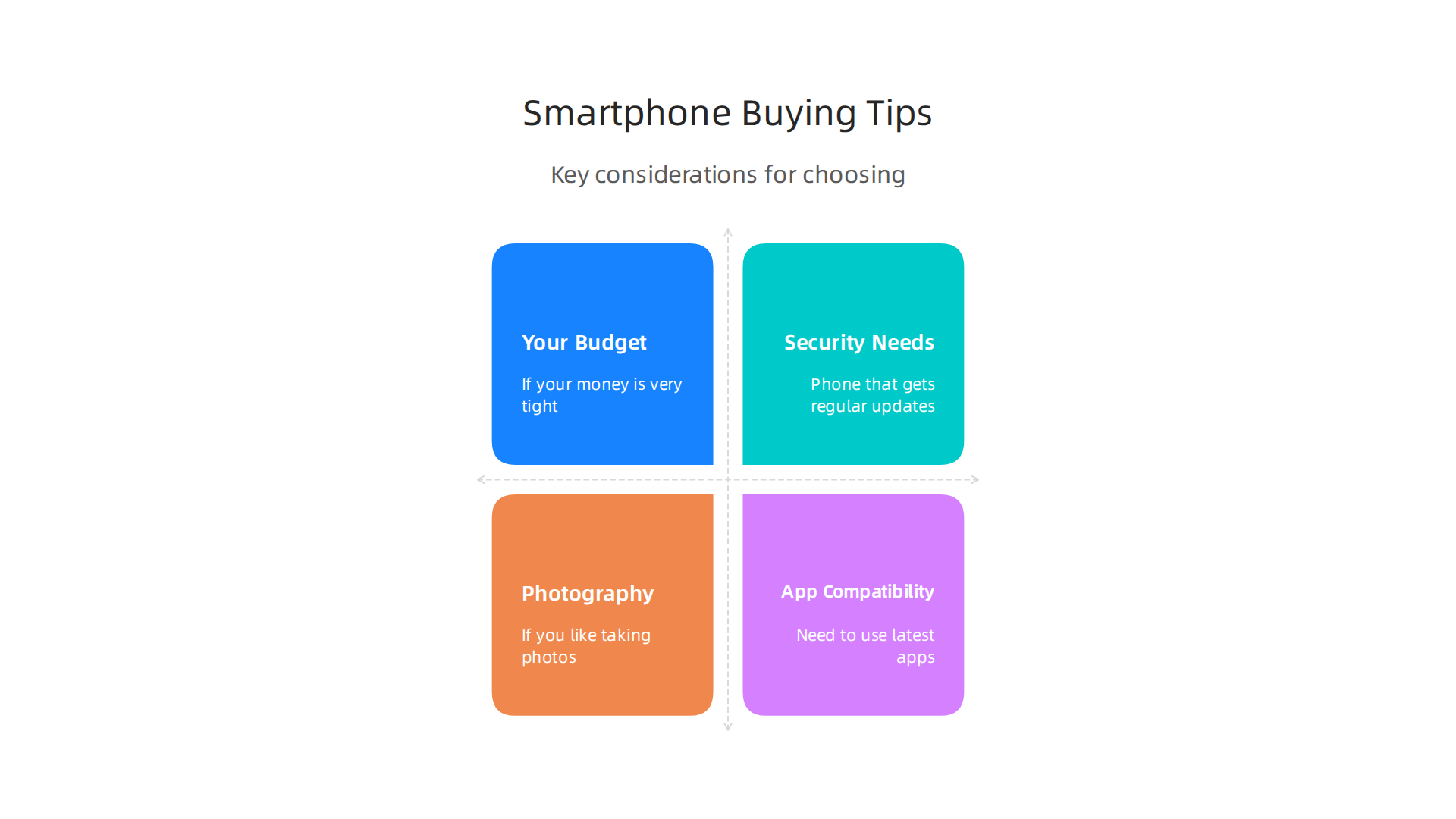
- Your Budget: If your money is very tight and you only need a phone for calls and texts, a refurbished iPhone 6 could be an option. But for slightly more, a new budget smartphone often gives better overall value.
- Security Needs: If you do online banking or use sensitive apps, choose a phone that gets regular security updates. A new budget smartphone is safer here.
- Photography: If you like taking photos, a newer budget phone will give you much better results.
- App Compatibility: If you need to use the latest apps, especially for work or school, a new budget smartphone is a must.
For those looking into newer iPhone models for comparison, you might also want to explore the Complete History of the iPhone to see how far they’ve come. And if you decide to upgrade to a newer model like an iPhone 13, remember to consider a good iPhone 13 case to protect your investment.
Summary
This article reevaluates the iPhone 6 in 2026 to give a clear, practical verdict on whether the decade‑old device still has value. It explains the phone’s historical impact, then walks through the technical limits—older A8 chip, 1 GB RAM, and weaker battery—that make modern apps, multitasking, and high‑quality media a poor fit. The piece also covers software and security concerns (the last update was iOS 12.5.8), and offers safe‑use advice if you keep one: avoid banking, skip public Wi‑Fi, and use it for low‑risk tasks. You’ll find specific ways to repurpose the handset (emergency phone, music player, smart‑home remote), guidance on selling or recycling, and how to decide between repairing, buying refurbished, or choosing a cheap new smartphone. The goal is to help readers make a smart, secure, and sustainable choice about an iPhone 6 today.