
Introduction: Navigating the Musk-shaped Tech Horizon
You wake up, and there is news about a new rocket launch, a self-driving taxi fleet growing, and an AI system that can read brain signals. All of this comes from one person: Elon. His companies touch nearly every corner of tech. From space travel to social media, from brain chips to electric trucks, the pace never slows.
Here is the thing. Keeping up with all these changes can feel impossible. You might wonder which updates actually matter for your daily life. Do you need to care about the latest self-driving software? What about those new gadgets coming soon? The information overload is real, and consumer trust in technology is shifting fast.
Recent stats show that less than a third of consumers trust AI to make decisions in their best interest. That is a big deal when AI is showing up in everything from your phone to your car.
This article cuts through the noise. We will look at the biggest moves across Elon’s empire in 2026. Think of it as your guide to understanding what these technologies mean for you. Whether you are eyeing the next smart device or just curious about where tech is heading, you will get a clear picture.
Want to stay ahead of the curve without the headache? Get clear daily AI updates from The Deep View Newsletter.
The State of Musk’s Empire: A 2026 Snapshot
It’s easy to think of Elon’s companies as separate islands. Tesla makes cars. SpaceX builds rockets. Neuralink works on brain chips. And X is a social platform. But here’s the thing. In 2026, these companies are acting more like one giant interconnected machine.
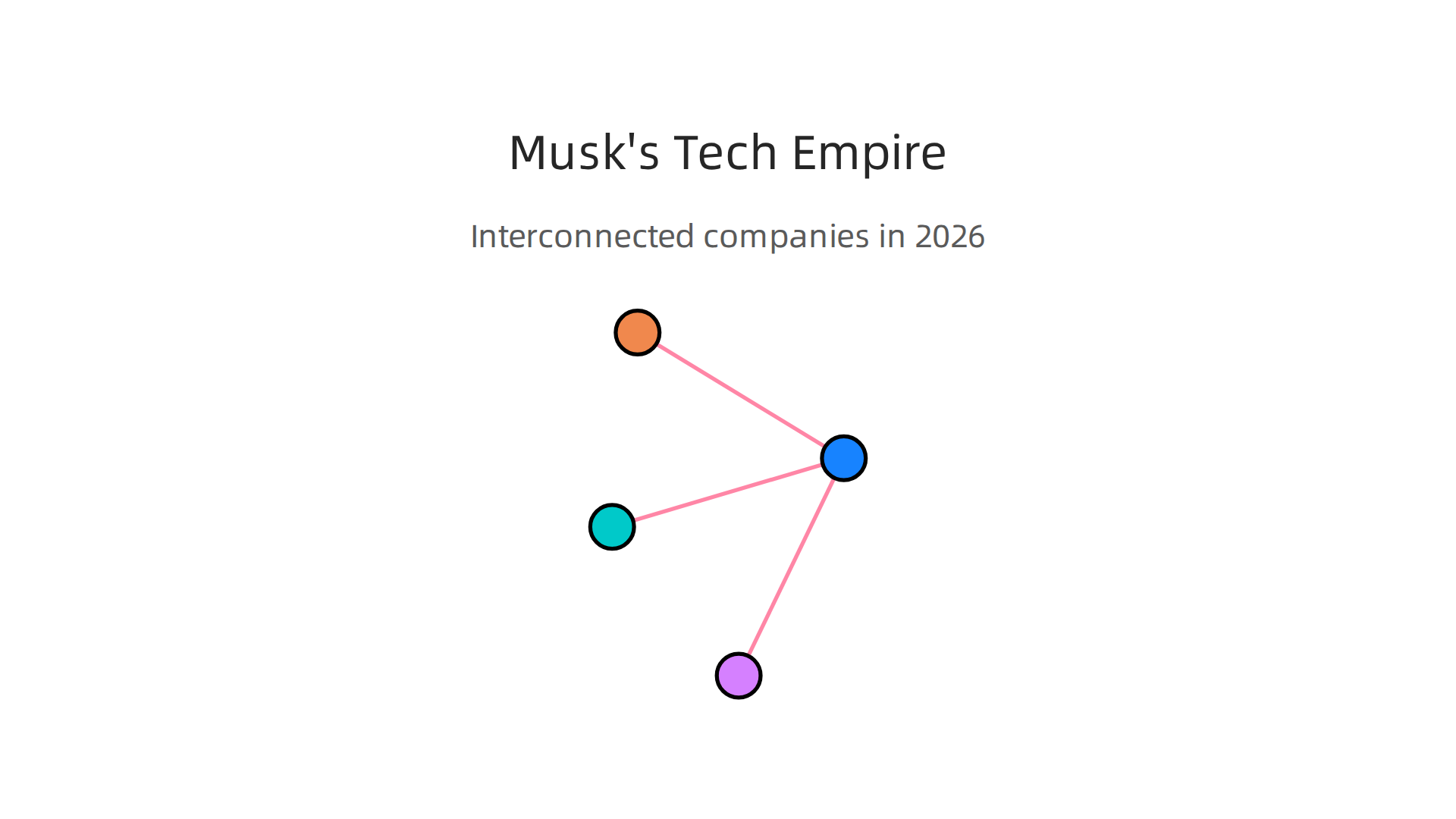

Each one feeds the others, and the results are reshaping what we think of as normal tech.
Let’s start with Tesla. The company is still the biggest piece of the empire. In the first quarter of 2026, Tesla produced over 408,000 vehicles and delivered over 358,000 of them, according to their official Q1 2026 update. That’s up from about 336,000 deliveries a year earlier, even though the overall auto market has been bumpy. Revenue also grew 16% year over year to $22.4 billion. And Tesla isn’t just about cars anymore. They deployed 8.8 GWh of energy storage in that same quarter. That’s a massive amount of battery power going into homes and businesses. The company is quietly becoming an energy giant.
SpaceX keeps pushing forward too. Starlink now covers most of the globe, bringing internet to places that never had it before. And Starship, the giant rocket, completed several test flights in the last year. This matters because Starlink is also becoming the backbone for other Musk companies.
Then there is Neuralink. The brain implant company got its first human patient in early 2026 and the results have been promising. A key detail often missed is that Neuralink uses Starlink for wireless connectivity. That link between space internet and brain chips shows how interdependent this empire really is.
xAI, Elon’s artificial intelligence company, powers Grok, which is now deeply integrated into X. You can use Grok for everything from answering questions to generating images. And Tesla’s self-driving software relies on similar AI models. So the AI built for one company flows into another.
Consumer trust in AI is still shaky. Recent surveys show that less than a third of consumers trust AI to make decisions in their best interest, according to CapTech’s 2025 Consumer Study. That is a real challenge for a world where AI is in your car, your social feed, and maybe soon your brain. But the technology keeps moving forward anyway.
Think about how the iPhone changed everything a decade and a half ago. We have a complete history of the iPhone from 2007 to iPhone 17 in 2026 that shows how one device can reshape an entire industry. Elon’s empire is doing something similar, but across multiple industries at once.
Keeping up with all these developments is tough. For a daily dose of what actually matters in AI and tech, without the hype, get clear daily AI updates from The Deep View Newsletter. It cuts through the noise so you can stay informed.
AI at the Core: How xAI and Grok Are Reshaping the Landscape
Think about the last time you asked your phone a question or got a movie recommendation. That was AI at work. Now imagine an AI that has real-time access to everything happening on X (formerly Twitter) and can answer you in seconds. That’s Grok, the AI from xAI, and it’s becoming one of the most talked-about tools in 2026.
Grok is built right into X. You can ask it about trending topics, news, or just about anything else. Unlike some other AIs that have delayed knowledge, Grok pulls from live conversations. That gives it an edge in speed and context. In fact, a comparison by Tech Insider found that Grok handles up to 1 million tokens of context and runs 33% faster than ChatGPT. That’s a big deal if you need quick answers.
But Grok isn’t just about speed. It has a personality. The model is known for being more direct and less filtered compared to competitors like ChatGPT and Gemini. As one review put it, Grok brings a "more uncensored personality" to the table. That appeals to users who want straight talk without corporate safety rails.
How does Grok stack up against the big names? OpenAI’s GPT-5.2 and Google’s Gemini 3 are also very powerful. Benchmarks show they trade blows on math and science tasks. But Grok’s secret weapon is its integration with the X ecosystem. While Gemini may be "the much smarter model" for complex reasoning, according to user reviews, Grok wins on real-time relevance and ease of access. xAI has also kept Grok mostly closed-source, which differs from the more open approaches of some rivals. That raises questions about transparency, but it also allows xAI to move fast.
For everyday users, Grok means smarter search, content generation, and even image creation, all from one app. For businesses, it offers a productivity boost. You can draft emails, summarize meetings, or analyze data without switching platforms. But there is a downside. Misinformation risks grow when AI can generate convincing posts or images instantly. The same speed that helps you find facts can also spread falsehoods. That is why understanding how these tools work is so important.
The smartphone revolution changed how we live. Now AI is doing the same. You can see how one device reshaped an industry in our complete history of the iPhone from 2007 to iPhone 17 in 2026. The pace of change today is even faster.
Keeping up with AI updates can feel like drinking from a fire hose. That is why so many people turn to a trusted daily source. For clear, honest AI news without the hype, get clear daily AI updates from The Deep View Newsletter. It helps you cut through the noise and focus on what actually matters.
The Human-Machine Frontier: Neuralink’s Milestones and Challenges
AI that talks to you is one thing. But what about an AI that talks directly to your brain? That is the promise of Neuralink, the brain-computer interface company started by elon Musk. And in 2026, this technology is moving faster than many people realize.
Think about how you interact with your phone or computer right now. You type, tap, or speak. Neuralink wants to skip all that. The goal is to let your thoughts control devices directly. It sounds like science fiction. But the company already has 21 human trial participants as of early 2026, and the results are stunning.
These patients were able to do things they could not do before. Some regained the ability to move a cursor with their minds. Others began typing out words just by thinking. One of the most exciting updates from Neuralink is the VOICE trial, which aims to restore speech for people with severe communication impairments. The FDA even gave Neuralink a Breakthrough Device Designation for this work.
The technical progress is impressive too. Neuralink has been refining its implants to use more electrodes with better resolution. Each tiny thread in the brain picks up signals from individual neurons. That gives the system a level of detail that earlier brain implants could not match. The company has also announced plans to ramp up production in 2026, aiming for "high-volume production" of its next-generation device.
But this journey has not been smooth. Getting FDA approval for human trials took years. The company finally got the green light in 2023 after addressing safety concerns. Since then, the pace has picked up. The PRIME study showed that patients could use the system right after surgery. Still, questions remain about long-term durability and security.
Here is the hard truth. Brain implants raise serious ethical questions. Who owns the data your brain generates?

What happens if someone hacks the implant? How safe is it to have wires in your brain for decades? These are not just hypothetical worries. They are real problems that researchers and regulators are working through right now.
The smartphone revolution changed how we live. But that change was slow compared to what is happening with brain-computer interfaces. The leap from a phone in your pocket to a chip in your brain is enormous. And it is happening in real time.
For a deeper look at how tech has evolved from the early iPhone days to the cutting edge today, check out our complete history of the iPhone from 2007 to iPhone 17 in 2026. The contrast between then and now is incredible.
Keeping up with developments like Neuralink can feel overwhelming. The pace of change is relentless. That is why so many tech enthusiasts rely on a trusted source to cut through the noise. For clear, daily updates on AI and the frontier of human-machine interaction, check out The Deep View Newsletter. It helps you understand the breakthroughs without the hype.
Beyond Earth: SpaceX’s Role in the Broader Tech Ecosystem
Have you ever tried to get work done with a spotty internet connection? It is frustrating. Now imagine living in a remote village with no connection at all. Or running a business on a cargo ship in the middle of the ocean. That is the real problem SpaceX is solving right now with Starlink.
It is easy to think of Elon as just the Tesla guy. But SpaceX is where the infrastructure for the entire future is being built. And in 2026, this infrastructure is already changing lives.
Starlink’s Global Broadband Expansion
Starlink’s satellite network has exploded in 2026. Thousands of small satellites now blanket the planet with high-speed internet. Latency has dropped dramatically. It is now good enough for video calls, competitive gaming, and enterprise contracts with airlines and shipping companies. For students in rural areas and businesses in developing nations, this is a game changer. It is one of the most practical latest cool electronics advancements we have seen, even if you do not hold it in your hand.
While Tesla was busy delivering over 358,000 vehicles in Q1 2026, SpaceX was busy connecting the unconnected. The whole elon ecosystem is working in parallel.
Starship’s Operational Progress
On the heavy-lift side, Starship is moving past the test flight phase. The company is now running regular cargo flights to orbit. NASA has contracted Starship for the Artemis moon missions. The timeline for an uncrewed Mars mission is starting to look real. Building a city on Mars sounds like science fiction, but SpaceX is building the actual ship to do it.
How SpaceX Enables Other Ventures
Here is the cool part. All of these companies talk to each other. Starlink provides the low-latency links that could one day allow a Neuralink patient to connect to the cloud instantly. It enables edge computing for remote operations. The same engineering that builds rockets is building the routers that power them. It is all one big connected system.
The speed of change is hard to grasp. Think about it. The latest cool electronics like the iPhone 17 Pro Max are incredibly powerful. But the real revolution is happening in orbit. To see how far we have come in just two decades, check out the complete history of the iPhone from 2007 to iPhone 17 in 2026. It puts the rocket revolution into perspective.
Keeping up with Elon’s web of companies can feel like a full-time job. From Tesla production to Starship launches, the news never stops. That is exactly why so many smart tech fans rely on a daily guide. For clear, daily updates on AI and the future of space tech, check out The Deep View Newsletter. It cuts through the hype and helps you understand the breakthroughs that actually matter.
Autonomous Everything: Tesla’s Full Self‑Driving and Beyond
So we have talked about rockets and satellites. But how does all of this connect to the car in your driveway? Here is the thing. The same elon drive that pushes SpaceX to Mars is pushing Tesla to make driving completely optional.
Full Self‑Driving Hits Its Stride in 2026
Tesla’s Full Self‑Driving (FSD) software has come a long way. In Q1 2026, the company produced over 408,000 vehicles and delivered over 358,000 of them, according to Tesla’s official first quarter 2026 update. That is a lot of cars with cameras and computers onboard. And each one gets smarter over time.
The current FSD version is gaining more regulatory approvals. States and countries are starting to let drivers take their hands off the wheel for longer stretches. Safety data is improving too. The fleet logs millions of miles every day, and the accident rate per mile keeps dropping. You can check the latest quarterly delivery numbers to see the scale.
Here are some of the features that are becoming standard:
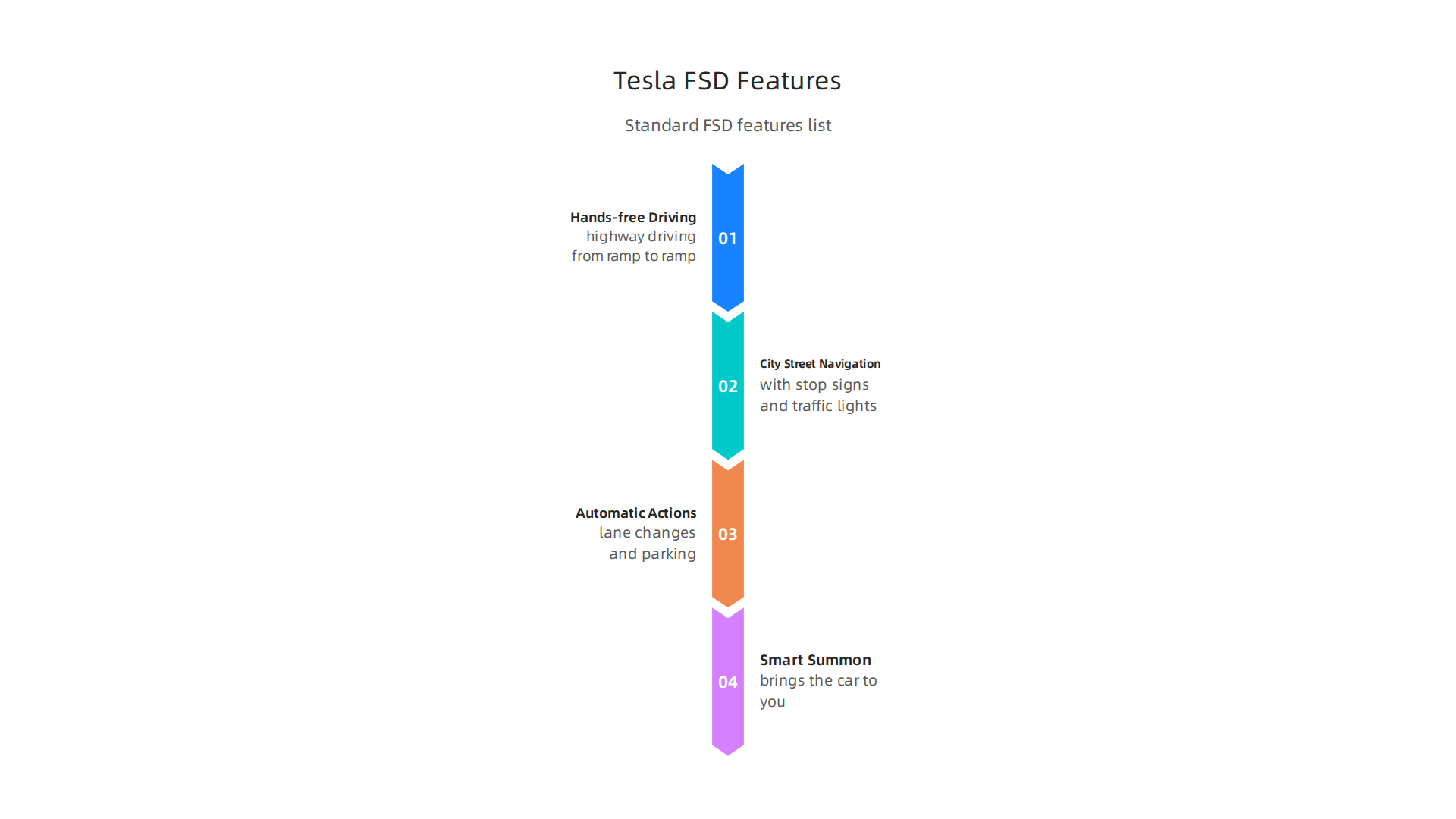
- Hands-free highway driving from ramp to ramp
- City street navigation with stop signs and traffic lights
- Automatic lane changes and parking
- Smart summon that brings the car to you in a parking lot
Meet Optimus: The Robot in the Factory
Now let us talk about something that sounds like science fiction but is already real. Tesla’s humanoid robot, Optimus, is no longer a prototype. It is working on the factory floor in 2026. Early units are doing repetitive tasks like moving parts and sorting bins. The goal is to have thousands of them in production by next year.
For the average person, the consumer potential is huge. Imagine a robot that can unload the dishwasher, fold laundry, or grab a package from the front porch. That is not a dream anymore. It is a timeline. The robotics division is borrowing heavily from Tesla’s vehicle AI and battery tech. It is one of the most exciting new gadgets coming 2021 at heart, even if it actually arrives now. To see how far personal tech has come, check out the evolution of consumer gadgets from the first iPhone to 2026 models.
The AI and Energy Connection
None of this works without brains and power. Tesla is deeply tied to xAI, Elon’s AI company. Grok, the AI assistant, is being integrated into the car’s voice commands. It helps you plan routes, answer questions, and even summarize messages.
And remember the energy side. Tesla deployed 8.8 GWh of energy storage in Q1 2026 alone, as stated in their Q1 2026 update. That is enough to power thousands of homes. Megapacks and solar tiles are becoming the backbone of a distributed energy grid. This is the infrastructure that will power all the latest cool electronics in your home.
Keeping up with all of these pieces is a real challenge. That is why a trusted daily update helps. For clear, practical insights on AI, autonomy, and the tech that is reshaping your life, check out The Deep View Newsletter. It cuts through the noise and shows you what actually matters.
The Attention Wars: X and the Future of Social and News
So we have seen how elon is reshaping transportation and energy. But no single platform affects how we get news and argue about politics more than X, the platform formerly called Twitter. Musk bought it in 2022, and by 2026 the changes are impossible to miss.
What Changed on X
The biggest shift is the algorithm. X now pushes content based on engagement, not just who you follow. That means more viral posts, more arguments, and more controversial takes. The goal is to keep you scrolling. And it works.
The average user spends about 32 minutes a day on X, according to X Screen Time Statistics 2026. That is a lot of attention.
X has also pushed hard on subscriptions. X Premium gives you a blue checkmark, longer posts, and early access to new features like Grok, the AI chatbot from xAI. In fact, Grok is now deeply integrated into the platform. You can ask it to summarize threads, answer questions in real time, and even draft replies. For a comparison of how Grok stacks up against other AI models, you can check out this Grok vs ChatGPT vs Gemini comparison. But not everyone is happy. Critics say the checkmark used to mean verified identity. Now it just means you pay.
Content moderation has also changed. Musk calls himself a "free speech absolutist." That means fewer bans and more borderline content. Some users love it. Advertisers, not so much.
The Numbers
Despite the chaos, X is still huge. The platform has about 611 million monthly active users, as reported by X Statistics 2026. That makes it one of the most used social networks in the world. It remains the go-to place for breaking news, live events, and real time conversation.
But the financial picture is mixed. In 2024, 68% of X’s revenue still came from advertising, according to X Revenue and Usage Statistics 2026. Advertisers have returned after an initial exodus, but they are more cautious. Brand safety is a constant concern.
The Competition
New rivals are trying to grab pieces of the pie. BlueSky, started by former Twitter CEO Jack Dorsey, offers a decentralized alternative. Mastodon, the open source network, appeals to users who want more control. Neither has come close to X’s size, but they are growing.
Meanwhile, the battle for your attention is only getting more intense. The fight for your time is real, and it affects everything from news consumption to your mental health. Even puzzle games like NYT Connections are part of the digital landscape competing for your precious minutes, as we explored in our coverage of the top puzzle apps to play in 2026.
Staying Sane in the Chaos
Keeping up with all of this is exhausting. That is why a daily dose of clear, practical insight helps. For a no-nonsense look at how X, AI, and the rest of tech are really changing your world, sign up for The Deep View Newsletter. It cuts through the noise and tells you what matters.
Practical Implications for Consumers and Professionals
All this change can feel overwhelming. How do you actually apply it to your day to day life? Here is a simple way to think about it.

First, filter the noise. You don’t need to follow every update about the latest cool electronics or every rumor about an iphone 17 pro max price. What matters is how a tool helps you. Ask yourself: does this solve a real problem I have? If yes, pay attention. If not, scroll past.
Here is a quick checklist for adopting any new tech:
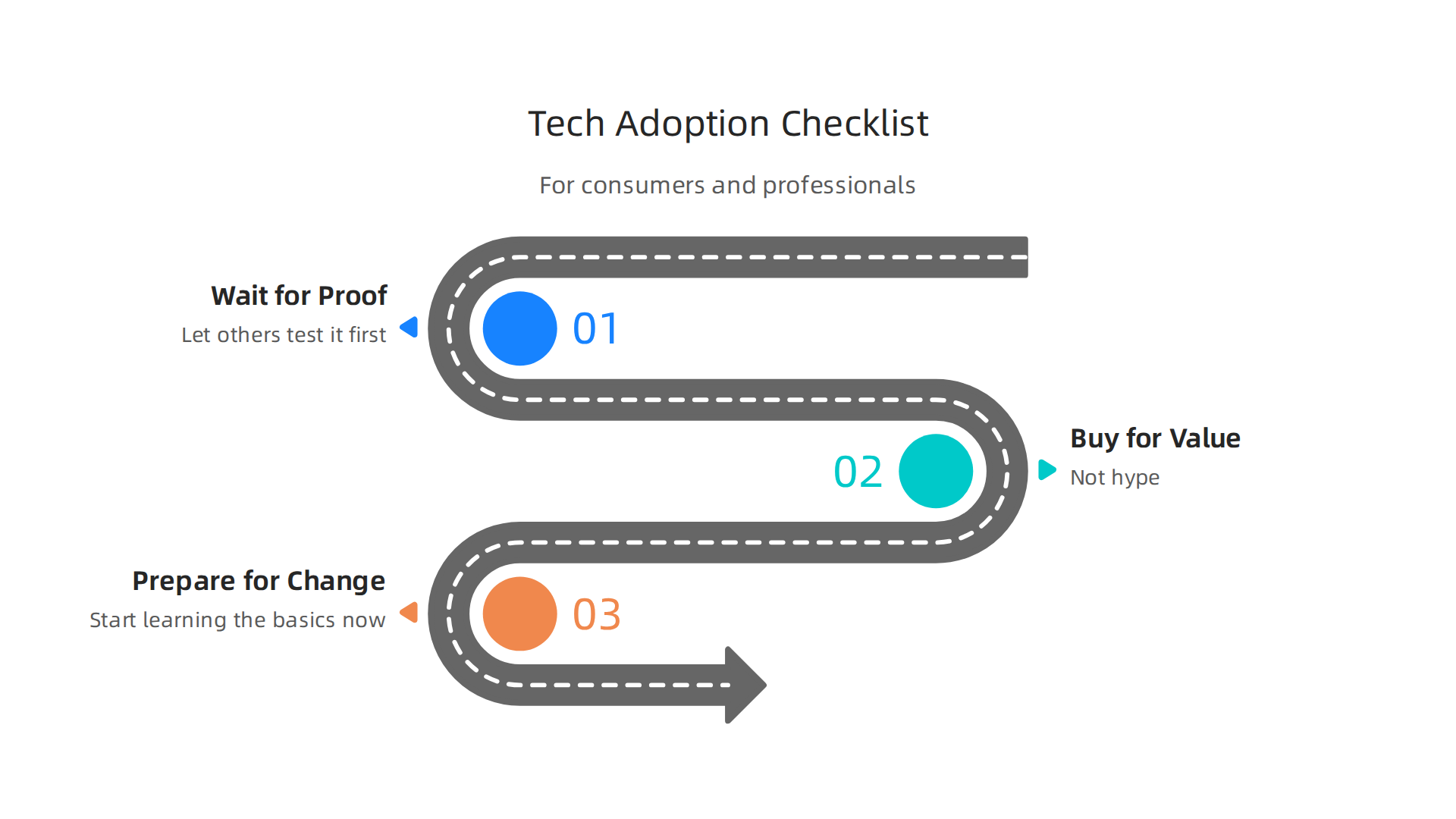
- Wait for proof. Let others test it first. Early adopters find the bugs. You can learn from them.
- Buy for value, not hype. That new gadget might be cool, but does it beat what you already own? Sometimes an older model, like the iPhone 15, still outperforms newer ones for less money. We explored this in our piece on the iPhone 15 128GB in 2026.
- Prepare for change. Some shifts, like the rise of AI on platforms like X, are coming fast. Start learning the basics now so you are not caught off guard.
Finally, think about security and privacy. When you connect devices to Musk’s ecosystem, you are sharing data. Trust in AI is still shaky. According to a 2026 study from the Pew Research Center, 47% of Americans have little or no trust in AI. That number should guide your choices. Turn off what you don’t need. Read the permissions. Stay in control.
Keeping up with all this is exhausting. That is why a daily dose of clear, practical insight helps. For a no-nonsense look at how X, AI, and the rest of tech are really changing your world, sign up for The Deep View Newsletter. It cuts through the noise and tells you what matters.
Summary
This article breaks down the biggest moves across Elon Musk’s companies in 2026 and explains why they matter for consumers and professionals. It covers Tesla’s production and energy deployments, SpaceX’s Starlink and Starship progress, Neuralink’s human trials and ethical questions, and xAI’s Grok as a live, integrated AI on X. The piece shows how these businesses are increasingly interdependent—Starlink links with Neuralink, xAI feeds Tesla, and SpaceX builds the backbone for global connectivity—while noting that consumer trust in AI remains low. Readers get a practical sense of what’s ready now (hands-free highway driving, factory robots, wider Starlink coverage) and what still needs proof (long-term brain implant safety, full autonomous freedom). The article also highlights risks like misinformation, privacy, and security, and provides a short checklist for adopting new tech wisely. After reading, you’ll understand the real-world implications of these technologies and how to evaluate them for your own use.