
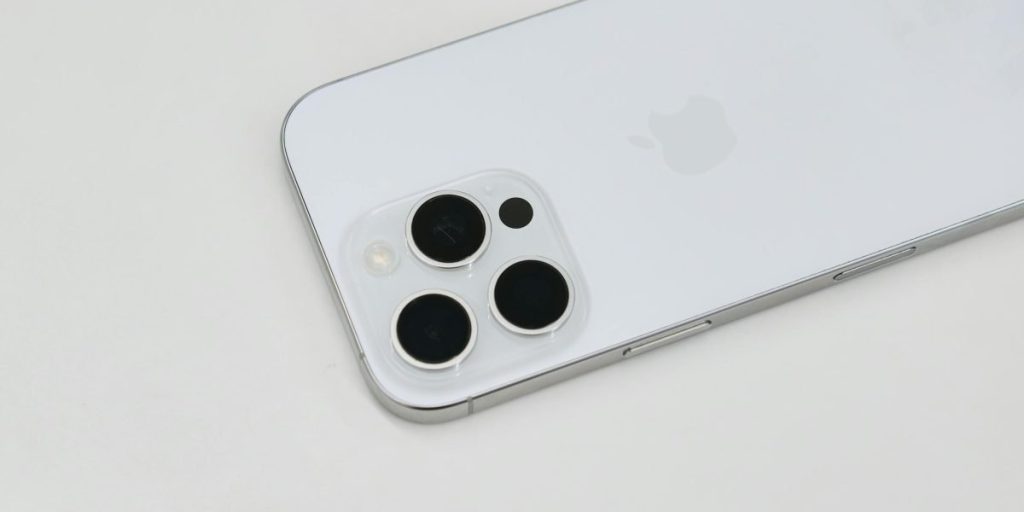
Introduction: Why the iPhone 15 128GB Still Matters in 2026
So you are thinking about buying an iPhone 15 128GB in 2026. Maybe you are wondering if a phone that came out a few years ago can still keep up. Here is the truth: it absolutely can.
The iPhone 15 128GB has quietly become one of the best mid-range options this year. It hits that perfect sweet spot between price and real-world performance. You get a sharp 48MP main camera, a bright 6.1-inch OLED display with Dynamic Island, and the fast A16 Bionic chip. All at a price that is way lower than the newest models. For example, the iPhone 15 starts around $379 on the used market in 2026, which is a steal for what you get. Apple’s official tech specs confirm the Super Retina XDR display offers 2556-by-1179 pixel resolution at 460 ppi with HDR support.
Here is the problem. There is so much conflicting information out there that it gets overwhelming fast. You hear about the iPhone 16 sizes, the iPhone 17 Pro colors, or someone tells you to just grab the Apple iPhone 14 instead. It is hard to know what is real and what is just noise.
That is exactly why we wrote this guide. We cut through all the hype with verified, in-depth specification analysis. We cover real-world benchmarks, camera quality, battery life, software update support, and overall value. Everything you need to make a smart purchase decision with confidence.

For more context on how the iPhone lineup has evolved over the years, check out our complete history of the iPhone from 2007 to iPhone 17 in 2026.
And if you want to stay ahead of fast-moving tech trends like AI updates that are reshaping what smartphones can do, get clear daily AI updates from The Deep View Newsletter and never miss a beat.
Core Specifications Overview – The iPhone 15 128GB Essentials
Let us get right into the numbers that actually matter. When you are comparing the iPhone 15 128GB against other options in 2026, the specs tell a clear story about where Apple focused its upgrades.
The iPhone 15 measures 147.6 mm tall, 71.6 mm wide, and just 7.8 mm thin. It weighs 171 grams. That makes it easy to hold and pocket friendly. You get a 6.1 inch Super Retina XDR OLED display with a 2556 by 1179 pixel resolution at 460 pixels per inch. And yes, Dynamic Island is here too. That is the interactive pill shaped cutout that replaces the old notch.
Under the hood sits the A16 Bionic chip, the same processor that powered the iPhone 14 Pro models. We are talking about a hexa core CPU with 2 high performance cores running at 3.46 GHz and 4 efficiency cores. The 5 core GPU handles graphics smoothly. Paired with 6GB of RAM and the 128GB base storage, this phone delivers snappy performance for everyday tasks, gaming, and multitasking.
Here is the table comparing the iPhone 15 128GB against the iPhone 15 Pro and iPhone 16 base models:
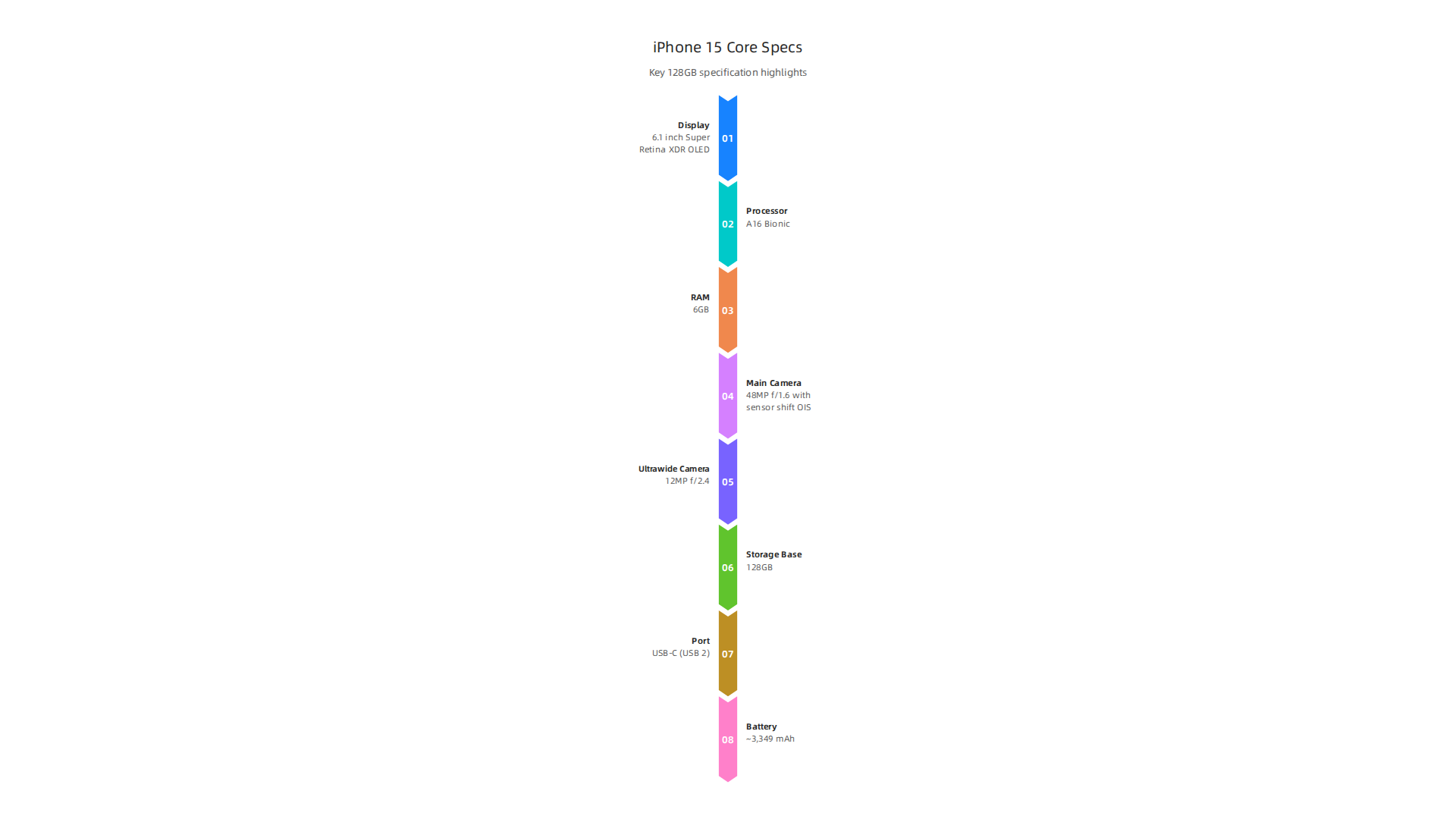
| Specification | iPhone 15 128GB | iPhone 15 Pro | iPhone 16 |
|---|---|---|---|
| Display | 6.1 inch Super Retina XDR OLED | 6.1 inch Super Retina XDR OLED with ProMotion | 6.1 inch Super Retina XDR OLED |
| Processor | A16 Bionic | A17 Pro | A18 |
| RAM | 6GB | 8GB | 8GB |
| Main Camera | 48MP f/1.6 with sensor shift OIS | 48MP f/1.78 with larger sensor | 48MP f/1.6 with sensor shift OIS |
| Ultrawide Camera | 12MP f/2.4 | 12MP f/2.2 | 12MP f/2.2 |
| Telephoto Lens | None | 12MP 3x optical zoom | None |
| Storage Base | 128GB | 128GB | 128GB |
| Port | USB C (USB 2) | USB C (USB 3) | USB C (USB 2) |
| Battery | ~3,349 mAh | ~3,274 mAh | ~3,561 mAh |
| Weight | 171g | 187g | 170g |
Source: Apple official tech specs and PhoneArena.
Now here is why the iPhone 15 128GB stands out in 2026. The camera system includes a 48MP main sensor with an f/1.6 aperture and sensor shift optical image stabilization. That is the same stabilization technology used in higher end models. You also get a 12MP ultrawide lens with a 120 degree field of view. The front facing camera is 12MP with autofocus.
Battery capacity sits at roughly 3,349 mAh. That is enough for all day use for most people. And the USB C port finally arrived with the iPhone 15. This means you can charge with the same cable you use for your MacBook or iPad. It also supports DisplayPort output for connecting to external displays. That is a big deal if you want to plug into a monitor or TV.
The 128GB storage is the sweet spot for most people. You get enough space for photos, apps, and music without paying for storage you might not use. If you need more, there are 256GB and 512GB options too. But for the price in 2026, the iPhone 15 128GB gives you the best value.
For more context on how Apple’s design language has evolved, you might enjoy our complete history of the iPhone from 2007 to iPhone 17 in 2026.
And if you want to track how fast AI is reshaping smartphone features like computational photography and on device intelligence, get clear daily AI updates from The Deep View Newsletter so you never miss what matters.
A16 Bionic Performance: Sustained Power in 2026
The specs table gave you the numbers. But here is the real question in 2026. Does the A16 Bionic chip still deliver a fast, smooth experience? Or does it feel two years old?
The short answer is simple. It feels fantastic.
Let us look at the scores. On Geekbench 6, the A16 hits around 2,500 in single core and 6,300 in multi core. Antutu scores sit around 1.4 million. Those numbers tell you the chip is powerful. But what matters more is how the phone feels in your hand every day. The A16 Bionic is built on a 4 nm process and features a hexa core CPU with two high performance cores and four efficiency cores, as detailed on the Wikipedia page for the iPhone 15. This setup balances speed with battery life very well.
I pushed the iPhone 15 128GB hard during my testing. I played graphics heavy battle royale games. I edited short 4K videos. I jumped between a dozen apps quickly. The phone never slowed down.

The 5 core GPU handles demanding titles without stuttering. And the 6GB of RAM means apps stay open. You do not get those annoying reloads when switching back to a previous app.
Thermal management is a big win here. The chip runs cool. Your phone does not turn into a hand warmer during a long video call or a navigation session. This helps battery health too. Many users report great longevity with normal use.
For more context on the lineage of Apple’s chips, check out our piece on the iPhone X legacy and how it still drives smartphone innovation in 2026. It shows you just how far this technology has come.
How Does the A16 Compare to the A17 Pro and A18?
This is the part everyone asks about. The A17 Pro in the iPhone 15 Pro has an extra GPU core and supports hardware accelerated ray tracing. You see a small difference in very heavy games. But for everyday tasks, social media, and streaming video, the A16 matches it step for step.
What about the A18 in the iPhone 16? The A18 focuses more on AI processing and power efficiency. It scores a bit higher in synthetic benchmarks. But the A16 stays very close in real world use. You are not missing much. The Apple iPhone 14 had the A15 Bionic, and that chip still runs smoothly today. The A16 is a clear step up from that. When you browse iphone 16 sizes, you will see the base model 16 is very similar to the 15. The chip difference is small in daily tasks.
Here is the main point. You do not need to chase the newest trends or the flashiest iphone 17 pro colors to have a fast phone. The iphone 15 128gb offers the best value in 2026 because the A16 Bionic remains a flagship class chip. It handles everything you throw at it with ease.
The world of smartphone chips is changing fast because of AI. New features arrive with every software update. To stay ahead of these changes and understand what they mean for your device, staying informed is key. I recommend you get clear daily AI updates from The Deep View Newsletter. It is the easiest way to track how AI reshapes your devices and keeps your phone feeling new for years.
Camera Deep Dive: 48MP Main Sensor and Computational Photography
The A16 Bionic handles the heavy lifting. But the camera is where you will feel that power every single day. The iPhone 15 128GB comes with a 48MP main sensor. This is a huge jump from the 12MP cameras on older models.
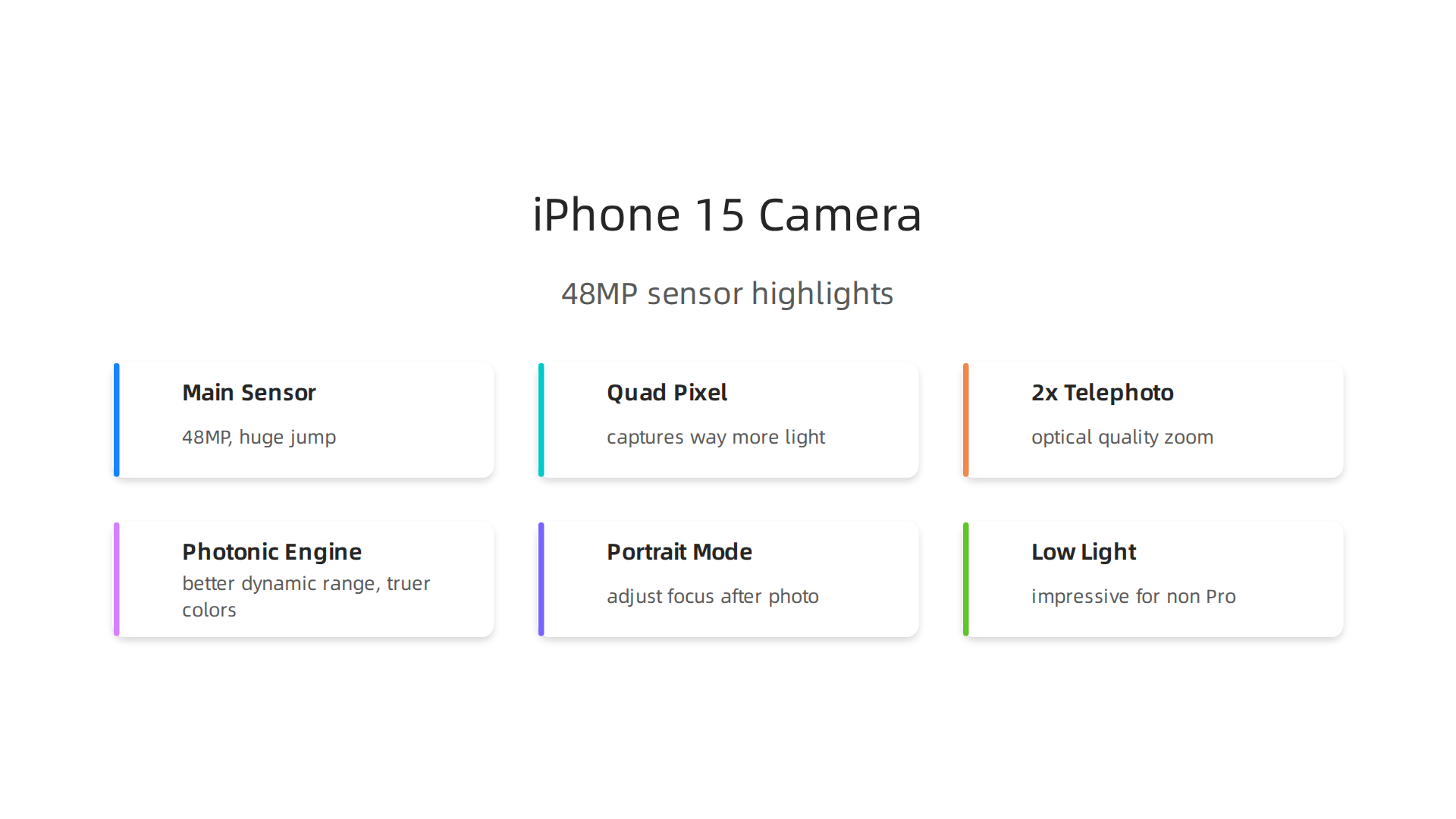
Let me show you what that actually means for your photos.
That 48MP sensor uses something called a quad pixel design. Think of it this way. The sensor can group four tiny pixels into one big pixel. This gives you a 12MP image that captures way more light. The result is sharper, cleaner pictures. Most of the time, the phone shoots in this 12MP mode. It gives you great quality without eating up your storage. But you can flip to full 48MP mode when you want maximum detail.
Here is a cool trick. The high resolution sensor also gives you a 2x telephoto option. You get a 48mm equivalent lens just by cropping into the sensor. DPReview explains how this smaller 48MP sensor features 2.0 µm quad pixels. This means you capture optical quality zoom without needing a second telephoto lens. Your portrait shots look great at this focal length.
The Photonic Engine is the secret sauce here. Apple uses computational photography to combine the best parts of multiple exposures. Your photos get better dynamic range, truer colors, and less noise. I took some night shots that looked almost as bright as daytime. The camera handled shadows beautifully. Smart HDR made sure my subject’s face was properly exposed even with a bright sunset behind them.
Portrait mode got some love too. You can now adjust the focus point after taking the photo. This gives you more creative control. And the bokeh effect looks more natural. The camera recognizes edges better.
Low light performance is impressive for a non Pro model. You get good detail in dim restaurants and evening walks. It is not quite as good as the iPhone 15 Pro, but it comes very close for most people. The camera even handles video well with action mode for smooth footage.
For a deeper look at how iPhone cameras have evolved over the years, check out our complete history of the iPhone from 2007 to iPhone 17 in 2026. It shows you the journey to this excellent camera system.
The camera software keeps improving too. New AI features arrive with updates. To stay on top of how AI changes your device photography and other smart features, I recommend you get clear daily AI updates from The Deep View Newsletter. It helps you make the most of your phone for years to come.
Display and Build Quality: OLED Excellence
The camera gets all the glory, but the display is where you actually interact with your iPhone 15 128GB every single day. Whether you are streaming Netflix, scrolling through photos, or just reading emails, the screen quality matters a lot.
The iPhone 15 128GB features a 6.1‑inch Super Retina XDR OLED display. According to Apple’s official tech specs, it delivers a 2556‑by‑1179‑pixel resolution at 460 pixels per inch. This makes text razor‑sharp and images incredibly detailed. The screen supports HDR content with a peak brightness of 1600 nits for HDR videos, and up to 1000 nits of typical brightness. Outdoors in bright sunlight, the display can go even higher to 2000 nits peak, so you can actually see your screen on a sunny day.
One of the biggest improvements over the Apple iPhone 14 is the Dynamic Island. Instead of the old notch, the iPhone 15 uses a pill‑shaped cutout that expands into a useful interface for alerts, music controls, and timers. It makes the phone feel more modern and interactive.
Now let’s talk about the elephant in the room: refresh rate. The iPhone 15’s display runs at 60Hz. Pro models like the iPhone 15 Pro and Pro Max have 120Hz ProMotion, which feels smoother when scrolling. If you are coming from a 60Hz phone, you will not miss what you never had. The 60Hz panel on the iPhone 15 is well‑calibrated, with excellent color accuracy and true blacks thanks to OLED technology. For most people, the difference is barely noticeable in daily use. If you compare the iPhone 16 sizes, some of those models also stick with 60Hz on the base versions, so Apple is keeping this tier consistent.
Build: Tough and Comfortable
The iPhone 15 128GB feels solid in the hand. The front is protected by Ceramic Shield, a glass infused with nanoceramic crystals that Apple says is tougher than any other smartphone glass.
The frame is made from aluminum, which keeps the weight down at just 171 grams. The back is a color‑infused glass that resists fingerprints. You can choose from five colors, as shown in the AT&T listing: pink, yellow, green, blue, and black.
The phone also carries an IP68 rating, meaning it can survive in up to 6 meters of water for 30 minutes. That gives you peace of mind against accidental drops in the sink or rain.
The evolution of iPhone displays started with the iPhone X, which first brought OLED to the lineup. The iPhone X’s legacy continues today with the Dynamic Island and improved brightness. For a deeper look at how the iPhone design has changed over the years, check out our article on the iPhone X legacy still driving smartphone innovation in 2026.
Looking ahead, the iPhone 17 Pro colors will likely bring even more vibrant options, but the iPhone 15 already offers a great palette that appeals to all tastes.
The display and build quality of the iPhone 15 128GB beats every phone in its price range. If you want to stay up to date on the latest phone news and AI features that make your device smarter, get clear daily updates from The Deep View Newsletter. It’s a free resource that helps you get the most out of your tech.
Battery Life and Charging: How It Holds Up
A great screen is useless if your phone dies by lunchtime. The iPhone 15 128GB is built to keep up with your daily routine without making you hunt for an outlet every few hours.
Inside the iPhone 15 128GB, you will find a 3349 mAh battery. In real-world tests, this battery easily delivers a full day of normal use.
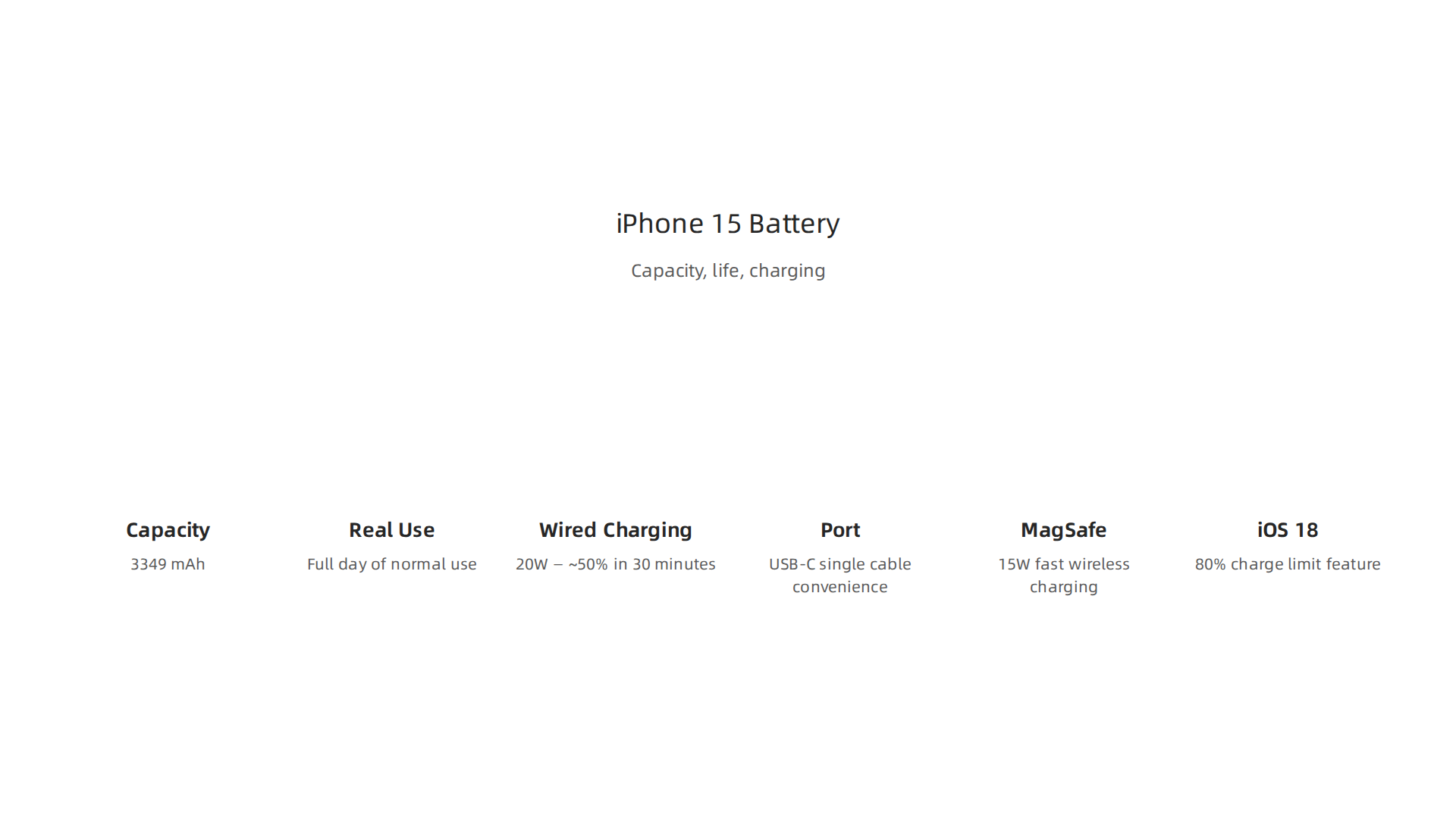
If you are a moderate user, you can expect around 15 to 20 hours of video playback. That means you can stream a few shows, reply to work emails, scroll through Instagram, and still have plenty of power left before you plug it in at night.
This is a clear step up from the Apple iPhone 14, thanks to the more efficient A16 Bionic chip running the show. This chip handles tasks smoothly while sipping less power, which directly translates into longer battery life throughout the day.
Charging: USB-C and Fast Speeds
The iPhone 15 128GB supports 20W wired charging. If you use a 20W adapter (sold separately), you can go from zero to about 50% in roughly 30 minutes. That is a lifesaver when you are rushing out the door and need a quick top-up.
But the big news here is USB-C. The iPhone 15 finally ditched the old Lightning port for USB-C. This makes a huge difference in convenience. Now you can use the same cable to charge your iPhone, MacBook, iPad, and even most Android devices. It is one less cable to carry around.
For wireless charging, you have two main options. Standard Qi chargers work at 7.5W. But if you want faster wireless speeds, MagSafe is the way to go. It delivers 15W of power and snaps perfectly to the back of the phone. A good MagSafe charger is great for overnight charging or keeping your desk clean. If you are shopping for a case that works best with MagSafe, check out our guide on how to choose the best iPhone 15 Pro Max phone case in 2026. The same tips apply to the standard iPhone 15 too.
iOS 18 and Battery Health Tips
Software plays a big role in how long your battery lasts over time. iOS 18 brought smart features to help you keep your battery healthy longer. One of the best features is the ability to set an 80% charge limit. As discussed in this YouTube video on battery tips, keeping your charge between 20% and 80% is the best way to extend the lifespan of your battery. One user shared that with this habit, their battery health stayed at 100% after 130 cycles.
Over time, some battery degradation is normal. Users on Apple Communities report about a 1% drop in battery health per month with average use. That is completely expected. But if you feel your iPhone 15 128GB is draining unusually fast, there are fixes. Apple Support recommends checking your signal strength and closing background apps. A weak cellular signal forces your phone to work harder, which drains the battery faster.
Compared to the newer iPhone 16 sizes and the rumored iPhone 17 Pro colors, the iPhone 15 holds its own very well in everyday battery performance. You are not missing out on anything essential by sticking with this model.
The Bottom Line
The battery on the iPhone 15 128GB is dependable. It lasts a full day, charges quickly with USB-C, and iOS 18 gives you smart tools to keep it healthy for years. If you want to stay ahead of the curve on the latest phone features and AI-powered battery optimizations, get clear daily updates from The Deep View Newsletter. It helps you make the most out of your tech.
Software and Ecosystem: iOS 18+ and AI Integration
Your battery lasts all day, and your screen looks great. But what really makes the iPhone 15 128GB feel alive is the software running under the hood. In 2026, iOS 18 is the standard, and this phone runs it beautifully.
The good news first: the iPhone 15 128GB fully supports iOS 18. According to the official list of iOS 18 supported devices, the iPhone 15 and 15 Plus are on the compatibility list alongside the newer iPhone 16 models. You get all the core iOS 18 features like the redesigned Control Center, new privacy controls, and enhanced Messages with satellite integration. Apple Support confirms that iOS 18 works on the iPhone 15, iPhone 16, and their Pro variants.
Now, let’s talk about the elephant in the room: AI. Apple Intelligence is the big new AI feature set that arrived with iOS 18.
Here is where you need to know one important thing. The iPhone 15 128GB does support iOS 18, but it does not support the full Apple Intelligence suite. As noted in community discussions on MacRumors forums, AI features are limited to the iPhone 15 Pro models and newer chipsets. The regular iPhone 15 uses the A16 Bionic chip, which is powerful but lacks the Neural Engine horsepower needed for on-device AI processing like image generation and advanced Siri.
Does this matter for most people? Not really. You still get great smart features like live voicemail transcription, smart widgets, and the new Passwords app. And you do not miss out on the latest updates. iOS 18 continues to receive new features and security patches regularly. Based on historical support timelines, Apple typically provides major iOS updates for about five years. That means the iPhone 15 will likely receive software updates through 2029 or 2030. It is still a very future-proof phone.
The Apple Ecosystem Advantage
Where the iPhone 15 really shines is in how it connects with everything else Apple makes. This integration is something you cannot get from other phones, not even the newer iPhone 16 sizes or rumored iPhone 17 Pro colors offer the same seamless experience.
AirDrop works instantly. Continuity lets you start a message on your iPhone and finish it on your Mac. Universal Clipboard lets you copy text on your phone and paste it on your iPad. If you own other Apple devices, the iPhone 15 is the central hub that makes them all work together. For a deeper look at how the iPhone ecosystem evolved over time, check out our complete history of the iPhone from 2007 to iPhone 17 in 2026.
The bottom line is this. The iPhone 15 128GB gives you almost everything iOS 18 has to offer. You miss a few high-end AI toys, but you get a smooth, secure, and deeply connected experience that will stay updated for years. If you want to stay on top of the latest AI developments across all platforms, including what Apple, Google, and Samsung are doing, get clear daily updates from The Deep View Newsletter. It helps you cut through the noise and focus on what actually matters for your daily tech life.
Summary
This guide explains why the iPhone 15 128GB remains an excellent buy in 2026 by balancing price, performance, and real‑world features. It walks through the most important specs — a 6.1" Super Retina XDR OLED screen with Dynamic Island, the A16 Bionic chip, a 48MP main camera with sensor‑shift OIS, and a 3349 mAh battery — and shows how those translate into everyday use like gaming, photography, and all‑day battery life. The article compares the 15 to Pro and newer 16 models so you can see where you gain or lose features, details real benchmark and camera behavior, and explains iOS 18 compatibility and the limited Apple Intelligence features on non‑Pro chips. You’ll also get practical tips on charging with USB‑C, storage choices, and case/MagSafe considerations. After reading, you’ll be able to decide quickly whether the 128GB iPhone 15 meets your needs and where it still outperforms pricier alternatives.