
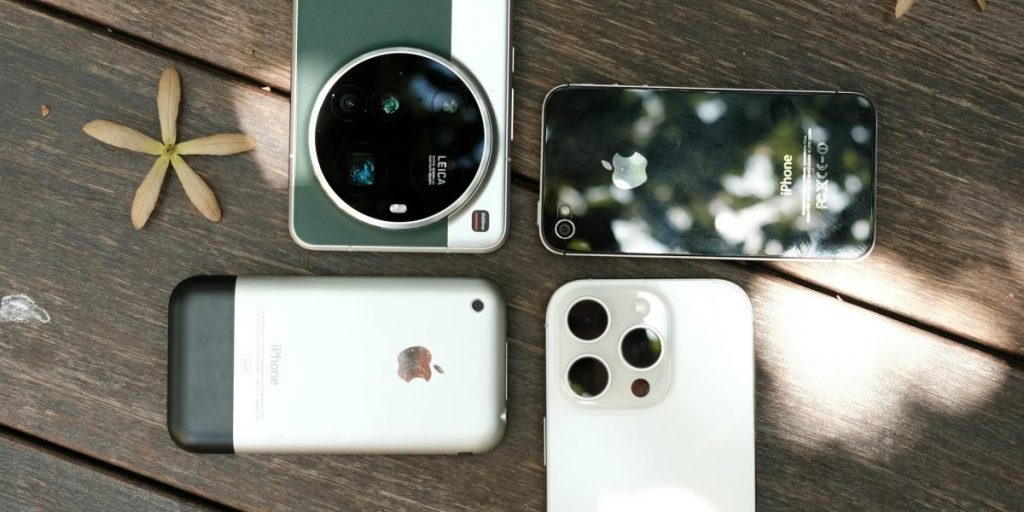
Remember when iPhones had a home button? It feels like a lifetime ago. Back in 2017, Apple introduced the iPhone X, and it completely changed the smartphone game. It was the first major redesign since the original iPhone. The iPhone X removed the home button entirely and introduced us to Face ID, a beautiful OLED screen, and a camera system that set a new standard. Apple called it "the future of the smartphone" Apple Newsroom.
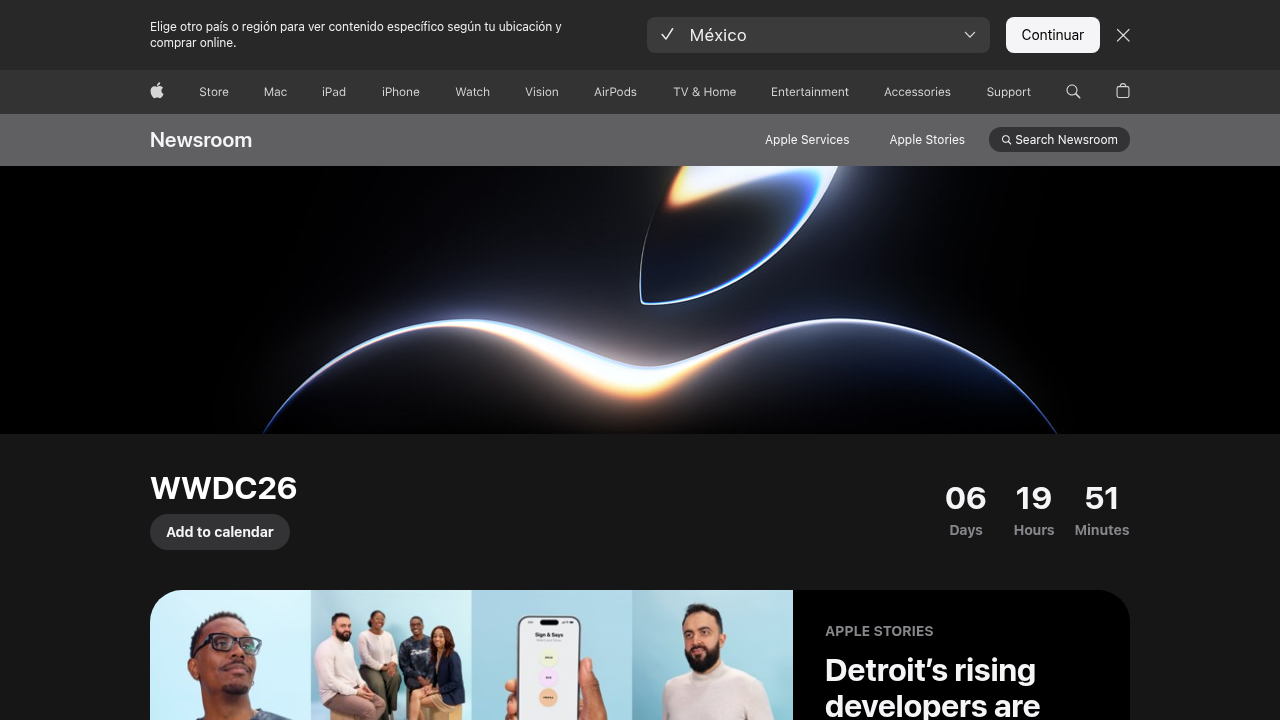
Now, in 2026, we can see just how right they were. The iPhone X only made up about 5% of iPhones a few months after its launch Pixalate.

But its DNA is in every model that followed, as you can see in our complete history of the iPhone from 2007 to iPhone 17 in 2026. Look at the current iPhone 17 models. They all borrow from that bold, bezel-less design. Even the way we shop for accessories, like finding the right iPhone 14 Pro Max case or an iPhone 16 Pro case, follows the shape and feel that the X introduced.
Why look back at an old phone? Because understanding the iPhone X legacy helps us predict the future. It showed us that people were ready to embrace a full-screen world. It paved the way for the powerful devices we carry today. If you love learning about tech shifts and want to stay informed on what is coming next, you might enjoy The Deep View Newsletter.

It offers clear daily updates on the trends that matter.
The Launch Heard ‘Round the World
On November 3, 2017, Apple fans lined up outside stores across the globe. The phone they waited for was the iPhone X.

It arrived exactly on the 10th anniversary of the original iPhone, and it was a big deal. Apple called it "the future of the smartphone" Apple Newsroom, and they meant it.
But what really shook the world was the price. The iPhone X started at $999. That was a huge jump. Before this, the most expensive iPhone was around $769. Many people thought Apple had lost its mind.
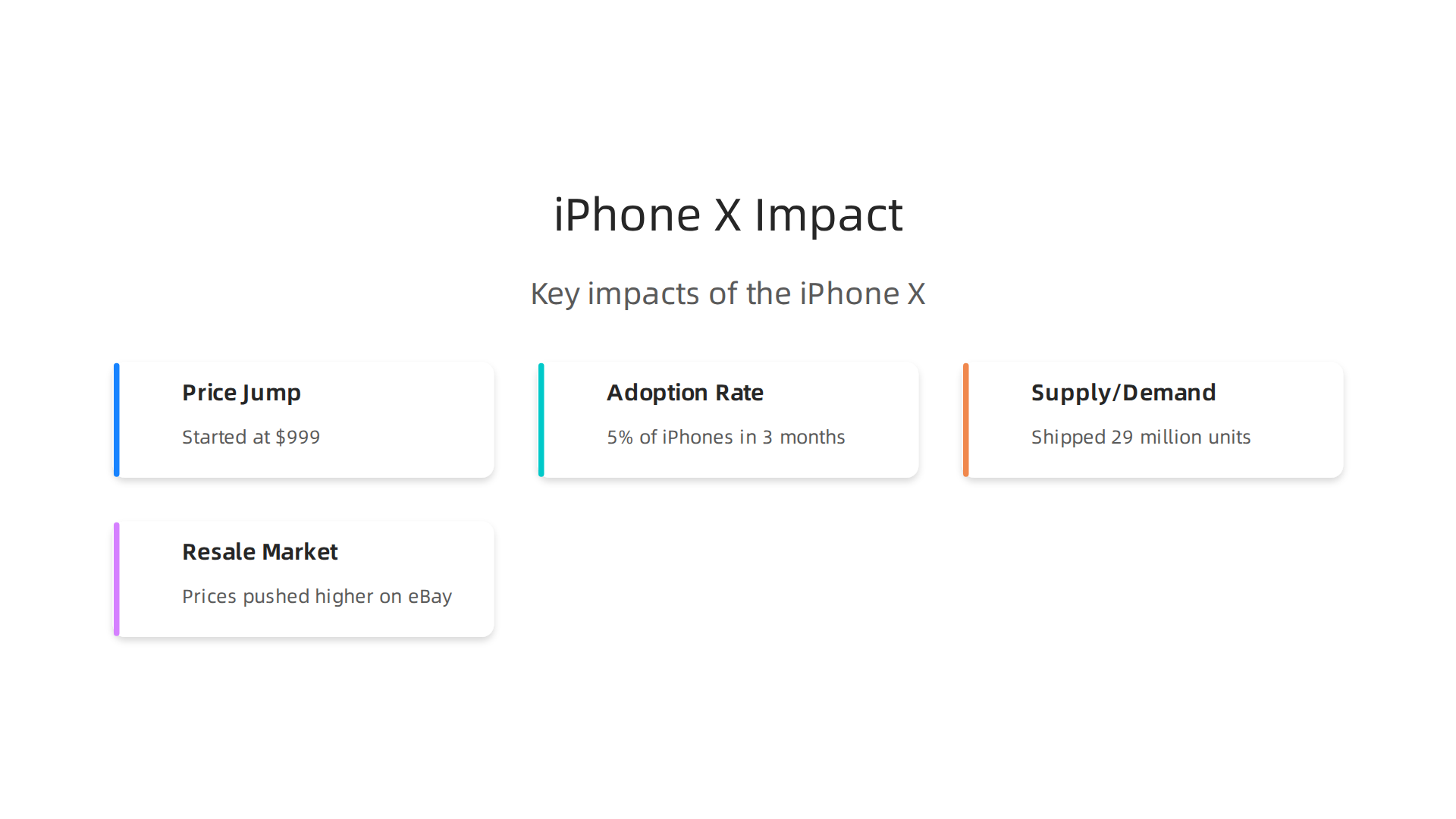
But the move created a whole new premium tier. From that moment on, flagship phones costing $1,000 became normal.
Supply could not keep up with demand. Technology analysts Canalys estimate that Apple shipped about 29 million iPhone X units in the last quarter of 2017 9to5Mac.
That is a massive number for a single model. Yet, many buyers still could not find one in stores. This shortage pushed prices even higher on the secondary market. People resold the iPhone X on eBay for well above retail eBay Inc.. It was like buying concert tickets from a scalper.
Despite the high price and limited availability, the iPhone X changed how people thought about smartphones. It showed that customers were ready to pay more for a premium experience. Nearly three months after launch, about 5% of all iPhone users were already on the iPhone X Pixalate. That adoption rate was stunning for a device that cost so much.
The iPhone X launch was a turning point. It set the stage for everything that followed, including the modern iPhone 17 models we use today. If you want to see how the iPhone lineup evolved from that bold 2017 release to the present, take a look at our complete history of the iPhone from 2007 to iPhone 17 in 2026. It puts the iPhone X launch into full context.
Design Revolution: The Notch and OLED
When you look at any modern smartphone today, you probably do not think twice about that dark cutout at the top of the screen. But in 2017, it was a shock. Apple called it the notch, and everyone had an opinion about it.
Here is what actually happened. Apple wanted a phone that was nearly all screen. But they still needed room for the front camera and a bunch of sensors. So they created a small cutout at the top. Inside that notch lived the TrueDepth camera system. This system did way more than take selfies. It powered Face ID, a new way to unlock your phone just by looking at it. It also enabled augmented reality features in both cameras

BizTech Magazine. Some people called the notch a design flaw Healy Chen. But Apple had a different take. They argued it maximized screen real estate in a way that bezels never could.
The notch was not the only display change. The iPhone X was also the first iPhone to use an OLED screen. Apple called it the Super Retina display Apple Newsroom. OLED meant each pixel lit up on its own. Blacks were truly black. Colors popped. And the phone supported HDR content for movies and photos. That screen set a new standard that every flagship phone chased after.
The design language did not stop with the iPhone X. The glass sandwich with a stainless steel band became the template for the iPhone 11, 12, 13, and beyond. Even today, when you pick up an iPhone 17 model, you can see the DNA of that 2017 phone. And because phones kept that same premium build, finding a good case matters more than ever. If you own a modern phone, check out our picks for the best iPhone 16 Pro Max cases in 2026 to keep that glass back safe.
The notch and the OLED screen were two bold bets that paid off. They reshaped how every phone maker thought about displays. And they proved that Apple was willing to break its own rules to move forward.
Want to understand more about how technology trends evolve from these bold launches? Stay ahead of the curve with daily updates that cut through the noise. It is a simple way to keep your finger on the pulse of what matters. Subscribe to The Deep View Newsletter for clear daily AI and tech insights.
Face ID: Biometrics Go Mainstream
The notch did more than just hold a camera. Inside that black cutout lived something truly different. Apple packed in a TrueDepth camera system with an infrared projector and a dot projector. Together, they scanned your face with over 30,000 invisible dots Apple Support. And just like that, the iPhone X killed the home button.
Face ID changed how we think about phone security. Before 2017, most of us used a fingerprint or a passcode. Touch ID worked great. But Apple claimed Face ID was way more secure. They said the chance of a random person unlocking your phone was 1 in 1,000,000. For Touch ID, that number was 1 in 50,000
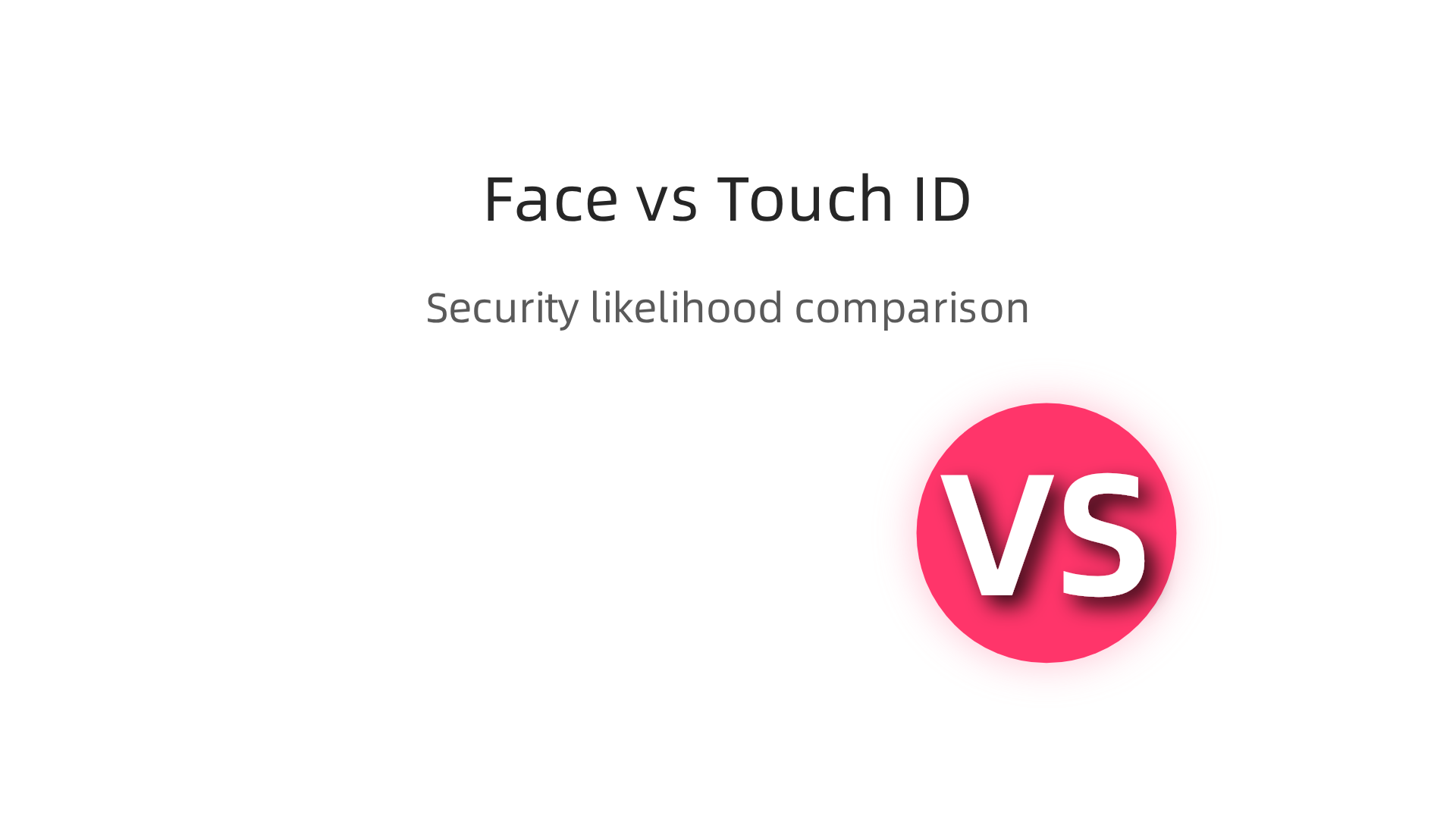
Intego. That is a massive jump.
The system did not just take a photo of your face. It projected dots and read the depth map. It even worked in the dark thanks to the infrared light Swappie. You looked at your phone, and it unlocked. No swiping. No pressing. No thinking.
Some people worried about privacy. What if someone held your phone up to your face while you slept? Apple thought of that. Face ID required your attention. It needed your eyes to be open and looking at the screen. That small detail made a big difference for security Apple Support.
The shift from Touch ID to Face ID was a big deal. It meant app developers had to rethink authentication. It meant banks had to update their apps. And it meant every other phone maker had to figure out their own version itstactical. The iPhone X set a new bar, and the industry followed.
Today, even the latest iPhone 17 models still use Face ID. The technology got faster and works at more angles, but the core idea is the same. That 2017 bet on facial recognition became the standard for a decade of smartphones.
Thinking about upgrading your phone and want to keep it safe? A good case helps protect that TrueDepth camera and display. Check out our guide to the best iPhone 16 Pro Max cases in 2026 if you own the latest model.
Want more stories about how technology actually changes your daily life? Stay informed with clear, practical updates that help you make smarter choices. Subscribe to The Deep View Newsletter for daily insights that cut through the hype.
Camera Evolution: Portrait Mode and Computational Photography
Remember taking a picture of someone and getting that blurry, messy background you did not want? Before 2017, that was just how phone cameras worked. The iPhone X changed that in a big way.
Apple put a dual 12 MP camera system on the back with optical image stabilization on both lenses. That meant sharper photos even if your hands were not perfectly still. But the real magic was Portrait Mode.
The two cameras worked together. One captured the regular image. The other measured depth. That let the phone figure out exactly where you ended and the background began. It then blurred the background in a natural way that looked like a professional DSLR shot. You could even adjust the blur level after you took the photo using depth control.
Apple called it "the future of the smartphone" at the launch event Apple Newsroom, and they were not wrong. This was the start of computational photography going mainstream. The iPhone X did not just take a picture. It processed data from two cameras, ran software calculations, and created an image that looked far better than the raw hardware could produce alone.
That same thinking laid the groundwork for Smart HDR and Night Mode on later models. Apple pushed the boundaries of camera and sensor technology with the iPhone X BizTech Magazine. Every iPhone since has built on those same ideas.
Here is the thing that surprises most people. The front camera also got Portrait Mode. The TrueDepth system you just read about for Face ID did double duty. It created depth maps of your face, not just for security but for selfies. That was the first time a phone could take professional looking portrait selfies.
Want to see how far phone cameras have come since then? Our complete history of the iPhone from 2007 to iPhone 17 in 2026 walks through every major camera leap.
The iPhone X proved that software could make hardware shine. That lesson still drives every smartphone camera today.
Thinking about how AI and software are changing photography even more in 2026? Stay ahead of the curve with clear, daily updates that help you make smarter tech choices. Subscribe to The Deep View Newsletter for insights that actually make sense.
Software Gestures: The End of the Home Button
Remember how many times you pressed that circular home button? For years, every iPhone user knew the button. It took you home. It brought up multitasking. It woke your phone up. Then the iPhone X came along and removed it completely.
That was a scary change for a lot of people. No home button meant no Touch ID. Your thumb could no longer unlock the phone on its own. But Apple replaced it with something faster and more natural: swipe gestures.
Instead of pressing a button to go home, you swiped up from the bottom of the screen. Instead of double clicking the button for multitasking, you swiped up and paused halfway. To reach Control Center, you swiped down from the top right. To see notifications, you swiped down from the top left.
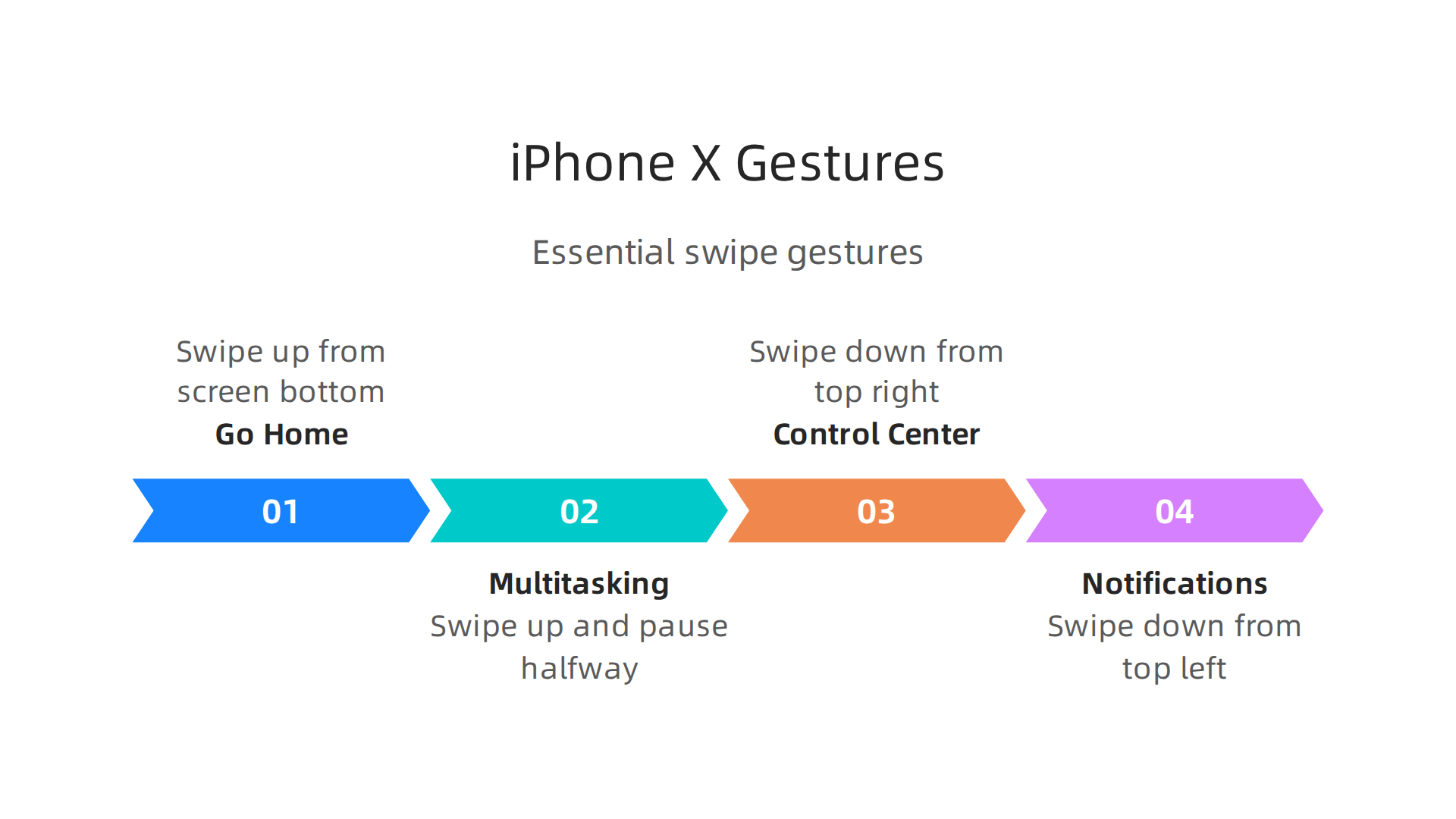
It all felt fluid and intuitive after just a few tries.
The announcement of the iPhone X saw the complete removal of the home button and the dawn of Apple’s newest biometric security feature, Face ID ITSTactical. Face ID used the TrueDepth camera to map your face with over 30,000 invisible dots Apple Support. It was more secure than Touch ID and worked in the dark, with sunglasses, and even as you changed your hairstyle.
Those swipe gestures set a new standard. Every iPhone since the X has used the same navigation system. In 2026, even the latest iPhone 17 models ship with gesture controls as the default. The home button is a distant memory. Phone case designs like the iPhone 14 Pro Max case and the iPhone 16 Pro case all include cutouts for the gesture bar at the bottom.
Apple has refined these gestures over the years. iOS updates added reachability gestures, easier app switching, and better accessibility options. But the core idea stays the same. No buttons. Just swipes.
Want to trace how far the iPhone has come since the original model? Our complete history of the iPhone from 2007 to iPhone 17 in 2026 covers every major interface change.
The iPhone X changed how we interact with our phones. That shift from buttons to gestures is still shaping mobile design today.
Understanding these changes helps you make smarter choices about your next phone. Stay ahead of the curve with clear daily updates that actually make sense. Subscribe to The Deep View Newsletter for insights you can use.
Market Influence: Shaping the Smartphone Landscape
The iPhone X didn’t just change how we swipe. It changed the entire smartphone market. Before this phone, most flagships cost around $650 or $700. Apple was bold. It set the price at $999. That was a huge jump for a phone in 2017. But people accepted it.
That single price move reset consumer expectations. Suddenly, a thousand dollars for a phone felt normal. Android manufacturers took notice. The next year, the Samsung Note 9 and the Google Pixel 3 both pushed their prices higher. The premium tier had a new ceiling.
The iPhone X also made a ton of money. According to Counterpoint Research, the iPhone X alone captured 35 percent of global smartphone profits in the fourth quarter of 2017 Silicon Republic. That is an insane number. One phone made more profit than hundreds of Android models combined.
The design influence was just as big. The notch at the top of the screen became the most copied look in the industry. Android phones from OnePlus, Huawei, and Xiaomi all shipped with notches for years. The glass back and stainless steel frame also became the standard for premium devices. In 2026, even the newest flagships still borrow cues from that original iPhone X look.
On the inside, the iPhone X pushed two major trends forward: wireless charging and augmented reality. The glass back made wireless charging a standard feature. And the TrueDepth camera enabled ARKit apps that let you place virtual furniture in your living room or measure objects with your camera Apple Newsroom. Those features opened new possibilities for developers and everyday users alike.
All these shifts changed how we think about phones. The $999 price tag. The notch design. The focus on AR and wireless charging. They all started with the iPhone X.
This is why protecting your investment matters. A premium phone deserves a premium case. Our guide to the best iPhone 16 Pro Max MagSafe cases in 2026 will help you keep your device safe for years.
Understanding these market forces helps you make smarter buying decisions. Stay informed with clear daily updates from The Deep View Newsletter. Subscribe today for insights you can actually use.
Lessons for the Future: What iPhone X Predicted
The iPhone X wasn’t just a look back at the first ten years of the smartphone. It was a bold look forward. It made big bets on design, security, and how we interact with the world. And in 2026, those bets are still paying off.

The Jump to an All-Screen World
Apple removed the Home button and the thick bezels completely. That was a huge risk back in 2017. But it set the stage for everything that came next. By 2026, we have foldable phones that bend in half. We are starting to see under-display cameras. The move to a full-screen design made protecting your device more important than ever. If you are looking to guard a newer model, a high quality case keeps that edge to edge glass safe. Check out our picks for the best iPhone 16 Pro Max MagSafe cases in 2026 for top protection.
AR and the RealityOS Vision
The TrueDepth camera made Face ID work. But it also enabled ARKit. Suddenly, you could measure real objects or place virtual furniture in your living room. That small step predicted Apple’s bigger push into spatial computing. The Vision Pro headset runs on realityOS. The connection is clear. The iPhone X showed us the camera could do more than take photos. It could see the world in 3D. As we move through 2026, Apple continues to build on this foundation, blending AI and augmented reality in exciting ways Business Insider. Analysts saw this potential early on, noting the technology would spread to all future models Mobile World Live.
Face ID and the Privacy Standard
Before the iPhone X, we unlocked phones with a fingerprint. Face ID changed that. It used a dot projector and infrared camera to map your face securely. This pushed the whole industry toward better, private biometrics. Even on the latest iPhone 17 models and beyond, the core idea remains the same: your face is your most secure password. The iPhone X predicted a future where your phone knows you. It knows your face. It knows your space. And it reacts without buttons.
Want to stay ahead of the next big tech prediction? Get clear daily updates on AI and hardware from experts who saw the iPhone X coming. Subscribe to The Deep View Newsletter today.
The iPhone in 2026: Carrying the X Legacy Forward
Pick up an iPhone 17 Pro in 2026, and you can still see the iPhone X in its bones. The all-screen front. The polished edges. The way the camera sits in the corner. That design DNA is everywhere.
But Apple has also moved forward. The notch that started with the iPhone X has gotten smaller. On the latest iPhone 17 models, it has become the Dynamic Island. And rumor has it that future iPhones may remove the notch entirely. Under-display Face ID and even under-screen Touch ID could be coming soon. That would give us a true full-screen phone with no cutouts at all. The iPhone X showed us the goal. The next generation might finally reach it.
Another place where the X legacy lives is inside the phone. The original TrueDepth camera was built for Face ID. But it also opened the door for smarter cameras. Today, computational photography uses AI to make every photo look better. Your phone’s camera system uses machine learning for portrait mode, night mode, and even video stabilization. These features all trace back to the foundation the iPhone X laid down Apple Newsroom.
On-device AI is another big piece. The iPhone X had a dedicated neural engine in its A11 Bionic chip. That was new at the time. In 2026, that engine is much more powerful. It powers live translations, smart photo editing, and real-time text recognition. All without sending your data to the cloud. Want to see how the original still holds up? Check out this YouTube video that tests the iPhone X as a daily driver nearly a decade later.
The all-screen design also means your display is more exposed than ever. Whether you are holding onto an older iPhone 14 Pro Max or rocking a newer iPhone 16 Pro, a good case keeps that edge-to-edge glass safe.
So the iPhone X is not just a relic. It is a blueprint. Every iPhone released since has been a refinement of that vision. If you want to see the full story, read our complete history of the iPhone from 2007 to iPhone 17 in 2026.
Summary
The article traces how the 2017 iPhone X rewrote smartphone design, security, and pricing and explains why its innovations still shape phones in 2026. It covers the X’s bold move to an all‑screen OLED display with a notch housing the TrueDepth system, the switch from Touch ID to Face ID, and the leap in camera capability through dual lenses and computational photography. The piece also walks through the launch drama — supply shortages and a $999 starting price that normalized premium tiers — and shows how those choices pushed the whole industry to copy or compete. Readers will learn what the X introduced, how those features evolved into today’s iPhone 17 lineage, why accessories and cases matter more for edge‑to‑edge glass, and what to watch for next in AR and under‑display tech. The article frames the X not as a one‑off product but as a blueprint for a decade of smartphone change.