

Elon Musk has been a major force in the tech world for years, but 2026 is seeing a big jump in his work with internet services and artificial intelligence (AI). His companies, like SpaceX with Starlink and xAI with its Grok AI, are making fast changes. These changes are not just for fun; they are shaping how we connect online and use smart technology every day. This shift affects everyone, from people at home to big companies in the tech industry.
Think about Starlink, the satellite internet service. It started small, but by February 2026, it already had over 10 million customers around the world [^1^]. This year, Starlink has been busy deploying its next-generation V3 satellites, aiming for much faster gigabit internet speeds for users [^2^]. These new satellites are designed to work with SpaceX’s Starship rocket for full deployment, a big step in making high-speed internet available even in places where it was once impossible [^3^]. The rapid growth of elon musk internet projects means more people than ever can get online, no matter where they live.

But it’s not just about internet access. Elon Musk’s work in AI is also very important. His company xAI is developing tools like Grok AI, which promises new ways for us to get information and interact with technology. While not a traditional grokipedia website, these AI advancements are pushing the limits of what computers can do. For consumers, this could mean smarter personal assistants or better online experiences. For business technology and product teams, it opens new doors for innovation and competition. If you want to dive deeper into how all these parts of elon musk internet and AI connect, you can read more about Elon Musk’s 2026 tech empire is more interconnected than ever.
This article will look closely at these exciting developments. We will break down the real effects on technology, what they mean for you, and how they might change policies. Our goal is to give you clear, factual information and real advice, without any hype. We want to help you understand what’s truly happening and why it matters in 2026.
[^1^]: What We Learnt About Starlink From The SpaceX IPO Documentation
[^2^]: Elon Musk Eyes Mass Deployment of V3 Starlink Satellites in Q4 2026
[^3^]: SpaceX – Company Profile, Milestones & Funding
Get clear daily AI updates from The AI Newsletter Worth Reading.
The evolution of Elon Musk’s internet projects: a timeline and taxonomy
Elon Musk’s work in internet and AI is always changing. It began with big ideas and has grown into real-world services that many people use. Let’s look at how his elon musk internet projects have developed over time and what they aim to do.
Starlink: Connecting the World from Space
Starlink is all about bringing internet to everyone, no matter where they live. This project started with a simple goal: use many small satellites to beam internet down to Earth.
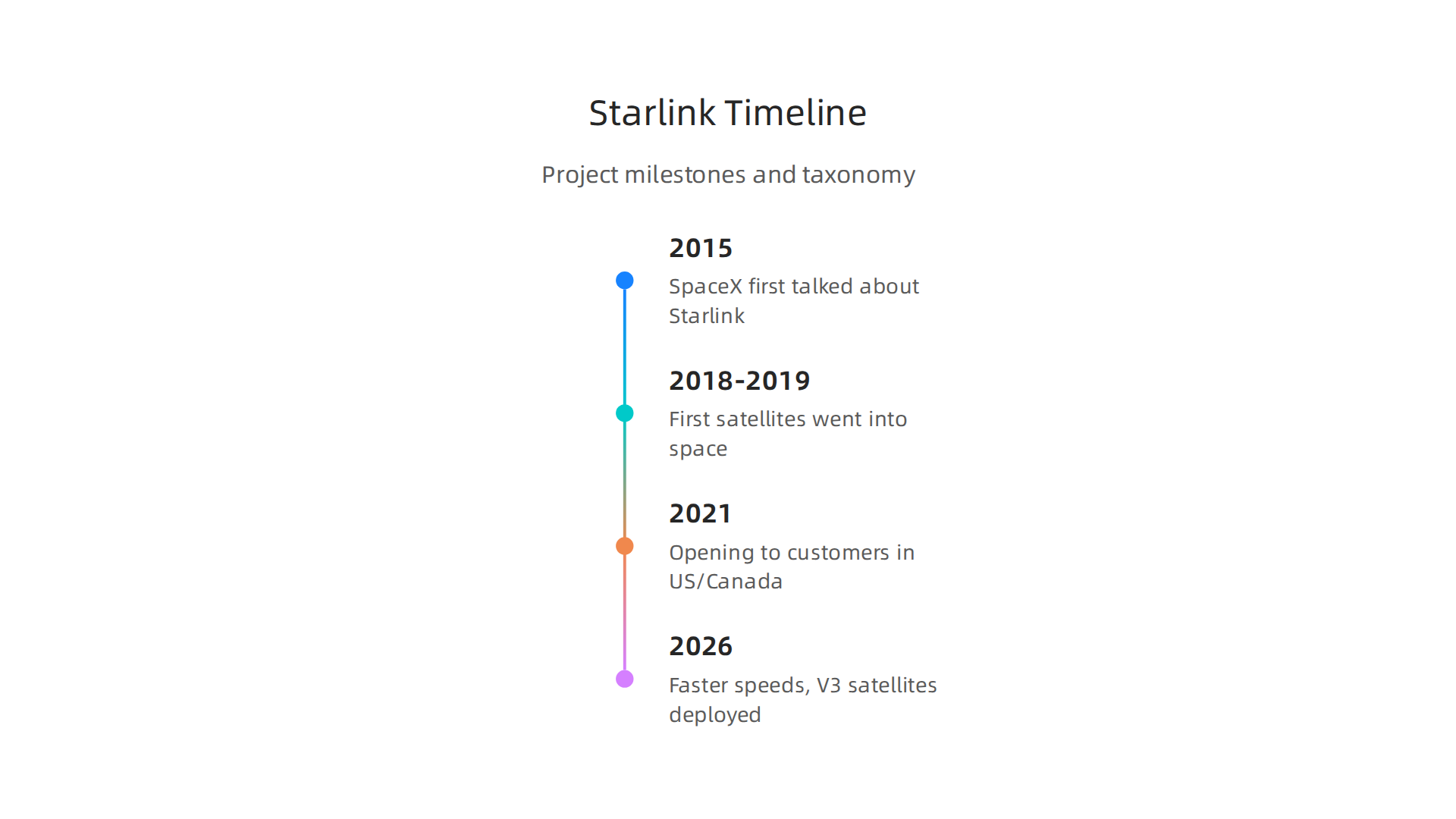
- 2015: The Big Idea
SpaceX first talked about Starlink in 2015. The goal was to build a huge network of satellites in space to provide internet access globally Starlink History & Timeline – Entire History (2015-2026). - 2018-2019: First Satellites in Space
After some test launches in 2018, the first group of 60 working Starlink satellites went into space in May 2019 The Complete History of Starlink: Bringing Global Internet from Space – History Tools. This was a huge step to start building the network. - 2021: Opening to Customers
People in the United States and Canada could start ordering Starlink internet in early 2021 Starlink – Wikipedia. This made the service available to the public for the first time. - 2026: Faster Speeds and More Access
This year, in 2026, Starlink is focused on making its service even better. It is deploying new V3 satellites that are much more powerful. These new satellites can send and receive a lot more data, meaning faster internet for users, sometimes reaching gigabit speeds. To get these V3 satellites fully into space, they need to launch on SpaceX’s big Starship rocket, which is a major event for thetech industryStarlink – Company Profile, Milestones & Funding – Venture Atlas. Starlink also plans to bring gigabit upgrades to many regions by early 2026 Starlink Roadmap 2026 When is Gigabit Speed Arriving?.
Starlink is different from regular internet providers. Most internet comes through wires buried underground or cables. Starlink uses satellites circling Earth, which helps people in very remote areas get online where wires simply don’t reach. It’s a new way to deliver global internet access. You can learn more about its impact and future in our article about Elon Musk Starlink satellite internet its global impact and future in 2026.
xAI and Grok AI: Smart Technology for Everyone
Beyond internet access, Elon Musk is also deeply involved in artificial intelligence. His company, xAI, is building new AI tools like Grok AI.

- What Grok AI Does
Grok AI is an advanced AI system that can understand and create human-like text. It’s not like a simplegrokipedia websitewhere you just look up facts. Instead, Grok can have conversations, answer complex questions, and even help with creative tasks. It aims to offer fresh ways for us to get information and interact with technology. - How It’s Different
Traditional information sites give you facts that humans have put there. Grok AI uses very smart computer programs to learn from vast amounts of information and then give you answers or create new things. This changes howbusiness technologyteams might build products and how you might use digital tools in your daily life. It’s pushing the boundaries of what AI can do. To understand more about the wider AI efforts, read about Elon Musk AI 2026 how xAI Tesla and Neuralink converge.
Together, these projects show how Elon Musk is trying to change both how we connect to the internet and how we use smart technology. They are shaking up the world of connectivity and AI, making things faster and smarter for many.
Starlink is a key part of the elon musk internet vision in 2026. This year, the focus is on making the service even more reliable and faster for its users around the world. Let’s look at how Starlink is doing, what users are experiencing, and what’s next for this satellite internet service.
Current Coverage and User Experience
Starlink continues to spread its service to more remote areas where traditional internet doesn’t reach. Its network of satellites, especially the new V3 models, is designed to give people high-speed internet access from almost anywhere.
Many studies this year show how Starlink performs. One study compared Starlink to regular cell service and found that Starlink often has much better latency. Latency is how fast your internet sends and receives data. Lower latency means less delay, which is good for things like online gaming or video calls Starlink Performance…. Another report looked at how Starlink delivers web content and found that speeds depend on how close users are to important internet hubs. In areas with good local connections, Starlink can offer speeds almost as fast as regular ground internet Investigating Web Content Delivery Performance over Starlink.
For most users, Starlink means getting online in places they couldn’t before.

It’s often used by people living far from cities, on boats, or even in RVs. Users often praise its ability to provide internet where there are no other choices, allowing them to stream videos, work from home, and stay connected. However, like any satellite service, its performance can sometimes be affected by very bad weather.
Roadmap Signals for Consumers
What can Starlink users expect in the near future? The company is constantly working to improve its service.
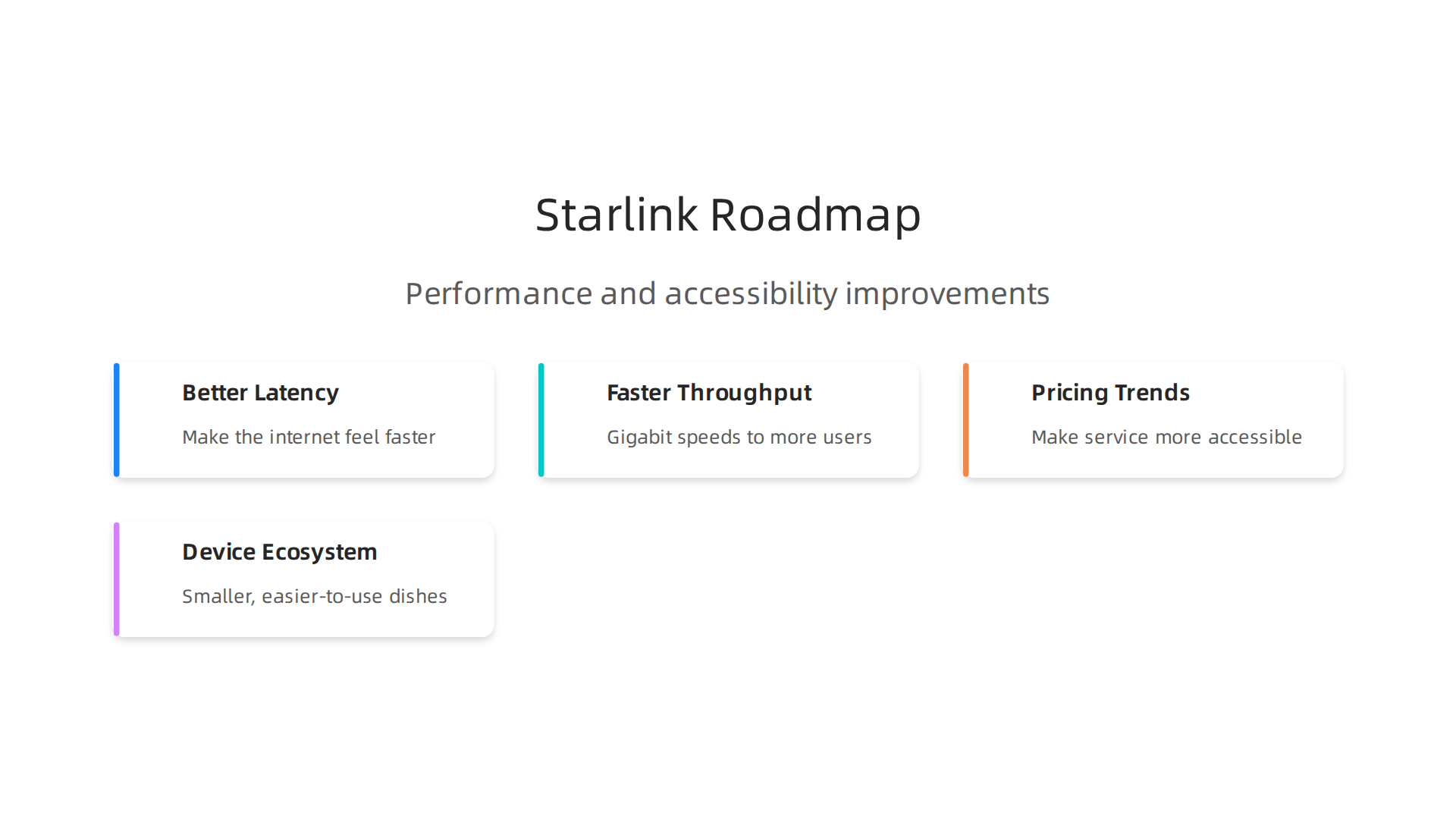
- Better Latency: Starlink is always trying to make the internet feel faster. Ongoing research helps reduce latency, which is important for almost every online activity, from browsing to business technology applications Deciphering Region-Level Signatures from Latency Measurements in LEO Satellite Internet.
- Faster Throughput (Speeds): The rollout of more powerful V3 satellites is helping bring gigabit speeds to more users. These satellites can handle more data, meaning everyone gets a bigger, faster internet highway. Data collected by researchers shows continued efforts to improve both download and upload speeds Starlink Latency and Downlink Throughput Measurement Dataset.
- Pricing Trends: Starlink’s pricing can change as the service grows and new technology becomes available. While specific changes are hard to predict, the goal is often to make the service more accessible as the network becomes more efficient.
- Device Ecosystem: Starlink continues to develop its user equipment, like the dish that connects to the satellites. We might see smaller, easier-to-use, or more specialized dishes for different needs, like mobile use, making it simpler for people to get online. The overall aim is to optimize the network’s performance and scalability Performance Optimization and Scalability of LEO.
Starlink’s ongoing development shows a clear path towards faster, more reliable, and more widespread satellite internet. It’s an exciting time for the tech industry as it changes how people access information and connect with the world. To stay informed about all the new developments in technology, including AI applications and other gadgets that impact daily life, consider subscribing to The AI Newsletter Worth Reading. You can also learn more about general aspects of staying up to date in the digital world in our guide on how to Navigate Digital Technology.
Starlink’s journey to connect the world relies on some clever technology, which is a big part of the overall elon musk internet vision. It’s not just one big satellite up in space. Instead, it’s a huge group of smaller satellites, called a constellation, that work together. These satellites fly much closer to Earth than older types of internet satellites. This closeness is key.
Technical Architecture and Coverage Mechanics
Because Starlink satellites are in low Earth orbit, or LEO, the internet signals do not have to travel as far. This helps make the internet faster and reduces delays, which we call latency. Think of it like a shorter path for your data to take. To make sure internet is always available, many satellites are needed. This big number of satellites creates a wide net of coverage across the globe. Researchers have studied how to best design these LEO satellite groups to maximize how much area they cover and how good the signal is Optimization of a LEO-PNT Constellation: Design Considerations. They look for the best number of satellites and orbits to get the best performance An In-Depth Investigation of LEO Satellite Topology Design.
This type of business technology has some trade-offs. Having many satellites means there is more chance of them running into space debris, but the benefits of global coverage and lower latency are huge. Studies continue to look at the careful balance needed for these large satellite systems to work well Multi-criteria design of continuous global coverage Walker. The goal is to get strong signal quality with good capacity, which is how much data the system can handle Spectral Efficiency of Low Earth Orbit Satellite Constellations.
Beyond the satellites themselves, Starlink needs ground stations. These are special places on Earth that connect the satellites to the main internet lines. When you send data from your home, it goes to a Starlink satellite, which then talks to a ground station, and from there, your data enters the rest of the internet.
Finally, there’s your user terminal, often called a "Dishy." This is the dish you set up at your home or on your vehicle. It talks directly to the satellites in the sky. Starlink is always making these dishes better. They want them to be easier to use and more powerful. Upgrades to the satellites and ground systems mean that your dish also gets better over time, often through automatic software updates. This way, Starlink keeps improving without you needing to buy new equipment all the time. Learning more about how the whole system of tech industry works can help you understand the influence of companies like Elon Musk’s endeavors. You can explore more about how this connects to the larger story of Elon Musk’s 2026 tech empire.
The constant improvements to Starlink’s user dishes through software updates show a bigger plan at work. This vision goes beyond just faster internet. In 2026, Elon Musk’s work with elon musk internet and his AI company, xAI, are coming together in a big way. This connection is changing what we expect from both internet services and advanced business technology.
xAI, AI ambitions, and what that means for internet products
Elon Musk’s venture into Artificial Intelligence, xAI, is a huge part of his overall plan. The biggest news in 2026 was when SpaceX, the company behind Starlink, bought xAI. This big move brought many of Musk’s projects, like space travel, AI, and internet services, under one roof. It shows his goal to weave artificial intelligence deeply into everything he does, even planning for "orbital AI data centers" powered by satellites Musk merges SpaceX and xAI firms, plans for space-based AI data centres. Some reports even say this deal valued the combined company at an amazing $1.25 trillion Musk’s SpaceX merges xAI in deal valued at $1.25 trillion.
The main AI product from xAI is called Grok. This AI is not just a standalone program; it’s being built to work closely with other services, especially X, the platform formerly known as Twitter. Imagine an AI that helps you find information faster, summarize long chats, or even make payments easier. Musk has talked about how Grok will go global on X, making X Chat an encrypted communication tool, and turning X Money into a central place for everyday payments Elon Musk NEW SpaceX & xAI Presentation LEAVES Audience Speechless! (2026). These are new consumer services that use AI to make your online life simpler. While some people might look for information on a grokipedia website to learn more, the real action is happening right within X and its growing family of products.
What does this mean for internet products like Starlink? A lot, actually! AI can help Starlink work even better. For example, AI can smartly manage the satellite network. It can figure out the best way to send internet signals to avoid slowdowns, especially when many people are online at once. This is called AI-powered network optimization. Think of it like a smart traffic controller for your internet data.
AI can also help with content moderation. On platforms like X, AI can learn to spot bad content or spam, helping to keep online spaces safer and more friendly. This is a big step for the tech industry as it grapples with making digital spaces better for everyone. By combining satellites, AI, and internet services, Elon Musk is creating a highly connected system. This approach promises a future where your elon musk internet connection is not just fast, but also smart and helpful, adapting to your needs almost without you knowing it.
If you are keen to dive deeper into how AI is changing our world and daily tech, consider subscribing to a specialized newsletter.
Get clear daily AI updates from The Deep View Newsletter. The AI Newsletter Worth Reading
The idea of a highly connected and smart system, like the one Elon Musk is building with elon musk internet, brings up a big question: how open or closed will it be? Most companies choose one path. An "open ecosystem" means other businesses and developers can easily build things that work with the main product. A "closed ecosystem" means the main company keeps tight control over everything, making it harder for outsiders to join in. Musk’s actions suggest a strong move towards a more controlled, integrated approach.
His combined ventures, especially with Starlink and xAI, show a preference for keeping things largely within his own companies. This can be good for making sure all parts work perfectly together, offering a very smooth experience for users. However, it also means less room for outside developers to create new tools or services that connect to Starlink or X. This way of doing business technology can affect how much new stuff comes out from other smaller companies, slowing down innovation from third parties.
A clear example of this approach is how Starlink handles user data. In January 2026, Starlink updated its privacy policy. This change allows the company to use customer data, like your location and how you use the internet, to train its Artificial Intelligence models.

This includes xAI’s models and even models for other companies that work with them. While you can opt out of this, it’s set as "opt-in" by default, meaning it happens automatically unless you change it yourself Musk’s Starlink updates privacy policy to allow consumer data for AI training.
This move has big implications for privacy. It means your activities on elon musk internet could directly feed into the AI systems being developed. For the larger tech industry, such policies raise questions about how much control users have over their own information. Countries like Vietnam are looking closely at how Starlink operates and how it handles local regulations, showing a global interest in these policies Starlink into Vietnam: new opportunity for freedom of speech?.
Elon Musk’s growing network, which connects space, AI, and global internet, needs us to think about who gets to use what and for what purpose. It creates an environment where privacy rules, developer freedoms, and how other services connect become very important. To learn more about his broader influence, you can check out this article on unpacking Elon Musk influence on tech politics and global markets. This integrated system, while powerful, makes us ask: how much openness do we want from the technologies that power our lives?
Policy, Regulation, and Privacy Implications
The discussion around Starlink’s privacy updates brings us to a bigger point: how governments and global rules will handle new technologies like elon musk internet. In 2026, many countries are still figuring out the best ways to keep things fair and safe for everyone.
There are three main areas regulators are watching closely.
First, spectrum allocation is about who gets to use which radio frequencies for their internet services. It’s like traffic lanes on a highway; everyone needs their own space to avoid crashes. Second, cross-border data flow looks at how information travels across different countries. When you use business technology like Starlink, your data might go through many places. Each country has its own rules about how that data can be collected, stored, and used. For example, some worry if these systems can be trusted, especially in regions with less oversight, as explored in "Can the Global South trust Starlink?" on NPR.
The third big area is AI governance. This is about making rules for artificial intelligence, like the kind xAI uses. Since AI models learn from data, there are big questions about how that data is gathered and if it’s fair. When internet service and AI tools are bundled together, it means we might trade off some privacy for better or more connected services. This creates challenges for the tech industry to balance new ideas with user rights. Countries like Singapore are also looking into how AI shapes the future of technology and how to manage it safely. You can learn more about how different countries are approaching this in articles about Singapore AI leads global tech innovation.
These challenges show how important it is for rules to keep up with fast-changing technology. It’s a tricky balance to let new ideas grow while keeping people’s information safe and ensuring fair access for everyone.
Moving from big rules and how countries manage new technology, let’s talk about what all this means for you, the person using the internet every day. When you look at services like elon musk internet through Starlink, there are a few important things to think about. These include how fast it is, what it costs, if it’s available where you live, and how safe your information is.
Coverage, Devices, and Speed
First, before you can use satellite internet, you need to check if it’s even available in your area. Satellite internet, especially from companies like Starlink, is great for places where regular internet lines don’t reach. But you’ll need special gear, usually a dish and a router, to connect to the satellites orbiting Earth. This gear needs a clear view of the sky.
When it comes to speed, satellite internet has gotten much better. It used to be slower, but with new satellites, speeds are now good enough for most things people do online, like watching videos or working from home. Companies are always working to make it faster and more reliable. In fact, many experts say that satellite internet has "reset global standards" for how much internet you get for your money, according to a report from SatNews.
Costs and Accessibility
Next, let’s talk about money. The cost of elon musk internet has two parts: the upfront cost for the equipment and the monthly service fee. The equipment, like the dish, can cost a few hundred dollars. Then, you pay a monthly fee, which can be similar to or sometimes more than what you’d pay for traditional internet. For example, some Starlink plans in 2026 might cost around $120 each month, plus about $499 for the hardware, according to a Starlink review by Noizz. These costs can change, so it’s good to check the latest prices.
Even with these costs, satellite internet makes high-speed internet possible for many people in rural areas or places where business technology and modern internet never reached before. This helps close the "digital divide," giving more people a chance to connect to the world. If you’re looking to understand your current internet speeds, you can check out tips for cox speed test results explained.
Security and Privacy
Finally, let’s look at security and privacy. When your internet signal travels through space to satellites and back, there are special things to think about. Like any internet service, it’s important to use strong passwords and secure your devices. Some reviews show that services like Starlink have faced questions about how much user data they collect and share. A 2026 review gave Starlink a "below average" privacy score due to "extensive data collection" and "data sharing with third parties" Starlink Review 2026: Privacy Score, Pricing, Verdict | Noizz.
When AI tools, like those from xAI or on a grokipedia website, are mixed with your internet service, it adds another layer of privacy concerns. AI models learn from data, so it’s vital to know how your information is being used. As the tech industry keeps growing, companies are trying to find ways to offer new services while also keeping your personal information safe. It’s a balance that affects everyone. To learn more about how technology is changing our daily lives, check out elon musk starlink satellite internet its global impact and future in 2026.
Staying informed about these changes is key. For those who want to keep up with the latest advancements in AI and how they shape our digital world, there’s a valuable resource available.
Get clear daily AI updates from The AI Newsletter Worth Reading.
Future scenarios: where satellite internet, AI, and transport converge
Now that we’ve thought about how satellite internet and AI affect your privacy, let’s look further ahead. What happens when these powerful technologies, especially those from elon musk internet services like Starlink, start to work together with things like cars and transportation? We are already seeing these big changes in 2026.
One of the biggest shifts is the joining of Elon Musk’s different companies. For example, SpaceX, which runs Starlink, recently bought xAI, his company focused on artificial intelligence. This big deal brings together rockets, satellite internet, and advanced AI under one roof. It means we could see a future where these technologies are not separate but work as one big system, as described in an insight from Futurum Group on SpaceX’s acquisition of xAI. This kind of strong connection is called "vertical integration" in the tech industry.
What could this mean for you in 3 to 10 years?
- Consumer-First Expansion: Imagine your car, like a Tesla, always being connected to the fastest internet no matter where you drive, thanks to Starlink. This constant connection would power advanced AI features, making driving safer and smarter. Your home devices could also link up seamlessly, getting information from the internet and AI working together. This could make daily life smoother, with everything from smart appliances to personal assistants benefiting from this powerful network.
- Vertical Integration Deepens: Because SpaceX and xAI are working as one, they can do some amazing things. Reports show plans for "orbital AI data centers" which means AI computing power could be put right into space, close to the satellites. This merger and plan to put AI in space could make AI services much faster and more available around the world, as highlighted by Al Jazeera’s report on Musk merging SpaceX and xAI. This tight bond means less reliance on other companies, making the whole system more controlled and potentially more powerful.
- New Kinds of Business Technology: This strong connection between satellite internet, AI, and transport could change how many
business technologycompanies operate. For example, agrokipedia websiteor other AI tools could use this super-fast, space-based computing to answer questions or process data almost instantly, no matter where the user is. This opens doors for completely new services and ways to work. If you’re looking into how these bigger tech trends can influence your own projects, understanding Elon Musk’s 2026 Tech Empire Is More Interconnected Than Ever can be very helpful.
What should product managers and marketers watch for?
For those who create new products or tell people about them, keeping an eye on these changes is super important. Here are some key things to monitor:
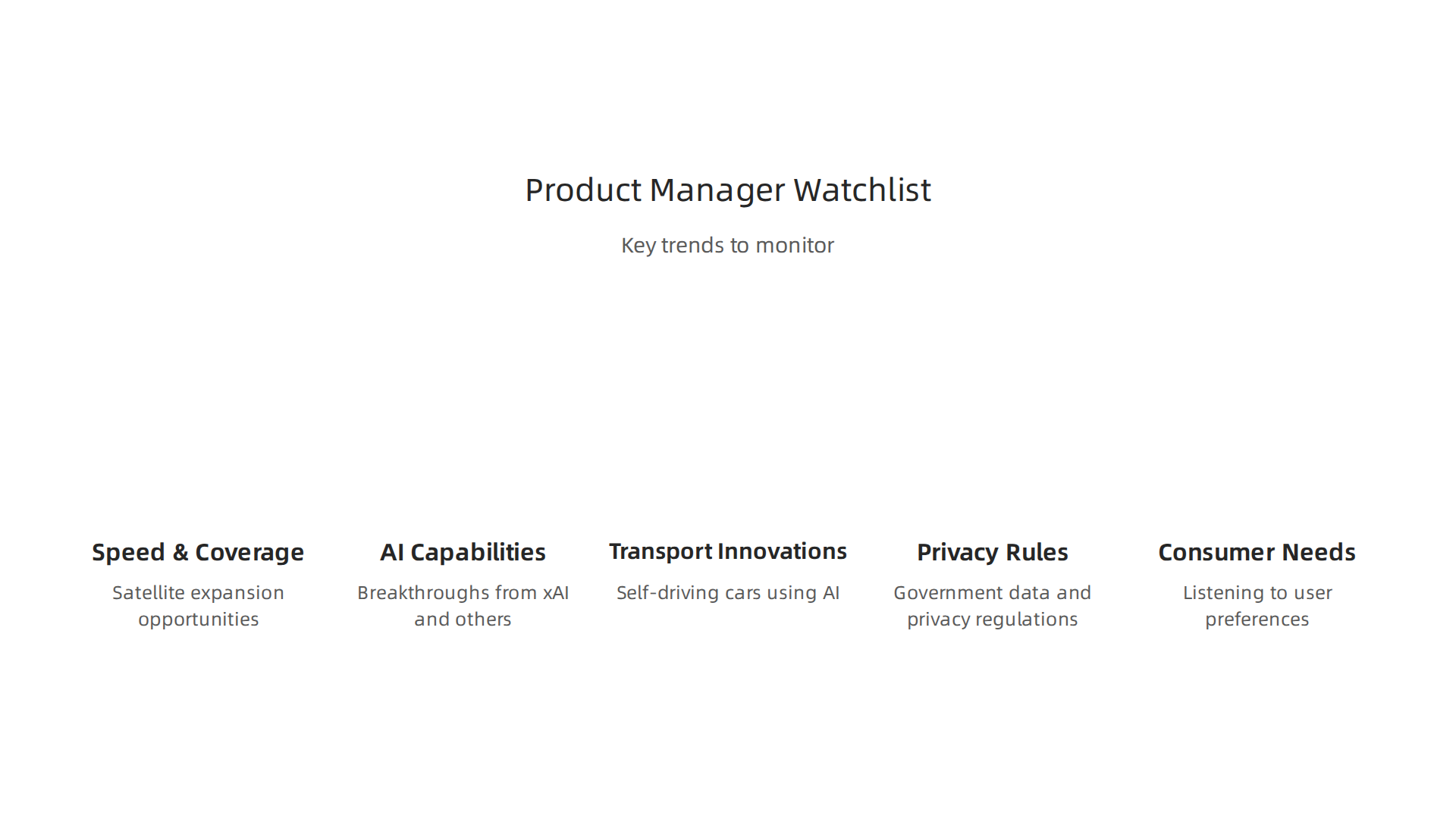
- Speed and Coverage of Satellite Internet: As Starlink and other
elon musk internetservices get faster and cover more areas, new products that rely on constant, high-speed connection will become possible. - AI Capabilities: Watch for new breakthroughs in AI, especially from companies like xAI. Better AI means smarter devices and more helpful services.
- Transport Innovations: See how self-driving cars and other smart vehicles use these connected AI systems. They might become mobile hubs for other services.
- Privacy Rules: Governments will keep making new rules about data and privacy. Staying on top of these will be vital for any new product.
- Consumer Needs: Always listen to what people want and need. Even the coolest technology won’t work if it doesn’t solve a real problem for users.
By watching these signals closely, companies can prepare their plans and marketing strategies to fit this changing world. It’s about figuring out how to Generate New Product Ideas That Deliver Real Value in 2026 by understanding the future of connected tech.
Summary
This article examines Elon Musk’s 2026 push to combine satellite internet and artificial intelligence, focusing on SpaceX’s Starlink and xAI’s Grok. It explains how Starlink’s expanding LEO constellation and new V3 satellites aim to deliver gigabit-class service worldwide and how xAI’s conversational Grok could reshape online experiences. The piece covers user impacts—coverage, speeds, device needs, pricing—and the technical pieces behind service delivery, like ground stations and user terminals. It also explores the strategic merger of SpaceX and xAI, the privacy implications of updated data policies that feed AI training, and the regulatory questions around spectrum and cross‑border data. Readers will learn what to expect from performance and costs, how AI may optimize networks and content moderation, and what product managers and regulators should watch next.