

Why Singapore Matters for AI Innovation: What It Means for You
Singapore is a small country, but it has big plans for how we use smart technology. It wants to be a leader in Artificial Intelligence, or AI. You might be wondering, "Why should I care about what Singapore does with AI?" Well, what happens there can change the phones we use, the apps that help us, and even how businesses work around the world in 2026. Singapore is truly becoming an important global tech hub.
The country has a special plan called the National AI Strategy 2.0, or NAIS 2.0. This plan helps guide how Singapore uses AI for good things, not just for itself but for everyone “Singapore’s National AI Strategy: AI for the public good”. In May 2026, they shared new updates to this plan, focusing on ten key things they want to improve “National AI Strategy Update 2026”. They are putting a lot of effort into making AI better in areas like making things (advanced manufacturing), money services (financial services), how we connect (connectivity), and staying healthy (healthcare) “C. Harness AI As A Strategic Advantage | Singapore Budget”.
This big push for singapore ai means a lot for people like you.
- For regular people, it could mean smarter apps on your phone or easier ways to get things done.

We’ll see many new future tools that help our daily lives.
- For product managers, who create new things, Singapore’s work gives them new ideas to generate new product ideas that deliver real value in 2026. They can see how AI can make products better and more helpful.
- For companies buying technology, it means more choices and better AI tools to help their businesses grow.
Of course, with all this new AI, there are things to think about. Singapore is also working on rules to make sure AI is used safely and fairly, looking at how to govern it so it helps everyone without causing problems “The Promise of Artificial Intelligence”. This helps make sure new AI ideas from Singapore are not just smart, but also good for people. Learning about leaders in AI like Singapore helps us understand the bigger picture of how technology is changing our world. Even someone like Elon Musk AI 2026 watches these global moves.
Want to keep up with the latest in AI and how it affects your daily life and work?
The AI Newsletter Worth Reading delivers clear daily AI updates to your inbox.
Singapore’s clear goals for smart technology are laid out in its National AI Strategy 2.0, also called NAIS 2.0. This strategy is like a detailed map, guiding how the country uses AI not just for itself, but to help people everywhere. It breaks down into important parts: how they do research, train skilled workers, set up rules, and put AI to use.
Building Blocks of Singapore AI
The singapore ai plan has strong foundations, covering different key areas.
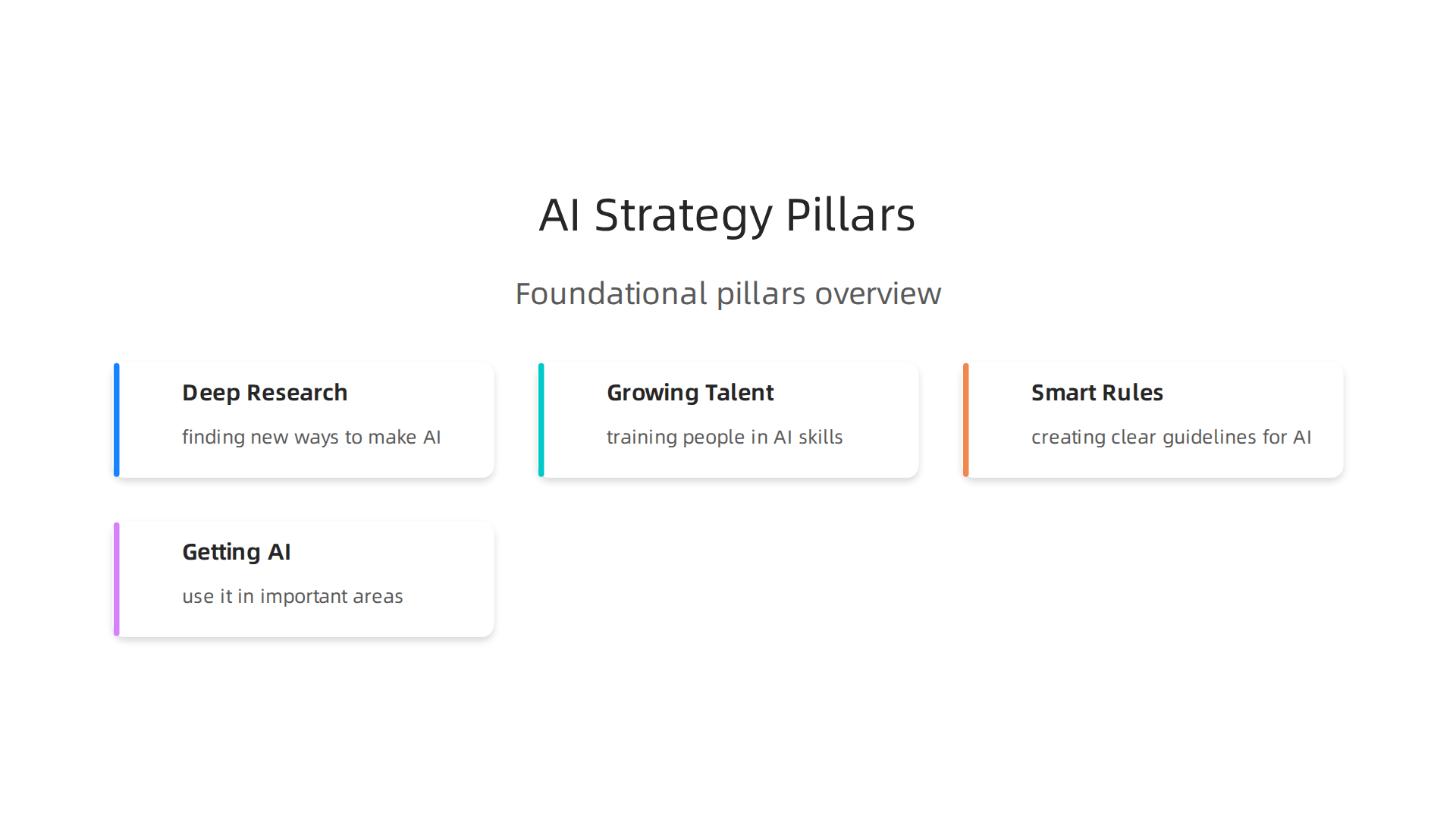
These areas work together to make sure AI grows smartly and safely.
- Deep Research: Singapore is putting a lot of money into finding new ways to make AI work even better. This means experts are looking into new ideas that could lead to amazing future tools for all of us. This focus on deep research helps create the next big breakthroughs, moving beyond just today’s AI. The country has updated its strategy with ten new priorities to guide this work, as noted in the National AI Strategy.
- Growing Talent: For AI to work well, you need smart people to build it and use it. Singapore is focused on training many more people in AI skills, from students to workers already in jobs. This helps make sure there are enough experts to handle new AI ideas and keep Singapore strong as a
tech hub. This also helps companies find the right people to develop and manage their AI products. - Smart Rules and Laws: As AI becomes more common, it’s super important to have rules that keep it fair and safe. Singapore is leading the way in creating clear guidelines for how AI should be used. This means making sure AI doesn’t harm people, respects privacy, and is used in ways everyone can trust. This focus on thoughtful governing intelligence: Singapore’s evolving AI governance framework is a big part of its plan.
- Getting AI into Real Life: It’s not enough to just create AI; you have to use it. Singapore’s strategy aims to get AI into important areas like factories, banks, and healthcare. This means that new AI solutions will be built into products and services we use every day, making them more helpful and efficient. They also share details on how they are working on this, as seen in the Singapore AI Policy Library.
How Singapore’s AI Approach Stands Out
Compared to some other countries, Singapore’s singapore ai strategy is very hands-on and detailed. Instead of just making general statements, it sets out clear missions and projects. Because Singapore is a smaller nation, it can move faster and test out new ideas more easily. This allows it to act as a kind of testing ground for AI, showing other countries how new AI plans can work in practice. It also means that future tools and ideas coming from Singapore often have real-world testing behind them.
This careful and practical way of working with AI means that products and services built with singapore ai might be more reliable and trustworthy. It also helps businesses around the world see clear examples of how to bring AI into their own operations in smart, responsible ways.
Singapore’s strong way of handling AI comes from its top research centers and the many data collections they use. These places are like workshops where new ideas and useful tools for singapore ai are created every day. They make sure that the country stays a leader in technology, pushing forward new ways that AI can help people.
Key Research Hubs
Singapore is home to several well-known places where AI research happens. Universities like the National University of Singapore (NUS) and Nanyang Technological University (NTU) are big players. They have smart people working on everything from how computers learn to understanding human language. The Singapore Management University (SMU) also contributes to this, with research into areas like machine learning.
These universities, along with national labs like AI Singapore (AISG), work together to build a strong tech hub. They focus on making AI models that are not just smart but also fair and helpful for everyone.
Important Data for AI Development
For AI to learn and get better, it needs a lot of data. Think of data as food for AI; the more and better data it gets, the smarter it becomes.
Singapore has some great resources for this:
- Public Open Data: The government offers many datasets through the Singapore Open Data Licence. This means anyone can use this information to build new AI tools and apps. This kind of data can cover things like city planning, transport, or even how much energy buildings use, which you can see in some research posted in Content Posted in 2026 – [email protected]. These are great for making
future toolsthat help people in their daily lives, like apps for navigating the city or managing home energy. - Synthetic Datasets: Sometimes, real data is hard to get or might have privacy concerns. That’s where synthetic data comes in. It’s like fake data that acts just like real data. For example, Nvidia, working with AI Singapore, released a dataset called Nemotron-Personas-Singapore in early 2026. This dataset has over 888,000 made-up people profiles that show Singapore’s mix of cultures and people. This helps AI learn about different types of users without using anyone’s real information, as noted in the news about Nvidia releases synthetic dataset to support Singapore’s AI ambitions.
- Specific Research Datasets: Groups like the Urban Analytics Lab share their research data, too. For instance, they have data on 3D buildings in Singapore that can be used for things like smart city planning or making realistic virtual tours, as shared in their Data and code | Urban Analytics Lab | Singapore.
- Open-Source Models: AI Singapore also offers its own open-source AI models, like the SEA-LION family. These models are available for others to use and build upon, which speeds up AI development for everyone. You can find more about these in the Official Open Source & Research – Singapore AI Observatory. They even have special rules for sharing AI models, called ModelGo licenses, to make sure creators get credit, as explained by the ModelGo License – Singapore – NUS – Institute of Data Science.
These resources are important for any team or company looking to create new AI apps or services. They help make sure that the singapore ai tools are not only smart but also safe and fair for everyone. To learn more about how different technologies are coming together to power new inventions, check out HERE Technologies powering location data and AI innovation.
Want to stay informed about the rapidly changing world of AI?
The AI Newsletter Worth Reading offers clear, daily updates.
Singapore’s helpful research centers and rich data sources set the stage for many new AI companies. This makes the country a strong Singapore Innovation Ecosystem where fresh ideas turn into useful products. If you are an investor looking for the next big thing or a product manager planning your next project, Singapore’s AI startup world has a lot to offer.

New Kinds of AI Companies Are Growing
The Singapore AI scene is buzzing with different types of new companies. Many of these startups are making smart tools for specific industries, often called "verticals." For example, you see a lot of AI companies focusing on money matters (FinTech) and health care. In 2025, AI and FinTech companies together drew a lot of money, showing how important these areas are. According to one report, AI deal value went up by 30% to over $1.8 billion in 2025, accounting for 30% of Singapore’s total venture deals, and AI startups made up almost 43% of all deals, up from 30.9% in 2024 AI, fintech draw venture cash in $5.9b funding year. Other startups build "tooling," which means they create the basic software and systems that other AI companies use to build their own products.
Many Singapore AI startups also work on solutions for big businesses (enterprise AI) rather than just apps for everyday users (consumer AI). This is because companies are willing to invest more in AI tools that can make their work better or faster. For instance, some startups are working with Google and EnterpriseSG to speed up the creation of new generative AI tools for businesses in Singapore Google, EnterpriseSG launch accelerator for generative AI startups in Singapore. One Singapore AI startup, Akro, even raised $700,000 recently for its AI work Singapore AI startup Akro raises $700K and other SE Asia ….
Money Coming In: What Investors Need to Know
Investment in Singapore AI startups is growing fast. By July 2026, AI companies in Singapore had already raised $4.07 billion in funding Artificial Intelligence in Singapore – 2026 Market & Investment Trends – Tracxn. Overall, Singapore has become a top place in Southeast Asia for AI funding, pulling in approximately $9.3 billion for local AI companies up to July 2026 Singapore Dominates Southeast Asia AI Funding as …. This heavy investment means product managers should think about making future tools that solve real-world business problems. There’s a strong focus on enterprise solutions that can make a big difference for companies.
Investors like SGInnovate, Antler, and Tin Men Capital are actively looking for deep tech and enterprise AI startups. Tin Men Capital, for example, focuses specifically on enterprise AI and B2B software 8 Singapore AI investors backing deep tech startups in 2026. For those planning product roadmaps, this means a chance to build AI solutions for growing industries like finance, healthcare, and smart city management. The government also helps by connecting startups with bigger companies and investors to help them grow faster. If you’re looking to generate new product ideas that deliver real value in 2026, the strong support and clear funding trends in Singapore’s AI space offer a clear path.
The consistent flow of money also means more partnerships. Big companies like Microsoft are working with Singapore to give more support to AI startups, helping them scale faster More support for AI startups to scale faster under new …. This kind of teamwork helps new businesses get the tools and connections they need to succeed in this fast-moving tech hub.
Real-world use cases: healthcare, finance, and smart cities in Singapore
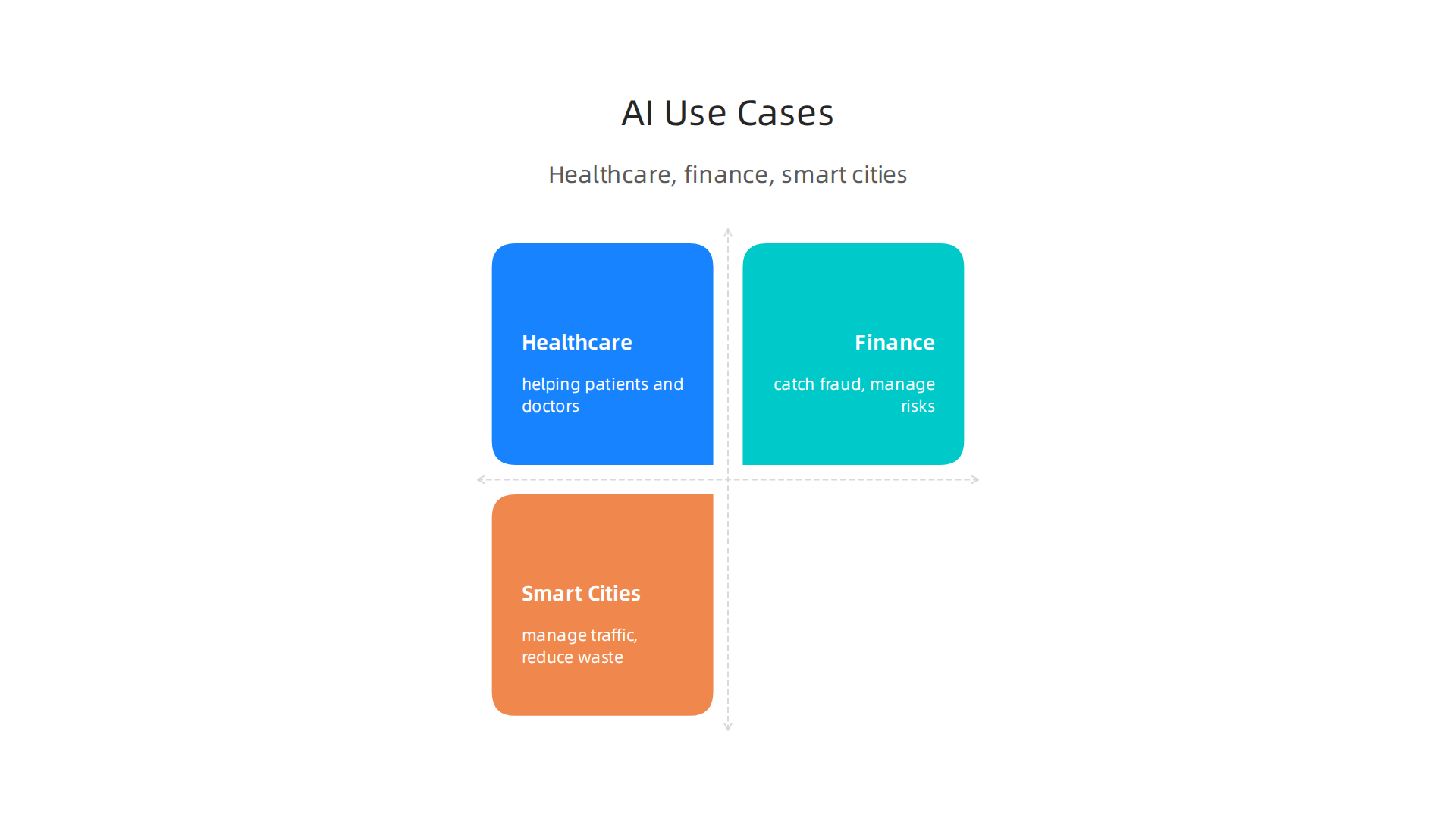
The strong support for AI in Singapore isn’t just about money; it’s about making real changes in daily life. The country’s leaders know that AI can help solve big problems. That’s why they have a plan called the National AI Strategy 2.0, which was updated in May 2026. This plan focuses on using AI in important areas like healthcare, financial services, and making cities smarter
National AI Strategy Update 2026 – Singapore AI Observatory. For product managers and investors, seeing these real-world uses shows where the true value lies.
AI at Work in Healthcare
In healthcare, singapore ai solutions are already helping patients and doctors. For example, AI agents are being used in hospitals and clinics to cut down on waiting times and help doctors decide on the best care for patients

Singapore’s Smart Nation Initiative: How AI Agents Are Transforming Public Healthcare. Imagine an AI system that can help predict if someone is at risk for diabetes or high cholesterol. Synapxe created "ACE-AI" to do just that, and it’s being rolled out to many clinics. Another tool, "RUSSELL-GPT," helps doctors write notes faster, saving them about half their documentation time AI Adoption in Singapore — enterprise uptake data tracker · sgai.
These tools show that future tools in healthcare need to be easy for doctors and nurses to use, and they must help patients directly. A big lesson here is that while AI is powerful, people still want to feel cared for by humans. About 55% of Singapore consumers worry about losing touch with human agents when AI is used too much Singapore consumers trust AI, but privacy concerns still linger. So, it’s key to build AI that works with people, not instead of them.
Boosting Finance with AI
The financial world in Singapore also uses a lot of singapore ai. Banks and financial companies use AI for many things. It helps them catch fraud, manage risks, and make back-office tasks like checking transactions much faster Singapore’s AI Ecosystem Research, development, and governance ESF Research Report. AI can analyze lots of information quickly, which is super helpful when dealing with money. This means financial service providers can offer better, safer services to their customers. Product teams looking to build in this area should focus on making AI that is very secure and can handle lots of data, while also being clear about how it makes decisions.
Smart Cities and Public Services
Singapore is known as a smart city, and AI plays a big role in this. AI helps manage traffic better, reduce waste, and even save energy in buildings Artificial Intelligence in Smart City Governance: Case Studies of Singapore. Think about how much smoother city life can be when systems can predict problems before they happen. For product managers, the lesson from smart city projects is to design AI that can adapt to different situations and handle large amounts of data in real-time. This kind of tech hub thinking is what makes Singapore a leader.
One challenge for all these areas is making sure the AI systems can easily talk to each other and share data safely. Also, managing the costs of setting up and running big AI projects can be tricky AI in Action: Singapore Edition – Dell. But by learning from these early uses, new AI companies can build even better future tools.
To stay on top of the latest advancements and insights in the world of AI, consider signing up for The AI Newsletter Worth Reading.
After seeing how much Singapore uses AI in real life, product managers and people who buy technology need a clear way to pick the best AI solutions. It’s not just about what an AI can do, but how well it fits with your business goals and how reliable it is. This is especially true in Singapore, which is a major tech hub for new ideas and growth.
What product managers and technology buyers need to evaluate in Singapore AI vendors
When looking at different AI companies in Singapore, it’s smart to have a checklist.
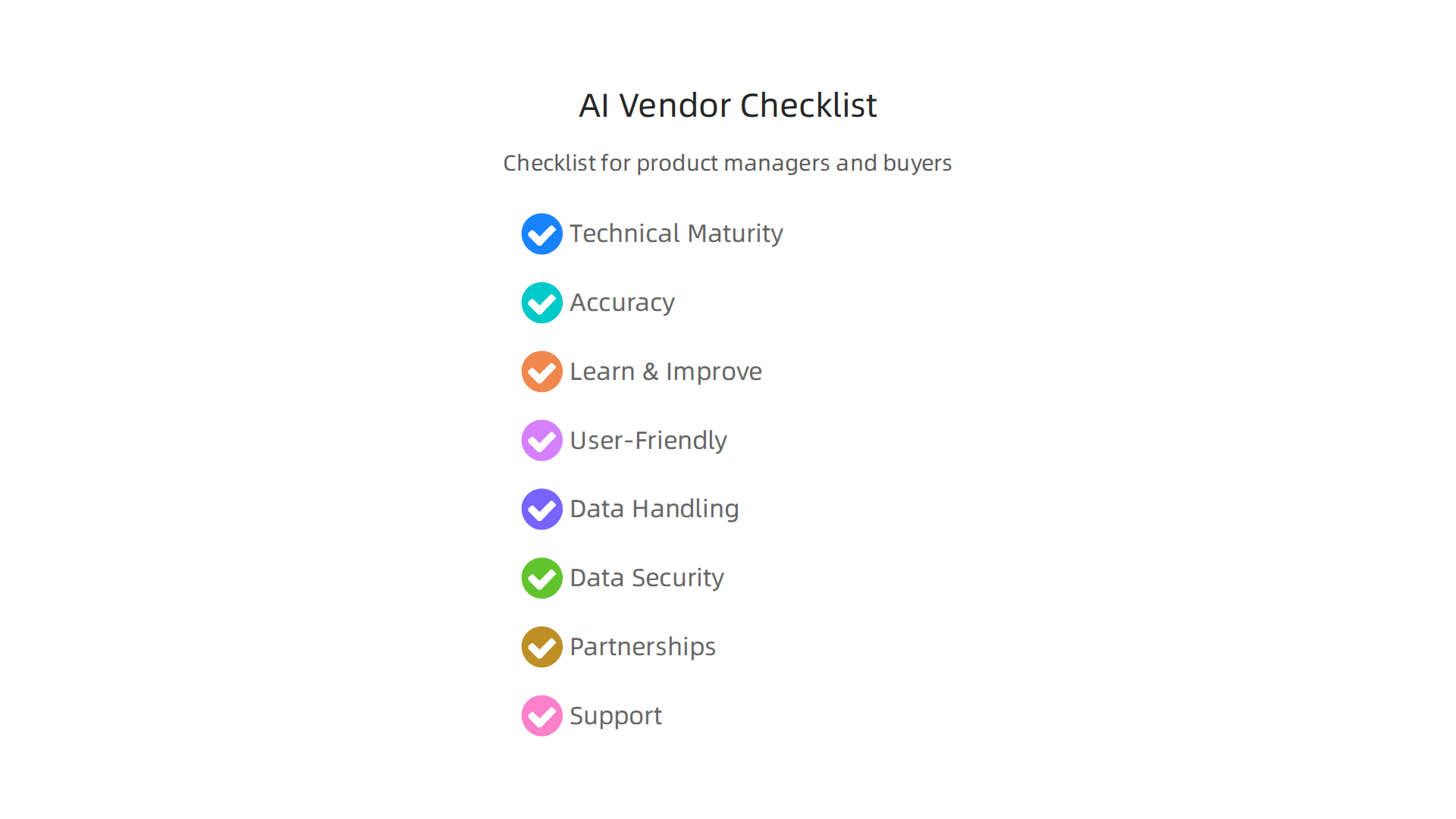
This helps you make sure you’re picking a solution that will truly help your business grow. Singapore’s AI market is big, with about $4.07 billion raised by AI companies in 2026 alone Artificial Intelligence in Singapore – 2026 Market & Investment Trends. So, there are many choices.
Decision Checklist for Evaluating AI Vendors
Here are key things to look at:
-
Technical Maturity and Performance:
- Is the AI ready to use now? Some AI might be new and still testing, while others are proven and stable. Look for AI that has already worked well in similar situations.
- How accurate is it? For example, in healthcare or finance, mistakes can be very costly. Make sure the AI is precise.
- Can it learn and get better? The best future tools using singapore ai will keep improving over time with new data.
- Is it easy to use? Even the smartest AI won’t help if your team can’t figure it out. User-friendly design is a must.
-
Data Handling and Security:
- How does the AI handle your data? Singapore has strict rules about data. You need to know if the vendor keeps your information safe and private.
- Where is your data stored? Many companies prefer their data to stay within Singapore for legal reasons.
- Can you trust their privacy policies? About 58% of consumers in Singapore worry about their personal data being misused by AI Singapore consumers trust AI, but privacy concerns still linger. Make sure the vendor has strong rules.
-
Partnerships and Support:
- Who do they work with? A vendor with good partners often means they are well-connected and have strong backing. For instance, EnterpriseSG works with big names like Google to help AI startups grow faster Google, EnterpriseSG launch accelerator for generative AI startups in Singapore.
- What kind of help do they offer? You’ll need good support if something goes wrong or you need to update the AI.
- Are they growing? Look for vendors that have received good investments. In 2025, AI deals in Singapore accounted for 30% of all venture funding AI, fintech draw venture cash in $5.9b funding year.
Procurement and Integration Considerations
When you decide to buy an AI solution, think about how it will fit into your company.
- Fitting into your current systems: Does the new AI work smoothly with the software and tools you already have? It should not create more problems than it solves.
- Customization needs: Can the AI be changed to fit your exact business needs, or is it a one-size-fits-all solution?
- Costs over time: Don’t just look at the upfront price. Think about how much it will cost to run and maintain the AI over many years. This includes things like computing power and ongoing support, which can be tricky to manage for large AI projects.
Choosing the right singapore ai partner means looking beyond the buzzwords and focusing on practical benefits, strong security, and good support. This helps ensure your investment in AI truly pays off.
Choosing an AI solution means looking at what it offers, how safe it is, and if it has good support. This is true for businesses, and it’s even more important for everyday people who use AI. When you use AI in Singapore, you should know about your privacy, how your information is kept safe, and the rules that protect you.
Privacy, security, and regulations: what consumers should know about AI in Singapore
In Singapore, we use AI more and more in our daily lives. This means it’s super important to understand how these tools handle your personal information. Think about when you use smart apps or online helpers. How do you know your data is safe?
Singapore’s Rules for Your Data
Singapore has clear rules to protect your personal information.
The main rulebook is called the Personal Data Protection Act (PDPA). This law helps make sure that companies collect, use, and share your personal data in a proper way. It means they need to tell you why they need your data and usually ask for your permission.
Actually, there aren’t special laws just for AI right now in Singapore. But the PDPA still applies to AI systems. This means that if an AI uses your personal data, like your name or what you like to buy, the company running that AI must follow the PDPA rules. For example, the Personal Data Protection Commission (PDPC) has given advice on how to use personal data in AI systems for recommendations and decisions safely Advisory Guidelines on use of Personal Data in AI… – PDPC. They even put out new guidelines in 2026 about using personal data in Generative AI Advisory Guidelines on the use of Personal Data in Generative AI. These guidelines help companies understand how to use singapore ai fairly and openly.
Keeping Your Information Safe from AI Problems
Even with rules, there are still things to watch out for. Here are some common problems with AI and what they mean for you:
- Data leaks: Sometimes, the information AI uses can get out by accident. This is why companies need strong security to stop bad people from getting your data.
- Unfair decisions: AI learns from data. If the data is not fair, the AI might make unfair decisions about you. For example, it might offer different prices or services based on things it shouldn’t.
- Not knowing what the AI does: Sometimes, it’s hard to tell how an AI made a certain decision. Companies should try to be open about how their AI works, especially when it affects you.
To help protect yourself, you can take simple steps. Always read the privacy policy when you sign up for new apps or services that use AI. Ask what data they collect and why. You can also learn to keep your own digital life safe by looking into ways to secure your phone and find digital balance for mobile tech wellness.
Singapore is committed to making sure AI is used in a good way, both for businesses and for you. Knowing these rules and tips can help you use AI with more peace of mind.
For those who want to dig deeper into the world of AI, staying updated is key. You can get clear daily AI updates by subscribing to The AI Newsletter Worth Reading.
After understanding the rules and tips for using AI safely, the next step is to stay informed about new developments. The world of AI changes very fast. It’s important for everyone, whether you use AI for fun or for work, to know how to keep up with the latest advancements in Singapore AI and worldwide.
Practical next steps: how consumers and professionals can stay current and evaluate Singapore AI advances
Staying current with AI means more than just reading the news. It means actively looking at new ideas, trying out smart tools, and talking with others who are also interested in AI. This helps you use AI in a good way and keep your information safe.
How to Monitor New AI Developments
Singapore is a major tech hub, so there are always new things happening with AI here. To stay updated, you can:
- Check Official Sources: Government groups like the Personal Data Protection Commission (PDPC) often share new guidelines and information. They help make sure AI is used fairly. You can also look at reports from Singapore’s AI Observatory which shares information on open-source AI projects Official Open Source & Research – Singapore AI Observatory.
- Follow Tech News: Keep an eye on local and global tech news that talks about AI in Singapore. For example, big companies like Nvidia are working with Singapore to create new tools, like special datasets to help AI learn more about Singapore’s unique mix of people and culture Nvidia releases synthetic dataset to support Singapore’s AI ambitions.
- Look at Research Papers: For those who like to dig deeper, universities in Singapore publish many papers on AI. This kind of information helps us see what future tools might be coming.
How to Safely Try New AI Features
When you want to try a new AI app or service, remember to do it carefully.
- For Consumers: Start with small steps. Check what data the AI needs and if you are comfortable sharing it. Always look for reviews from other users. Make sure you understand what the AI does before you rely on it. Learning how to navigate digital technology and master smart use can help you avoid feeling overwhelmed by new tech.
- For Professionals: If you are using or building AI for your job, it’s very important to understand the rules around it. This includes copyright laws for the data used to train AI models About Copyright: Artificial Intelligence (AI) – NTU LibGuides and how to license your own AI models if you share them ModelGo License – Singapore – NUS – Institute of Data Science. Singapore’s legal guides on Artificial Intelligence can also give you a lot of useful information Artificial Intelligence – Legal 500 Country Comparative Guides 2026.
Engaging with the AI Community
Talking to others is a great way to learn.
- Join Online Groups: Many online forums or social media groups discuss new AI tools and their impact. You can ask questions and share your experiences.
- Attend Events: Keep an eye out for AI-related events, workshops, or festivals. For instance, the Singapore Data Festival, which happened in July 2026, brought together many people to talk about how to use data for businesses and with AI Inaugural Singapore Data Festival helps businesses harness data’s …. These events are good places to learn and connect.
Routine Checks for AI Use
Even after you start using an AI tool, it’s a good idea to check it regularly.
- Review Settings: Go back to the app’s settings now and then. Make sure your privacy choices are still what you want them to be.
- Check for Updates: AI tools often get updates that change how they work or how they use your data. Keep an eye on these changes.
- Assess Benefits and Risks: Ask yourself if the AI is still helping you in the way you expected. Are there any new risks you’ve noticed?
By taking these practical steps, you can feel more confident and in control as you explore the world of Singapore AI. You can enjoy the benefits of these exciting future tools while also protecting yourself.
Summary
This article explains why Singapore matters as a fast-moving hub for artificial intelligence and what that shift means for everyday users, product managers, investors, and businesses. It reviews Singapore’s National AI Strategy 2.0 and the country’s hands-on approach to scaling AI through deep research, talent development, clear governance, and real-world pilots in manufacturing, finance, healthcare and smart cities. The piece outlines the data and model resources available—public datasets, synthetic data, and open-source models—and shows how local research centres and startups turn those resources into practical products. It covers funding trends, types of AI companies growing in Singapore, and what investors and buyers should watch when choosing vendors. The article also explains privacy and legal basics under the PDPA and new advisory guidance for generative AI, plus common risks like bias or data leaks. Finally, it gives concrete next steps for staying informed, safely testing new tools, and evaluating AI suppliers so readers can adopt Singapore AI with more confidence.