

Why ‘new product ideas’ are the most valuable skill in 2026
In 2026, it feels like there’s a new gadget or app popping up every day. Think about all the smart devices, new AI tools, and clever little helpers. It’s exciting, but it can also feel like too much. This is what we call ‘information overload’.
Sometimes, these new things are just "new echo new tech," meaning they sound cool but don’t really make our lives better. We see lots of shiny new items, but many don’t truly solve everyday problems. For instance, reports show that while retail revenue may go up, the actual number of tech products people buy is staying pretty flat in the U.S. this year, suggesting consumers are looking for real value, not just more stuff CTA U.S. Consumer Technology One-Year Industry ….
That’s why having great new product ideas is the most valuable skill you can have right now. It’s about looking past the hype to find what truly matters to people. This article will show you a clear, easy-to-follow way to come up with product ideas that are not just new, but also useful and wanted by many.

We’ll help you learn how to make ideas that can actually work, grow, and bring real value to the world.
Want to keep up with the latest in AI and tech without feeling overwhelmed? Getting clear, daily updates can really help you spot where the next great idea might come from. Get clear daily AI updates from The AI Newsletter Worth Reading.
Finding truly useful new product ideas means looking past the surface. It’s not about making another "new echo new tech" item that just adds to the noise. Instead, it’s about solving real problems that people face every day. To do this, we need to understand what those problems are. This first step is often called "spotting real user pain."
Qualitative Research: Listening to People’s Stories
One way to find out what people truly need is by using qualitative research. This means getting to know people and their experiences up close. It’s like being a detective for hidden problems.
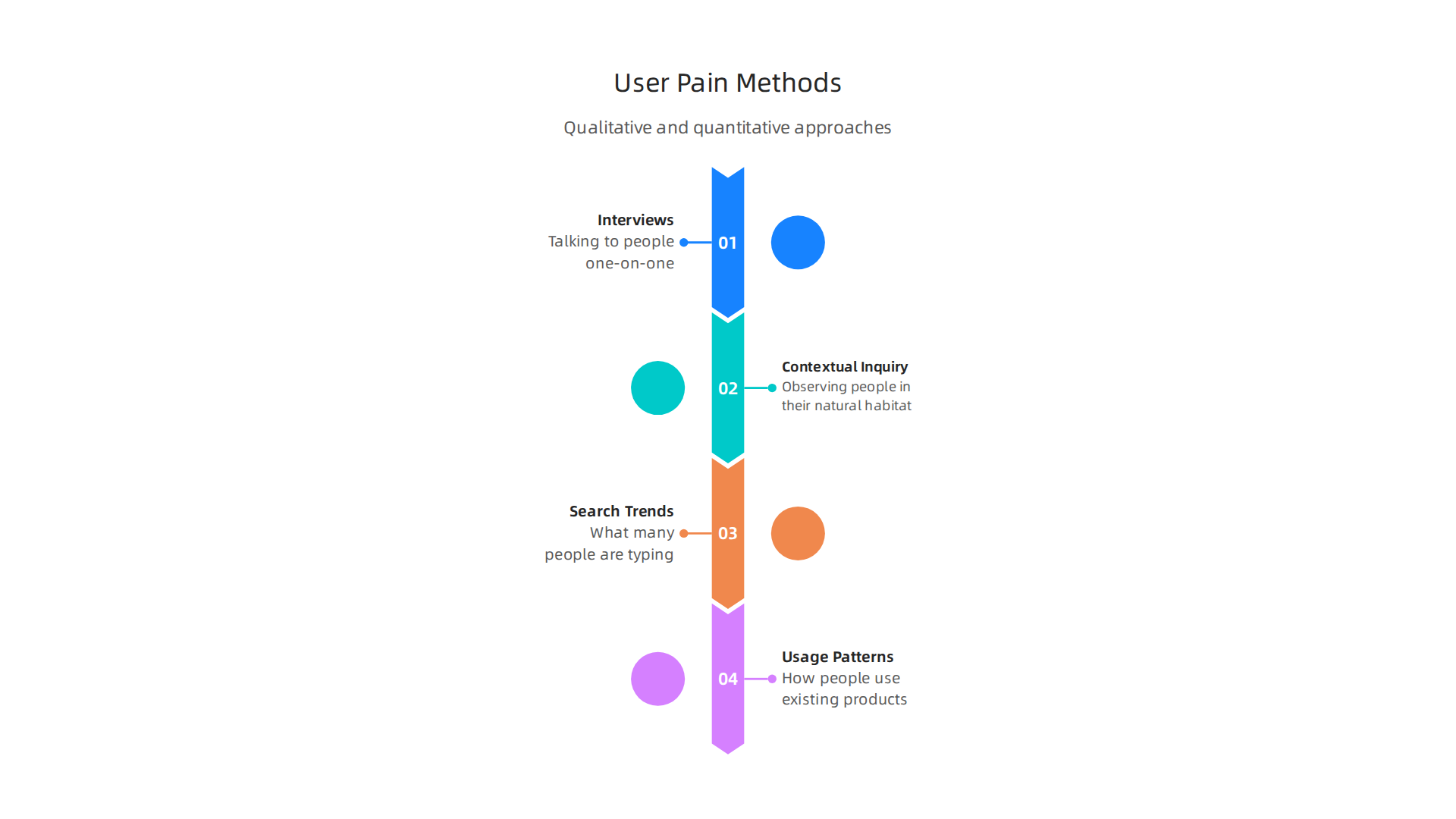
- Interviews: This involves talking to people one-on-one. You ask them about their daily lives, what challenges they face, and what makes them feel frustrated with current tools or tasks. For example, you might ask someone how they manage their smart home devices and listen carefully to their complaints. They might say, "It’s too hard to connect everything," or "I wish my gadgets talked to each other better." These stories give you clues about where a new product could help.
- Contextual Inquiry: This is like watching people in their natural habitat. You observe them while they do everyday things. Imagine watching someone try to set up a new app or use a kitchen gadget. They might struggle with a step, or skip a feature because it’s too confusing. Often, people don’t even realize they’re having a problem until you watch them closely. This method helps uncover needs that people can’t easily put into words.
These deep dives help you understand the why behind a problem. They show you the unmet needs that no one has properly solved yet. Think of it like a doctor listening to a patient’s symptoms to understand their pain.
Quantitative Signals: Checking the Numbers
Once you have some ideas about common problems from talking to people, it’s smart to check if these problems are big enough to be worth solving for many people. This is where quantitative research comes in. It helps you see if your ideas have real demand.
- Search Trends: What are many people typing into search engines like Google in 2026? If a lot of people are searching for "how to fix my smart fridge" or "easier way to manage digital photos," it tells you there’s a widespread problem. These trends are strong signals that many individuals are looking for better solutions.
- Usage Patterns: Look at how people use existing products or services. Do they quickly stop using certain apps? Do many users abandon a website at a specific step? These patterns can show where existing solutions are failing and where a new idea could fit in. For instance, if people download an app for productivity but uninstall it quickly, it might mean the app isn’t truly helping them. Reports like the Digital Consumer Trends 2026 help track how consumers interact with technology.
By combining the personal stories from qualitative research with the broad data from quantitative research, you get a much clearer picture.
You can confirm that the pain points you found are real and that a significant number of people would want a solution. This approach builds a strong foundation for developing valuable new product ideas that truly matter.
Once you know what problems people are facing, the next big step for any new product ideas is to ask: can we actually build it with today’s technology? This is called checking the "technical feasibility." It’s no good having a great idea if the tools needed to make it aren’t ready yet. This part looks at AI, hardware, and what computer platforms can do.
Is AI Ready for Your Idea?
Artificial intelligence (AI) is a huge helper for many new products today. But you need to see if the AI models available in 2026 can do what your idea needs.
- Current AI Power: Can today’s AI understand complex speech, see objects in images, or make smart choices fast enough? For example, in 2026, many AI models can run right on your phone or device, not just in the cloud. This "on-device AI" means they work even without internet and are often quicker and more private. Companies like Apple and Google have made big steps in making AI models smaller and faster for devices, like with Core ML 7 for iOS 19 or Google’s Gemma 4. These advancements allow complex AI to fit into everyday gadgets, cutting down model size by a lot with little loss in quality. For instance, Google’s Gemma 4 is a top "edge model" for early 2026, working very well on phones like the iPhone 16 Pro. This means many tasks, from image sorting to talking with virtual helpers, can happen right on your device. Experts say this "on-device inference" can happen in less than 20 milliseconds on some Android phones, making new product ideas that use AI very practical.
- Data and Training: Does your AI idea need a lot of special information to learn? Is that information easy to get? Most importantly, can the AI truly understand and act on that information? Some AI models are now so good they can solve hard science questions and math problems, sometimes even better than people. This shows how far AI has come. To keep up with how fast AI is changing, getting regular updates is key. You might want to check out The AI Newsletter Worth Reading for clear daily AI updates.
Checking Hardware and Sensors
Many new product ideas depend on physical parts like cameras, microphones, or special sensors.
- Are the Parts Available? Do the cameras, sensors, or other gadgets you need already exist? Are they small enough? Are they cheap enough to make your product affordable? In 2026, new ways of thinking about tech mean more intelligent wearables and smart home devices. This changes what people expect from their tech, pushing for more convenience and personalized experiences.
- New Tech vs. Old Tech: Will your product need brand-new hardware, or can it use what’s already out there? Sometimes, a "new echo new tech" idea fails because the custom hardware it needs is too costly or hard to make.
Platform Readiness and Risks
Even with great AI and hardware, your product needs a place to live. That means thinking about operating systems and other software tools.
- Operating Systems (OS): Will your product work on Apple’s iOS, Google’s Android, Windows, or another system? Each system has its own rules and tools for building apps. Are these tools, called SDKs, easy to use for what you want to build? For example, developers can now access on-device language models through Apple’s Foundation Models framework and Google’s MediaPipe. These tools make it simpler to build AI features into apps.
- Hardware Limits: Does the device your product will run on have enough battery life, processing power, or memory? For example, building apps that use a lot of on-device AI means making sure the phone or gadget can handle it without slowing down or draining the battery too fast.
- Integration Risks: This means checking how well all the different parts of your product will work together. Will the AI talk to the sensors correctly? Will the app run smoothly on the chosen operating system? Thinking about how to deal with these risks early can save a lot of trouble later. If you want to dive deeper into how technology changes and how to manage these new digital tools, learning to navigate digital technology can be very helpful.
By carefully looking at these technical details, you can see if your exciting new product ideas are actually possible to build right now. This helps you avoid wasting time and money on ideas that can’t be made real yet, or that will cost too much to develop.
Once you know if your exciting new product ideas can actually be built, the next big question is: will people want to use it? This is where good design comes in. It’s not just about making something look nice; it’s about making it easy to understand and use, so it truly adds value to people’s lives.
Simplicity and Clear Value
Making new product ideas successful means making them simple.
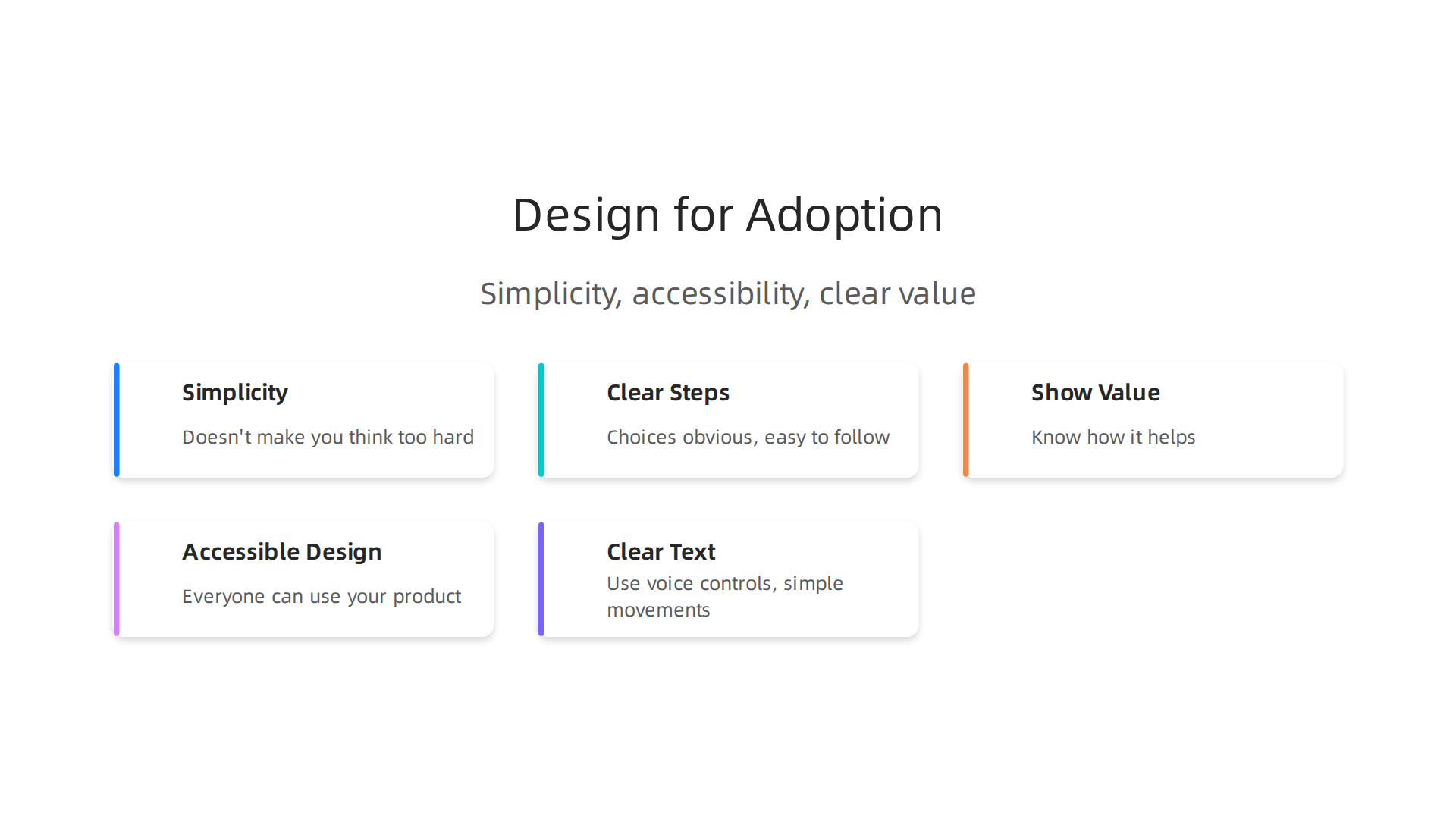
When something is simple, it reduces "cognitive load." This is a fancy way of saying it doesn’t make you think too hard. Imagine an app with too many buttons or confusing menus. People will quickly give up. A good design makes steps clear, choices obvious, and shows you the value right away. You should know what a product does and how it helps you without needing a long instruction manual. For example, learning how to transform your Samsung phone smart layout ideas for productivity and security shows how much easier a clear design can make your daily tasks.
When people don’t have to struggle to figure out how to use something, they’re more likely to keep using it. This is why companies spend so much time on "user experience" or UX. A product with a great UX feels natural and helpful. It tells you exactly why you need it and how it will make your life better. This is especially true in 2026, as people are always looking for ways to secure your phone and find digital balance for mobile tech wellness without feeling overwhelmed by complex features.
Accessibility and Inclusive Design
Another key part of good design for new product ideas is making them "accessible." This means everyone can use your product, no matter their abilities. Think about people who cannot see well, or cannot use their hands easily. Designing for them helps everyone. For example, clear text, voice controls, and simple movements make a product better for more people.
Actually, making things accessible is a smart business move. It means more people can use your product, which opens up a bigger market. Research shows that focusing on accessibility can greatly improve user experience (UX) for all users. In fact, 91% of people say that digital accessibility makes their overall experience better, and 90% report it boosts customer satisfaction in 2026, according to the State of Accessibility Report 2025-2026 | Key Data.
Unfortunately, many apps still have problems. A report found that 72% of user journeys had problems with accessibility in some top mobile apps, leading to "poor" or "failing" experiences for users in 2026. This often causes people to give up on a product or even uninstall the app entirely. You can learn more in The State of Mobile App Accessibility report. By making new product ideas easy for everyone to use, you not only do good, but you also make your product stand out. Investing in good user experience (UX) design can bring a huge return, with every $1 spent possibly bringing back $100. This is a key UX statistic for 2026.
After designing new product ideas to be simple and helpful for everyone, the next step is to actually build and test them fast. You want to learn quickly if your ideas truly work before spending a lot of time and money. This is where prototyping and quick experiments come in.
Prototype and Learn Fast: Experiments That De-Risk Ideas
To make sure your new product ideas will be a hit, you need to test them early and often.

The goal is to learn as much as possible, as fast as you can. This is often done by creating a "Minimum Viable Product" or MVP. Think of an MVP as the simplest version of your new product that still lets people try its main feature and gives you important feedback. It’s not perfect or polished; it’s just enough to learn from.
For software products like apps, an MVP might not even be a fully working program. You could use a "smoke test" where you put up a simple webpage describing your idea to see if people sign up for more information. This shows if there’s real interest. Another way is a "concierge MVP," where you offer the service manually at first. For example, if your new product idea is a personalized meal planning app, you might manually create meal plans for a few early users to see what they like and don’t like.
For hardware products, like a new echo new tech gadget, you can use things like 3D printing to make basic models. These models might not work fully, but they let people hold the product, see its size, and tell you if it feels right. This helps you catch problems with the design or how it feels to use, long before you build thousands of them. Rapid testing helps de-risk new product ideas, meaning it reduces the chances of failure later on.
Getting your new product ideas into the hands of early users is super important. Setting up "early user labs" lets real people try out your simple prototypes or MVPs. You watch them, ask questions, and see what confuses them or what they love. This direct feedback is gold. For example, new AI applications for on-device tech, which run right on your phone or computer without needing the internet, are a big deal in 2026. Companies are constantly prototyping and testing these to make them faster and more helpful for daily use, like those mentioned in a report on On-Device AI in 2026: Building Apps That Work Without the Cloud.
The world of technology, especially with AI, is changing so fast that learning quickly is the only way to stay ahead. The way software is being made is even changing to be more "AI-native," meaning AI is built in from the start. This makes rapid testing even more important. You can see how fast this area is growing by looking at The State of AI-Native Software Delivery 2026. By constantly testing and learning, you can adjust your new product ideas to meet real user needs and unlock the smart future that technology promises.
For those keen to stay on top of the latest in AI and tech, don’t miss out.
The AI Newsletter Worth Reading
Learning quickly about your new product ideas is only one part of making them a success. Another very important part is building trust with the people who will use your products. This means making sure your products are safe, protect user information, and follow all the rules. In today’s world of smart gadgets and AI, thinking about privacy, security, and legal rules from the very start is not just a good idea; it’s a must.
Key Privacy and Security Design Patterns
When you’re creating new product ideas, especially for something like a new echo new tech device or a smart app, you need to think about privacy and security from day one. It’s like building a house: you put in a strong foundation and good locks before you even think about the paint color. For tech products, this means including certain design choices.
- Data Minimization: Only collect the information you absolutely need for your product to work. Less data means less risk if there’s ever a security problem.
- Built-in Security: Make sure your product is designed to be safe from attacks. This could mean encrypting data so only authorized people can read it, or having strong ways to protect user accounts.
- User Control: Give users clear and easy ways to control their own information. They should be able to see what data is collected, how it’s used, and even ask for it to be deleted.
- Transparency: Be open about your privacy policies. Explain in simple language how you handle user data, not just in long legal documents.
Building these security steps into your new product ideas helps keep user data safe. It also means you respect your users, which helps them trust your product and brand. For personal devices, knowing how to manage your privacy is key. You can learn more about managing your settings to protect your data by reading about how to Master your Samsung notification and tracking settings for enhanced privacy.
Regulatory Trends and Compliance Requirements
The rules around data privacy and how AI is used are changing very quickly in 2026. Governments around the world are creating new laws to protect people’s information and ensure AI is used safely and fairly. Staying on top of these rules is vital for any new product idea.
For example, in the United States, states like California are introducing new acts, such as the California Generative AI Training Data Transparency Act, which went into effect on January 1, 2026, creating new rules for AI developers on being clear about the data they use to train AI. Other states like Texas have enacted laws like TRAIGA, requiring healthcare providers to tell patients when AI systems are being used in their treatment or service 2026 AI Laws Update: Key Regulations and Practical … For product makers, staying aware of these new laws is important, as states continue to expand privacy and AI regulation in 2026 March 2026 roundup on privacy, security and AI regulation.
Across the ocean, the European Union (EU) has regulations like the EU Data Act that covers connected devices, which started applying main rules from September 2025 2026 AI Laws Update: Key Regulations and Practical …. The UK is also setting clear expectations for smart device companies on how to handle personal information responsibly Setting out our expectations for the smart device industry.
These new rules mean that new product ideas need to be planned with these laws in mind from the very beginning. Forgetting about them can lead to big problems, like fines or losing trust from users. This makes things like California’s rules on automated decision-making and risk assessment for AI very important to follow Privacy and AI Heatmap for 2026: What Device & Drug Makers ….
How Regulations Affect Product Development
These regulatory trends and compliance requirements can change how new product ideas are designed and how long it takes to bring them to market. You might need to adjust features, add specific user controls, or even change how your product collects and stores data. Planning for these rules early helps you avoid costly delays or having to redesign your product later. It’s all part of making sure your new product ideas are not only exciting but also responsible and trustworthy for everyone.
After making sure your new product ideas are safe, secure, and follow all the rules, the next big step is figuring out how to make them a successful business.

This means deciding how you will earn money from your product and how you will get it to your customers. It’s like having a great recipe; you still need to decide if you’re selling it as a meal, a meal kit, or opening a restaurant.
Choosing the Right Business Model
For any new product idea, picking the right way to make money is super important. This is called your business model. Here are some common ways:
- One-time Purchase: You sell your product once, and the customer owns it. Think of buying a new phone or a video game.
- Subscription: Customers pay a small amount regularly, like every month, to keep using your service or product. Many streaming services or apps work this way.
- Freemium: You give away a basic version of your product for free, but customers pay if they want extra features or a better experience.
- Advertising: Your product is free to use, but you show ads to users to earn money.
The best model depends on what your new product ideas are and who you’re selling to. For instance, a new echo new tech device might be a one-time purchase, but an app that goes with it could be a subscription.
Getting Your Product to Customers: Go-to-Market Strategies
Once you know how you’ll make money, you need a "go-to-market" (GTM) plan. This is your roadmap for how to introduce your product to the world and get people to buy it. In 2026, a good GTM plan helps your product stand out. It includes things like understanding who your customers are, what you will say about your product, and where you will sell it. Experts say a full GTM plan covers many parts, from figuring out your ideal customer to how you will measure success Go-to-Market Strategy Components: The Data-Driven Framework for 2026.
Finding Your Customers and Growing Your Reach
Part of your GTM strategy is choosing where to sell and how to get noticed. These are your distribution channels. For new product ideas, especially tech, you can use different places:
- Online Stores: Setting up your own website or selling through big online retailers.
- Social Media: Using platforms like TikTok to show off consumer products or LinkedIn for tools made for businesses Best Channels for Launching a Startup Product in 2026.
- Tech Websites: Launching on sites like Product Hunt to reach early tech users.
- Partnerships: Working with other companies to reach their customers.
It’s smart to try out different ways to see what works best. This is called running "growth experiments." By testing different messages and places, you can learn how customers react before spending a lot of money. Modern businesses in 2026 often mix sales methods, using both direct sales and ways for customers to try a product for free before buying State of Go-to-Market 2026. This helps them connect with customers in the ways customers want to buy.
Staying up-to-date on these kinds of business and marketing strategies, especially how AI changes them, is key for any new tech product.
Get clear daily AI updates from The AI Newsletter Worth Reading.
Summary
This article explains why the ability to generate new product ideas that actually solve real problems is the most valuable skill in 2026. It walks through a practical process—from spotting genuine user pain with qualitative research to confirming demand with quantitative signals—then shows how to assess technical feasibility (AI, hardware, platforms) and design for simplicity and accessibility. You’ll learn how to prototype quickly with MVPs and experiments, run early-user tests to de-risk concepts, and embed privacy, security and regulatory thinking from day one. Finally, the guide covers choosing the right business model and go-to-market tactics so your idea can scale. Read it to gain a repeatable checklist for turning useful insights into buildable, market-ready products.